


In modern industrial manufacturing and pipeline construction, achieving consistent, high-quality welds is essential. As industries continue to demand greater precision, cleanliness, and repeatability, orbital welding technology has become a preferred solution across multiple sectors. But one of the most common questions engineers and buyers ask is: what materials can be welded with orbital welding machines?
Understanding material compatibility is crucial when selecting the right equipment, especially for applications involving critical piping systems, high-purity environments, or high-pressure operations. Whether you are using an orbital welding machine for pipes in field construction or an industrial orbital welding machine in a controlled factory setting, choosing the correct material ensures both performance and durability.
In this comprehensive guide, we will explore the different materials suitable for orbital welding, their characteristics, and how orbital welding technology adapts to each one.
Before diving into materials, it’s important to understand the basics of orbital welding. Orbital welding is an automated process where the welding arc rotates 360 degrees around a stationary pipe or tube. This process is typically carried out using TIG (Tungsten Inert Gas) welding, known for its precision and clean welds.
A high-precision orbital welding machine controls key parameters such as current, speed, arc length, and shielding gas flow, ensuring consistent results across multiple welds. This makes it especially suitable for industries where quality cannot be compromised.
Different materials behave differently under heat and welding conditions. Factors such as melting point, thermal conductivity, oxidation resistance, and mechanical strength all influence the welding process.
Orbital welding machines are designed to handle a wide range of materials, but selecting the right settings and equipment configuration is essential. Improper material selection or parameter setup can lead to:
Weld defects
Cracking or distortion
Contamination
Reduced structural integrity
Therefore, understanding which materials are compatible with orbital welding machines helps maximize efficiency and product quality.
Stainless steel is one of the most widely used materials in orbital welding. It is especially popular in industries such as pharmaceuticals, food processing, and semiconductors due to its corrosion resistance and hygienic properties.
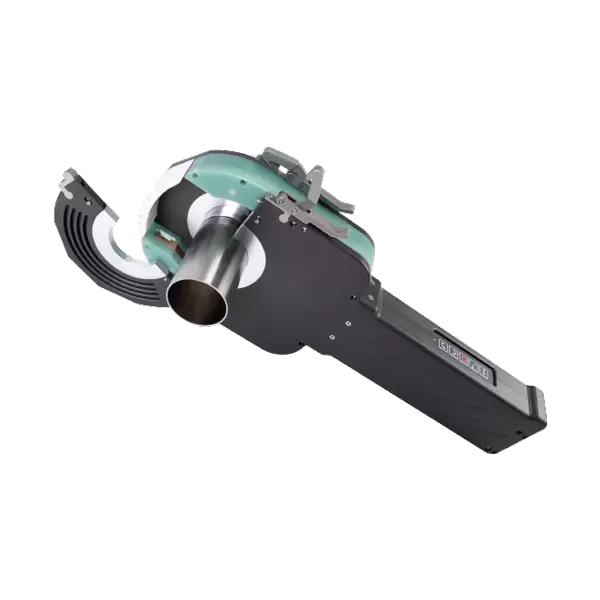
An orbital welding machine for stainless steel pipes is specifically designed to produce clean, smooth, and contamination-free welds. These welds are critical in applications where internal pipe surfaces must remain free of impurities.
Excellent corrosion resistance
Smooth weld finish
High strength and durability
Suitable for sanitary applications
Pharmaceutical tubing systems
Food-grade piping
Cleanroom environments
Chemical processing plants
Carbon steel is another commonly welded material, particularly in heavy industries such as construction and oil & gas.
While carbon steel is more prone to oxidation than stainless steel, modern industrial orbital welding machines can handle it effectively with proper shielding gas and parameter control.
Requires proper shielding to prevent oxidation
May need preheating depending on thickness
Higher risk of distortion compared to stainless steel
Structural piping
Oil and gas pipelines
Power plant systems
Alloy steels contain additional elements such as chromium, molybdenum, or nickel, which improve strength, heat resistance, and corrosion resistance.
Orbital welding is well-suited for alloy steels because it provides precise heat input control, minimizing the risk of cracking or material degradation.
Controlled heat input reduces stress
Consistent weld quality
Suitable for high-performance environments
High-temperature piping
Pressure vessels
Energy sector components
Titanium is widely used in aerospace, medical, and high-tech industries due to its excellent strength-to-weight ratio and corrosion resistance.
However, titanium is highly reactive at high temperatures, making it difficult to weld using traditional methods. A high precision orbital welding machine is essential for welding titanium because it provides:
Controlled atmosphere
Stable arc conditions
Consistent shielding gas coverage
Requires ultra-clean environment
Sensitive to contamination
Needs precise parameter control
Aerospace tubing
Medical devices
Marine systems
Nickel-based alloys, such as Inconel and Hastelloy, are used in extreme environments where high temperatures and corrosion resistance are required.
Orbital welding machines are ideal for these materials because they allow for precise control of heat input, preventing overheating and maintaining material integrity.
Excellent corrosion resistance
High-temperature stability
Long service life
Chemical processing plants
Nuclear industry
Aerospace components
Aluminum is widely used due to its lightweight and corrosion resistance, but it presents unique challenges for welding.
Orbital welding of aluminum requires advanced equipment and expertise because aluminum:
Has high thermal conductivity
Forms an oxide layer quickly
Requires precise heat control
While not as common as stainless steel, some orbital welding machine for pipes systems can be configured to weld aluminum successfully.
Duplex stainless steels combine the benefits of austenitic and ferritic stainless steels, offering high strength and excellent corrosion resistance.
These materials are commonly used in offshore and chemical industries. Orbital welding is particularly beneficial for duplex steels because it maintains the correct phase balance during welding.
High mechanical strength
Excellent resistance to stress corrosion cracking
Suitable for harsh environments
Copper and its alloys are used in electrical and thermal applications due to their excellent conductivity.
Orbital welding can be used for copper, but special considerations are required due to its high thermal conductivity.
Requires higher heat input
Needs precise control to avoid burn-through
Specialized shielding gas may be needed
While orbital welding is primarily used for metals, certain advanced systems can also be used for welding thermoplastics in specialized applications.
However, this is less common and typically requires different welding technologies such as orbital fusion welding.
When choosing materials for orbital welding, several factors must be considered:
Thin-walled tubes are ideal for orbital welding because the process provides precise heat control.
Different welding heads are required for different pipe diameters.
Industries such as pharmaceuticals require ultra-clean welds, making stainless steel the preferred material.
High-temperature or corrosive environments may require alloy steels or nickel-based materials.
Modern orbital welding machines are highly versatile and can be adjusted to suit different materials through:
Programmable welding parameters
Adjustable shielding gas flow
Interchangeable welding heads
Advanced control systems
An industrial orbital welding machine can store multiple welding programs, allowing operators to switch between materials quickly and efficiently.
Using orbital welding machines across different materials offers several key benefits:
Consistent weld quality across applications
Reduced human error
Improved productivity
Lower defect rates
Enhanced safety
These advantages make orbital welding a preferred solution for industries that require high reliability and precision.
Orbital welding machines are capable of welding a wide variety of materials, ranging from common metals like stainless steel and carbon steel to advanced materials such as titanium, nickel alloys, and duplex stainless steels.
Their ability to deliver precise, consistent, and contamination-free welds makes them ideal for industries with strict quality requirements. While some materials present challenges, modern orbital welding technology, combined with proper setup and expertise, allows operators to achieve excellent results across diverse applications.
Understanding material compatibility is essential for selecting the right orbital welding machine and ensuring long-term success in welding projects. As technology continues to advance, the capabilities of orbital welding machines will only expand, making them an indispensable tool in modern industrial manufacturing.

Mr. Jeff Huang
15251441199
Miss Doria Zhu
15102105304
Miss Jina Wang
18261592800








 Language
 Back
Back
 Prev
Prev
 Next
Next
 Apr 16,2026
 Leave a Message