


Selecting the correct welding head is one of the most critical decisions when working with orbital welding systems. While much attention is often given to the power supply and controller, the welding head is the component that directly interacts with the workpiece. It determines the accessibility, weld quality, precision, and overall efficiency of the welding process.
Whether you are working in industries such as pharmaceuticals, food processing, aerospace, or oil and gas, choosing the right welding head for your orbital welding machine can significantly impact your results. A well-matched welding head ensures consistent weld quality, reduces defects, and improves productivity—especially in high-demand industrial environments.
In this comprehensive guide, we will explore the different types of orbital welding heads, key selection factors, application scenarios, and best practices to help you choose the right welding head for your specific needs.
An orbital welding head is a mechanical device that holds and rotates the electrode (typically a tungsten electrode in TIG welding) around a pipe or tube. It ensures precise control of the welding arc, travel speed, and alignment.
Orbital welding heads are typically used in conjunction with automated welding systems and are designed for specific pipe sizes, materials, and applications.
Securely hold the workpiece
Maintain precise arc positioning
Control rotational movement
Deliver shielding gas to the weld zone
Ensure repeatable and consistent welds
Because the welding head directly influences weld quality, selecting the appropriate type is essential.
Understanding the different types of welding heads is the first step in making the right selection.
Closed welding heads are fully enclosed systems that surround the pipe during welding. They are commonly used for high-purity applications.
Fully enclosed chamber
Controlled shielding gas environment
High repeatability
Minimal contamination
Pharmaceutical tubing
Semiconductor industries
Food and beverage piping
Cleanroom environments
Closed heads are ideal when weld cleanliness and precision are critical.
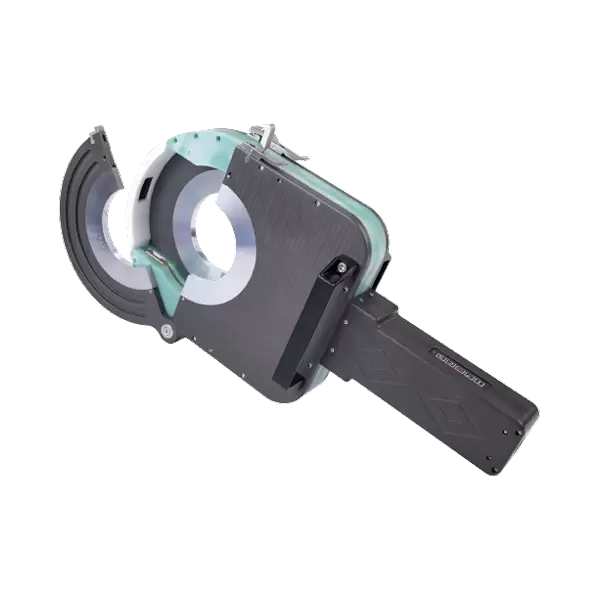
Open welding heads are not enclosed and allow direct access to the weld area. They are more flexible and suitable for larger pipes or thicker materials.
Open design for accessibility
Suitable for larger diameters
Can handle thicker wall materials
Oil and gas pipelines
Structural piping
Heavy industrial fabrication
Open heads provide greater versatility but require more operator control compared to closed systems.
These specialized welding heads are designed for welding tubes to tube sheets, commonly used in heat exchangers and boilers.
Power plants
Heat exchangers
Industrial boilers
They offer precise alignment and control for complex welding geometries.
Narrow gap welding heads are used for thick materials where deep weld penetration is required.
Reduced weld material usage
Improved efficiency for thick sections
Controlled heat input
Micro welding heads are designed for very small diameter tubes, often used in high-tech industries.
Medical devices
Precision instrumentation
Microelectronics
These heads require extremely precise control and are often paired with advanced orbital welding systems.
Selecting the right welding head involves evaluating several technical and operational factors.
One of the most important considerations is the size of the pipe or tube.
Small diameter tubes require compact or micro welding heads
Large pipes need open welding heads with greater reach
Thick walls may require higher heat input and specialized heads
Choosing a welding head that matches your pipe specifications ensures proper fit and optimal weld quality.
Different materials require different welding conditions. The welding head must be compatible with the material being welded, such as:
Stainless steel
Carbon steel
Titanium
Nickel alloys
For high-purity materials, closed welding heads are often preferred because they provide better shielding and contamination control.
In many on-site projects, space is limited. The welding head must be able to operate within confined areas.
Consider:
Clearance around the pipe
Accessibility of the weld joint
Installation environment
Compact and portable welding heads are ideal for tight spaces.
The position of the weld (horizontal, vertical, or overhead) can influence the choice of welding head.
Some welding heads are specifically designed to maintain stability and arc control in challenging positions, ensuring consistent results regardless of orientation.
Modern orbital welding systems offer various levels of automation.
Fully automated heads provide maximum consistency
Semi-automatic heads offer more flexibility
Manual adjustment heads require skilled operators
For high-volume production, fully automated welding heads are typically the best choice.
Proper shielding gas coverage is essential for preventing oxidation and contamination.
Closed welding heads provide superior gas protection, making them ideal for critical applications. Open heads may require additional gas control measures.
Time is a critical factor in industrial operations. Welding heads that are easy to install, adjust, and maintain can significantly improve productivity.
Look for:
Quick clamping systems
Simple alignment mechanisms
Easy access for cleaning and maintenance
Different industries have specific requirements that influence welding head selection.
These industries require:
High cleanliness
Smooth weld surfaces
Zero contamination
Closed welding heads are the preferred choice due to their controlled environment.
Pipeline welding often involves:
Large diameter pipes
Thick materials
Harsh environments
Open welding heads are more suitable for these conditions.
Aerospace applications demand:
High precision
Lightweight materials
Strict quality standards
High-precision welding heads with advanced control systems are essential.
Power plants require reliable welding for high-pressure systems. Specialized welding heads for tube-to-tube sheet applications are commonly used.
Choosing the wrong welding head can lead to poor results and increased costs. Here are some common mistakes:
Selecting a head that does not match pipe size
Ignoring material compatibility
Overlooking workspace constraints
Choosing low-cost options without considering performance
Failing to account for future scalability
Avoiding these mistakes ensures long-term efficiency and reliability.
Even with the right welding head, proper usage is essential for achieving the best results.
Keep the welding head clean and inspect components regularly to prevent wear and tear.
Ensure that the welding head is properly aligned and calibrated before use.
Even automated systems require skilled operators who understand setup, monitoring, and troubleshooting.
High-quality electrodes, shielding gases, and accessories contribute to better weld performance.
As technology advances, welding heads are becoming more sophisticated.
Emerging trends include:
Smart welding heads with sensors and data feedback
Integration with digital control systems
Lightweight materials for improved portability
Enhanced cooling systems for longer operation
These innovations will further improve efficiency, precision, and usability.
Choosing the right welding head for orbital welding machines is essential for achieving high-quality, consistent, and efficient welds. From closed welding heads for high-purity applications to open heads for heavy industrial use, each type serves a specific purpose.
By carefully considering factors such as pipe size, material type, accessibility, and automation level, you can select a welding head that meets your operational requirements and delivers optimal performance.
In today’s competitive industrial landscape, investing in the right welding head is not just a technical decision—it is a strategic move that can enhance productivity, reduce costs, and ensure long-term success in orbital welding applications.

Mr. Jeff Huang
15251441199
Miss Doria Zhu
15102105304
Miss Jina Wang
18261592800








 Language
 Back
Back
 Prev
Prev
 Next
Next
 Dec 04,2025

 Leave a Message