


In modern manufacturing, welding plays a critical role in ensuring the structural integrity and reliability of industrial products. Whether in aerospace, pharmaceuticals, food processing, or semiconductor industries, the demand for high-quality, consistent welds is ever-increasing. Traditional manual welding methods, while flexible, often fall short in terms of repeatability and precision, particularly when dealing with complex tube geometries and critical applications. This is where CNC orbital welding machines emerge as a game-changer, significantly improving welding precision and operational efficiency.
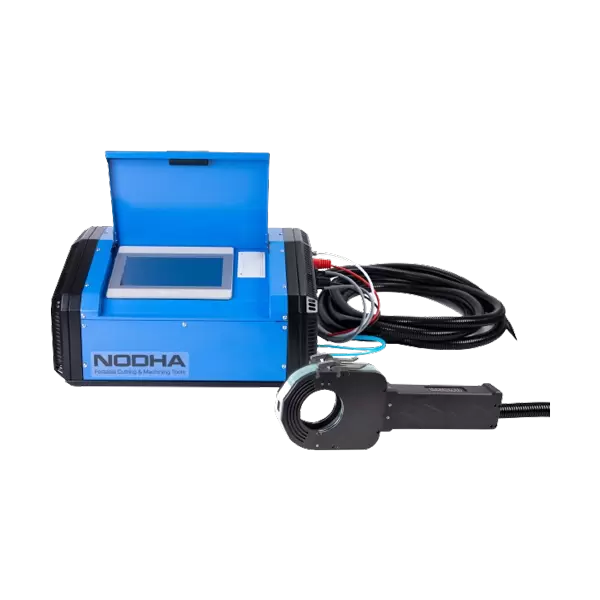
CNC orbital welding machines are automated welding systems designed to perform precise, repeatable welds, typically on tubular components. Unlike conventional welding, which relies heavily on the skill of the operator, CNC orbital welding uses a pre-programmed control system to guide the welding torch around the workpiece in a controlled, circular motion. This approach ensures uniform weld quality and minimizes human error.
Orbital welding systems consist of several key components:
CNC Controller: The brain of the system, which stores welding parameters, such as current, voltage, travel speed, and rotation rate, and executes the welding program with high accuracy.
Orbital Welding Head: This component rotates 360 degrees around the tube, maintaining a constant arc and distance from the weld joint.
Power Supply and Arc Control: Provides stable electrical input and ensures consistent arc characteristics for uniform penetration and bead formation.
Clamping Mechanism: Secures the tube in place, preventing movement and vibration that could compromise weld quality.
By integrating these components, CNC orbital welding machines deliver consistent, high-precision welds that are difficult, if not impossible, to achieve manually.
One of the primary advantages of CNC orbital welding machines is their ability to deliver high-precision welds consistently. Manual welds are inherently variable, as they depend on the operator’s skill, fatigue level, and environmental factors. Even experienced welders may struggle to maintain uniform bead width and penetration over large production runs.
In contrast, CNC orbital welding machines follow pre-programmed parameters with micron-level precision. This eliminates variability, resulting in welds that are identical from the first piece to the thousandth. Industries such as pharmaceuticals and semiconductors, where contamination control and precise weld geometry are critical, rely heavily on this repeatability.
High-precision welding is not just about accuracy—it also affects the mechanical and structural properties of the welded joint. CNC orbital welding ensures proper heat input, optimal penetration, and uniform fusion, reducing common defects like porosity, undercutting, and incomplete fusion.
For thin-walled tubes used in industries like chemical processing, precise heat control is vital. Excessive heat can cause warping or burn-through, while insufficient heat leads to weak joints. CNC orbital welding machines excel in maintaining the ideal heat profile, resulting in high-quality welds that meet stringent industry standards.
Automated welding systems significantly improve operational efficiency. Once a welding program is set up, CNC orbital welding machines can operate continuously without fatigue, producing high-quality welds faster than manual methods. This not only reduces labor costs but also increases throughput, particularly in large-scale manufacturing environments.
Moreover, operators are freed from repetitive, physically demanding tasks, allowing them to focus on setup, monitoring, and quality control, which further enhances overall productivity.
Manual welding, especially in confined spaces or when working with toxic or pressurized materials, carries inherent risks. CNC orbital welding machines reduce human exposure to sparks, fumes, and high temperatures by automating the process. The operator can control the welding process remotely, minimizing the risk of burns, eye injuries, or inhalation of hazardous fumes.
CNC orbital welding machines are particularly effective for tube welding and other cylindrical components. The orbital motion allows the welding torch to maintain a constant arc length and travel speed around the tube, which is challenging to achieve manually. This makes CNC orbital welding ideal for complex piping systems, heat exchangers, and stainless steel sanitary tubing used in food, beverage, and pharmaceutical industries.
The precision and consistency offered by CNC orbital welding make it indispensable across multiple industries:
Aircraft components demand the highest level of precision due to safety requirements. CNC orbital welding machines are used to weld fuel lines, hydraulic tubing, and high-pressure fluid systems, ensuring leak-proof joints with exact tolerances.
Sanitary tubing in pharmaceutical and food processing plants must meet strict hygiene standards. CNC orbital welding produces smooth, crevice-free welds that prevent bacterial growth and contamination, complying with regulatory requirements such as ASME BPE.
In semiconductor fabrication, ultra-high purity tubing systems are critical. Any inconsistency in welding can introduce contamination, leading to defective products. CNC orbital welding machines provide the repeatability and precision necessary for these high-stakes applications.
Piping systems in chemical plants often operate under high pressure and corrosive conditions. CNC orbital welding ensures strong, uniform welds, enhancing the reliability and longevity of these critical systems.
High-precision welds are crucial in nuclear power plants, offshore oil rigs, and renewable energy systems, where structural integrity directly impacts safety and performance. CNC orbital welding helps maintain stringent quality standards in these demanding environments.
While CNC orbital welding machines offer unparalleled precision, several factors influence the final weld quality:
Program Accuracy: The welding program must be meticulously designed with correct parameters for material type, tube diameter, wall thickness, and joint configuration.
Equipment Calibration: Proper calibration of the welding head and power supply ensures the system performs as intended.
Clamping and Fixturing: Secure and stable tube positioning is essential. Any movement during welding can lead to defects or inconsistencies.
Material Cleanliness: Contaminants like oil, oxide layers, or dirt can affect weld penetration and fusion. Proper cleaning before welding is critical.
Maintenance: Regular maintenance of the CNC system, including torch components and sensors, prevents malfunctions and maintains precision over time.
Selecting the appropriate CNC orbital welding machine depends on the application and desired precision:
Tube Diameter and Wall Thickness: Ensure the machine can accommodate the size range of the tubes you work with.
Welding Process: Some machines specialize in TIG (GTAW) welding, while others support MIG or plasma processes.
Automation Level: Fully automated systems reduce human intervention, while semi-automatic machines provide more flexibility for unique setups.
Software Capabilities: Advanced CNC controllers allow for precise parameter control, multi-pass welding, and detailed program storage for repeated use.
Support and Training: Choose a manufacturer that provides training, technical support, and spare parts to minimize downtime.
The evolution of CNC orbital welding continues to be shaped by advances in automation, AI, and sensor technology:
Real-Time Monitoring and Feedback: Modern systems can monitor weld quality in real time, adjusting parameters automatically to maintain precision.
Integration with IoT: Data from CNC orbital welding machines can be connected to factory-wide systems for predictive maintenance and quality analytics.
Robotic Hybrid Systems: Combining orbital welding heads with robotic arms enables welding of more complex geometries and inaccessible areas.
Sustainable Manufacturing: Precision welding reduces material waste and rework, contributing to greener manufacturing practices.
In conclusion, CNC orbital welding machines represent a transformative technology in modern manufacturing. By automating the welding process, these machines dramatically improve welding precision, consistency, and efficiency, while reducing human error and enhancing safety. Industries ranging from aerospace to pharmaceuticals, semiconductors, and energy rely on CNC orbital welding to meet stringent quality standards and production demands.
For manufacturers seeking high-precision, repeatable, and reliable welds, investing in a CNC orbital welding system is no longer a luxury—it is a necessity. As technology continues to advance, the capabilities of these machines will expand, further solidifying their role as a cornerstone of modern industrial welding solutions.

Mr. Jeff Huang
15251441199
Miss Doria Zhu
15102105304
Miss Jina Wang
18261592800








 Language
 Back
Back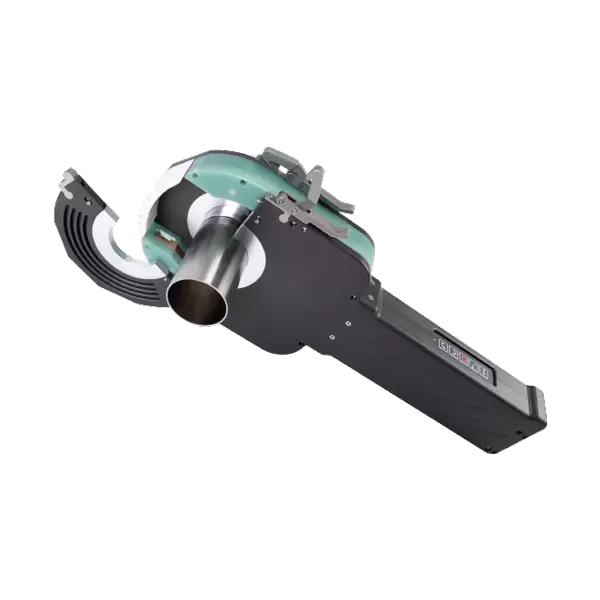
 Prev
Prev Next
Next
 Jan 07,2025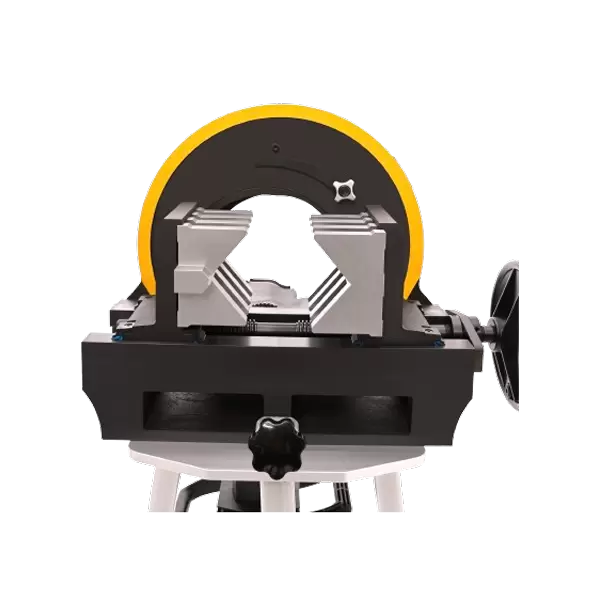
 Leave a Message