


Thin-walled stainless steel tubes are widely used in industries where precision, cleanliness, and reliability are essential. Applications such as semiconductor manufacturing, pharmaceutical processing, food and beverage production, aerospace systems, and high-purity gas distribution require tubing solutions that can withstand strict performance standards.
However, processing thin-walled stainless steel tubes is not an easy task. Due to their reduced wall thickness, these tubes are more sensitive to mechanical stress, heat input, and cutting force. Traditional cutting methods often result in deformation, burr formation, rough edges, and inconsistent dimensions, which can negatively affect subsequent welding and assembly processes.
This is why many manufacturers are turning to orbital cutting machines for precision tube processing. Designed specifically for high-accuracy pipe and tube fabrication, an orbital cutting machine provides clean, burr-free cuts while maintaining the original geometry and surface quality of thin-walled stainless steel tubes.
In this article, we will explore how orbital cutting machines work, why they are ideal for thin-walled stainless steel tube processing, their key advantages, applications, and how they improve overall manufacturing efficiency.
Thin-walled stainless steel tubes offer many advantages, including lightweight construction, corrosion resistance, and excellent flow performance. However, their unique characteristics also create challenges during fabrication.
Unlike thick-wall pipes, thin-walled stainless steel tubes have lower structural rigidity. Excessive cutting pressure or improper clamping can easily cause:
Tube flattening
Oval deformation
Dimensional inaccuracies
Poor welding alignment
Once the tube shape changes, it becomes difficult to achieve high-quality welded joints.
A clean tube edge is essential for precision welding applications. Conventional cutting methods may leave:
Internal burrs
External sharp edges
Metal particles
Uneven cutting surfaces
These defects are especially problematic in industries such as semiconductor and pharmaceutical manufacturing, where contamination control is critical.
A high-performance orbital cutting machine minimizes burr formation by using controlled cutting movement and precision tooling.
Some cutting processes generate excessive heat, which can affect stainless steel performance.
Heat-related problems include:
Oxidation
Discoloration
Changes in material properties
Heat-affected zones
For high-purity stainless steel tube systems, maintaining the original material condition is extremely important.
Thin-walled stainless steel tubes are often connected through orbital welding. To achieve strong and reliable welds, tube ends must have:
Accurate dimensions
Square cutting surfaces
Smooth edges
Consistent geometry
An inaccurate cut can increase welding defects and reduce system reliability.
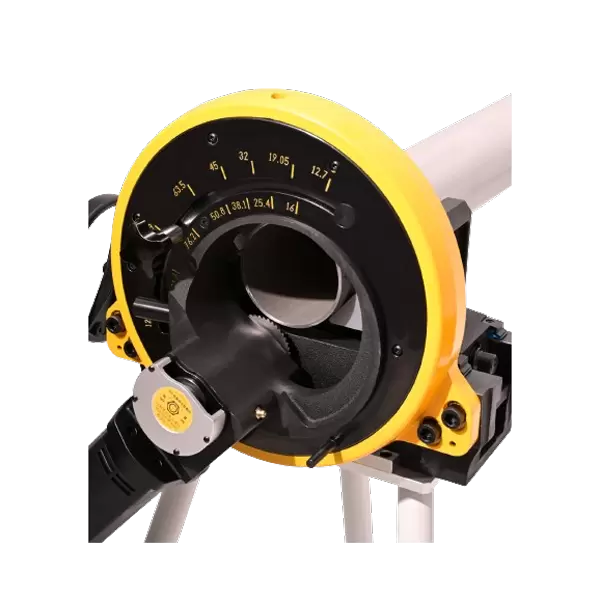
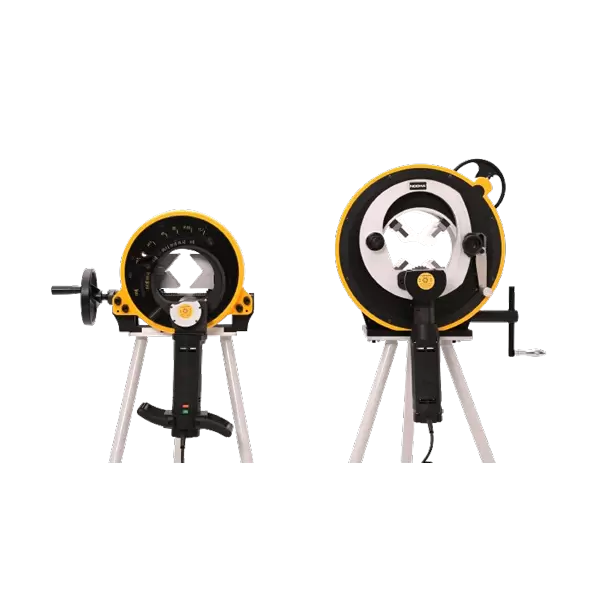
An orbital cutting machine is a specialized tube and pipe cutting system that uses a rotating cutting head to process tubes while keeping the workpiece stationary.
Unlike traditional methods that rotate the tube or rely heavily on manual operation, an orbital cutting machine provides controlled and repeatable cutting performance.
The basic working process includes:
The stainless steel tube is positioned inside the machine.
A precision clamping system securely holds the tube.
The cutting head rotates around the tube circumference.
A controlled feed mechanism gradually advances the cutting tool.
The machine completes a clean and accurate cut.
This orbital movement ensures that cutting forces are evenly distributed around the tube, reducing stress and improving surface quality.
Using an orbital cutting machine for stainless steel tubes provides several important benefits compared with conventional cutting equipment.
One of the biggest advantages of orbital cutting technology is its ability to maintain tube geometry.
A professional orbital pipe cutting machine typically uses:
Self-centering clamps
Precision guide systems
Stable mechanical structures
These features distribute holding pressure evenly around the tube.
As a result, manufacturers can avoid:
Tube distortion
Misalignment
Uneven cutting depth
This is especially important when processing thin-walled stainless steel tubing with strict dimensional requirements.
For thin-wall tube fabrication, cutting quality directly affects downstream processes.
An advanced orbital cutting machine produces:
Smooth tube ends
Minimal burr formation
Clean welding surfaces
Reduced post-processing requirements
Unlike abrasive cutting methods, cold cutting technology removes material through controlled mechanical action instead of generating excessive friction heat.
This allows manufacturers to achieve cleaner results without additional grinding or deburring.
Many industrial orbital cutting machines use cold cutting principles to prevent thermal damage.
The benefits include:
No heat-affected zone
No oxidation layer
No discoloration
Better corrosion resistance preservation
For stainless steel tubes used in clean environments, maintaining surface integrity is essential.
This makes orbital cutting technology particularly suitable for:
304 stainless steel tubes
316L stainless steel tubes
High-purity stainless steel tubing systems
In industries requiring precision welding, tube preparation quality determines final performance.
An orbital cutting machine creates ideal conditions for welding by providing:
Accurate tube alignment
Consistent wall thickness at the joint
Smooth edge preparation
Better cutting accuracy helps reduce:
Welding defects
Leakage risks
Rework costs
For automatic orbital welding applications, precise tube cutting is an essential first step.
When selecting an orbital cutting machine for thin-walled stainless steel tubes, manufacturers should consider several important features.
A reliable clamping system is critical for thin-wall tube processing.
High-quality machines use:
Self-centering mechanisms
Replaceable clamping inserts
Low-deformation holding methods
These systems ensure stable positioning without damaging the tube surface.
The cutting blade directly affects:
Surface finish
Tool life
Cutting efficiency
Premium cutting tools provide:
Smooth material removal
Lower cutting resistance
Longer operating life
Choosing the correct blade according to stainless steel grade and tube thickness is essential.
Different stainless steel tubes require different cutting parameters.
Factors affecting cutting performance include:
Tube diameter
Wall thickness
Material hardness
Required surface quality
An advanced orbital tube cutting machine allows operators to optimize cutting speed and feed rate for different applications.
Many industries require flexible installation and maintenance solutions.
Portable orbital cutting machines offer advantages such as:
Easy transportation
On-site tube processing
Reduced installation requirements
This makes them suitable for field fabrication and cleanroom environments.
The semiconductor industry requires extremely clean gas and chemical delivery systems.
Thin-walled stainless steel tubes are commonly used for:
Ultra-high purity gas pipelines
Process equipment connections
Vacuum systems
An orbital cutting machine ensures clean tube preparation with minimal contamination risk.
Pharmaceutical facilities require hygienic piping systems that meet strict regulatory requirements.
Orbital cutting machines help produce:
Smooth tube connections
High-quality weld joints
Contamination-free processing lines
These advantages support applications such as:
Sterile fluid systems
Clean steam pipelines
Laboratory equipment
Stainless steel tubing is widely used in sanitary processing equipment.
Precision cutting helps maintain:
Hygienic internal surfaces
Reliable connections
Easy cleaning performance
An orbital pipe cutting machine improves fabrication efficiency while maintaining food-grade system standards.
Aerospace systems require lightweight yet reliable tubing solutions.
Orbital cutting technology provides:
High dimensional accuracy
Repeatable processing quality
Reduced material waste
This makes it suitable for hydraulic systems, fuel systems, and specialized aerospace pipelines.
| Feature | Orbital Cutting Machine | Traditional Cutting Methods |
|---|---|---|
| Cutting Accuracy | Very High | Variable |
| Burr Formation | Minimal | Common |
| Tube Deformation | Low | Higher Risk |
| Heat Generation | Minimal | Possible |
| Welding Preparation | Excellent | Requires Additional Work |
| Repeatability | High | Operator Dependent |
For industries requiring precision thin-wall stainless steel tube processing, orbital cutting machines provide significant advantages.
To maximize the performance of an orbital cutting machine, manufacturers should follow several best practices.
Choose equipment according to:
Tube diameter range
Stainless steel grade
Wall thickness
Production requirements
Using the correct machine improves efficiency and extends tool life.
Regular inspection helps prevent:
Poor cut quality
Excessive vibration
Unexpected downtime
Replace worn blades promptly to maintain consistent performance.
Clean operation is especially important in high-purity industries.
Regular maintenance should include:
Removing metal chips
Cleaning clamps
Checking moving components
Inspecting electrical systems
Even advanced equipment requires skilled operation.
Operators should understand:
Machine setup procedures
Cutting parameter adjustment
Safety requirements
Maintenance routines
Proper training improves both productivity and product quality.
As industries continue to demand higher precision, orbital cutting technology is evolving toward smarter and more automated solutions.
Future orbital cutting machines are expected to feature:
Digital parameter control
Automated cutting adjustment
Smart monitoring systems
Integration with robotic welding
Improved energy efficiency
These developments will further enhance accuracy, reduce labor requirements, and improve manufacturing consistency.
Processing thin-walled stainless steel tubes requires advanced cutting technology that can deliver precision, cleanliness, and repeatability. Traditional cutting methods often struggle with deformation, burr formation, and inconsistent quality, making them unsuitable for demanding industrial applications.
An orbital cutting machine provides an ideal solution by combining precise clamping, controlled cutting motion, cold cutting technology, and high repeatability.
For industries such as semiconductor manufacturing, pharmaceuticals, food processing, biotechnology, and aerospace, orbital cutting machines ensure:
Burr-free tube cutting
Minimal deformation
Superior welding preparation
Improved production efficiency
Consistent processing quality
As precision tube fabrication continues to advance, orbital cutting machines will remain an essential technology for manufacturers seeking reliable and high-quality thin-walled stainless steel tube processing solutions.

Mr. Jeff Huang
15251441199
Miss Doria Zhu
15102105304
Miss Jina Wang
18261592800








 Language
 Back
Back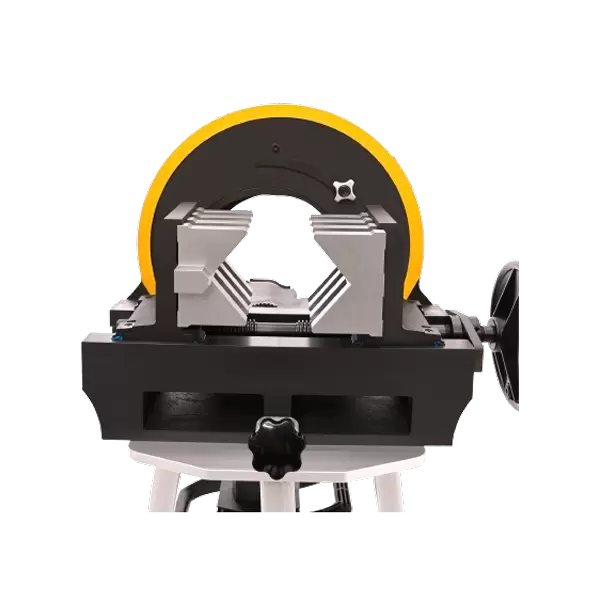
 Prev
Prev Next
Next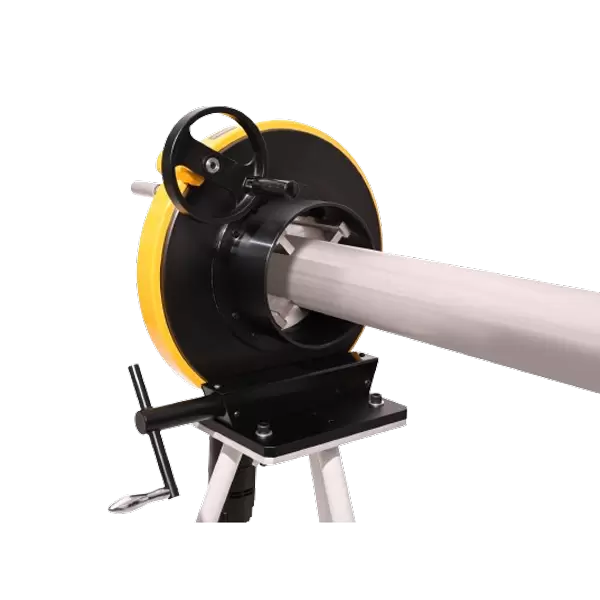
 Jul 03,2025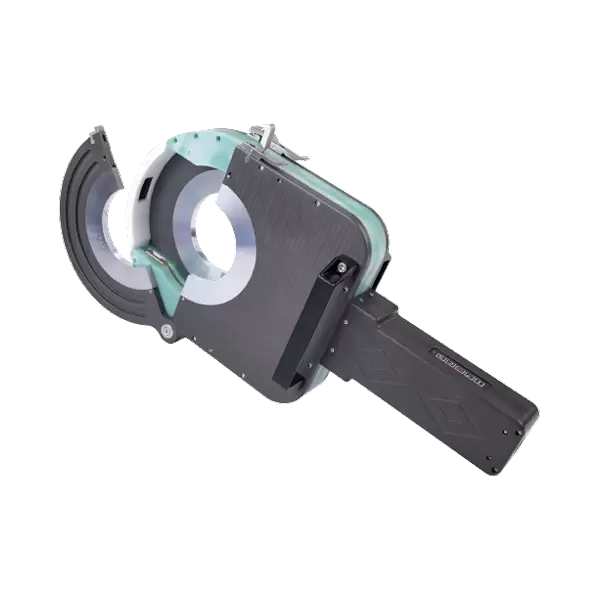
 Leave a Message