


In modern manufacturing industries, welding quality and production efficiency directly affect product reliability, operational costs, and project success. As industries such as semiconductor manufacturing, pharmaceuticals, aerospace, food processing, energy, and industrial piping continue to demand higher precision, traditional manual welding methods are often unable to meet increasingly strict requirements.
This is where automatic orbital welding machines play an important role. By combining advanced automation technology, precise control systems, and repeatable welding processes, these machines help manufacturers achieve consistent weld quality while improving production speed and reducing human-related errors.
Unlike conventional welding methods that rely heavily on operator experience and manual control, automatic orbital welding machines provide a controlled welding environment with accurate parameter management. They are especially suitable for applications requiring high-quality pipe and tube welding, including stainless steel tubing, high-purity systems, and critical industrial pipelines.
This article explores how automatic orbital welding machines improve welding quality and production efficiency, and why more manufacturers are adopting automated orbital welding solutions for demanding welding applications.
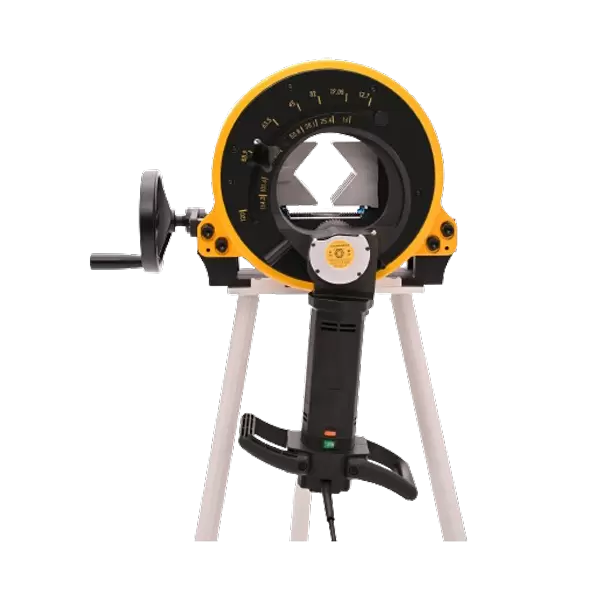
Automatic orbital welding machines are advanced welding systems designed to perform automated welding around the circumference of pipes or tubes. Instead of requiring a welder to manually rotate around the workpiece, the welding head moves automatically along the pipe joint, creating a complete and uniform weld.
These machines typically consist of several key components:
Orbital welding power supply
Automatic welding head
Control system
Cooling system
Programming interface
Clamping and positioning accessories
Most automatic orbital welding machines use the TIG (Tungsten Inert Gas) welding process because TIG welding provides excellent control over heat input and produces clean, high-quality welds. This makes orbital welding especially valuable for industries where weld integrity and cleanliness are critical.
Through digital control and automated operation, these machines can precisely manage welding parameters such as current, voltage, travel speed, shielding gas flow, and heat input throughout the entire welding cycle.
One of the biggest advantages of automatic orbital welding machines is their ability to deliver consistent welding results.
In manual welding operations, weld quality can vary due to factors such as:
Operator skill level
Fatigue during long production hours
Inconsistent welding speed
Incorrect torch positioning
Human judgment differences
Even experienced welders may produce slightly different results from one weld to another.
Automatic orbital welding machines eliminate many of these variables by following pre-programmed welding procedures. Once the correct welding parameters are configured, the machine can repeatedly produce welds with the same quality standards.
For industries such as semiconductor manufacturing, biotechnology, and pharmaceutical production, where even small welding defects can affect system performance, consistent weld quality is essential.
With automatic control of torch movement and welding parameters, manufacturers can achieve:
Uniform weld penetration
Stable bead appearance
Reduced welding defects
Better joint strength
Higher production reliability
This repeatability is one of the main reasons why automatic orbital welding machines are becoming a preferred solution for precision pipe welding applications.
Welding quality depends heavily on controlling multiple parameters during the welding process. Small changes in current, speed, or heat input can significantly affect weld performance.
Automatic orbital welding machines provide precise digital control over important welding factors, including:
The machine automatically adjusts welding current according to the programmed welding cycle. This ensures proper heat distribution and prevents problems such as overheating or insufficient penetration.
Consistent torch movement is critical for producing smooth and reliable welds. Automatic orbital welding systems maintain stable travel speed throughout the welding process, reducing irregularities caused by manual operation.
Excessive heat can cause material deformation, oxidation, or damage to sensitive components. Automated systems help maintain appropriate heat input, making them suitable for thin-wall tubing and high-precision applications.
Proper shielding gas protection prevents contamination and oxidation during welding. Automatic orbital welding machines can integrate controlled gas flow systems to maintain weld cleanliness.
By managing these parameters accurately, manufacturers can achieve higher-quality welds with fewer adjustments and less rework.
Welding defects can lead to serious problems, including leakage, system failure, product recalls, and increased maintenance costs. Industries working with critical piping systems require welding processes that minimize defects.
Common welding issues include:
Incomplete penetration
Porosity
Uneven weld beads
Excessive oxidation
Cracking
Lack of fusion
Automatic orbital welding machines help reduce these risks by providing a stable and controlled welding process.
Because the machine follows programmed welding procedures, it can maintain the same welding conditions throughout production. This reduces the possibility of inconsistent weld quality caused by manual operation.
For example, in high-purity stainless steel tubing systems used in semiconductor or pharmaceutical facilities, orbital welding technology helps create smooth internal weld surfaces that reduce contamination risks and improve system performance.
Besides improving weld quality, automatic orbital welding machines significantly enhance production efficiency.
Traditional welding processes often require considerable preparation time, skilled labor, and post-welding inspection. Automated welding systems optimize each stage of the welding process, helping manufacturers complete more work in less time.
Automatic orbital welding machines can operate continuously with minimal interruption. Once parameters are set, operators only need to position the workpiece and start the welding cycle.
This reduces setup time and improves overall production output.
Poor-quality welds often require additional grinding, repairing, or complete replacement. These activities increase production costs and delay project schedules.
Because automatic orbital welding machines provide stable and repeatable results, manufacturers can reduce the number of defective welds and minimize rework.
Skilled welders are valuable resources, but manual welding requires significant labor input. Automated systems allow operators to manage multiple welding tasks while reducing dependence on individual welding skills.
This enables companies to improve workforce efficiency and maintain stable production capacity.
Many industries require welding solutions that meet strict quality standards. Automatic orbital welding machines are widely used in applications where precision and cleanliness are important.
Semiconductor manufacturing requires extremely clean gas and fluid delivery systems. Weld quality directly affects contamination control and equipment performance.
Automatic orbital welding machines help create smooth and reliable tube connections for high-purity piping systems.
Pharmaceutical production facilities require hygienic piping systems with excellent corrosion resistance and clean weld surfaces.
Automated orbital welding helps manufacturers achieve consistent weld quality while meeting strict industry requirements.
Aerospace components require lightweight, durable, and highly reliable welding solutions. Automated orbital welding technology provides the precision needed for complex tubing applications.
Energy facilities often involve large-scale piping systems operating under high pressure and demanding conditions. Automatic orbital welding machines improve welding reliability and reduce installation risks.
Although automatic orbital welding machines require an initial investment, they can provide significant long-term cost benefits.
The main cost advantages include:
Reduced material waste
Lower labor costs
Fewer welding repairs
Higher production capacity
Improved product consistency
In large-scale manufacturing environments, even a small improvement in welding efficiency can generate substantial savings over time.
Additionally, improved weld reliability helps reduce future maintenance costs by preventing failures caused by poor-quality joints.
For manufacturers focused on long-term competitiveness, investing in automatic orbital welding technology can provide strong economic benefits.
Selecting the right equipment is important because different industries and welding applications have different requirements.
Before purchasing automatic orbital welding machines, manufacturers should consider the following factors:
The machine should be suitable for the materials being welded, such as stainless steel, carbon steel, titanium, or alloy pipes.
Different welding heads are designed for different pipe diameters. Choosing equipment that matches the required tube sizes ensures better performance.
Manufacturers should evaluate whether they need TIG orbital welding, closed welding heads, open welding heads, or other configurations.
Advanced systems may include:
Digital parameter storage
Welding data recording
Touchscreen operation
Remote monitoring
Quality tracking functions
These features improve process management and production control.
Reliable technical support, training services, and spare parts availability are also important when selecting an automatic orbital welding machine supplier.
As manufacturing industries continue moving toward automation and smart production, automatic orbital welding machines will become increasingly important.
Future welding systems are expected to include more intelligent features, such as:
Real-time welding monitoring
Automated quality inspection
Data analysis capabilities
Integration with factory automation systems
These developments will help manufacturers achieve higher productivity while maintaining strict quality standards.
Automation does not simply replace traditional welding methods; it provides manufacturers with a more reliable and efficient way to handle complex welding requirements.
Automatic orbital welding machines have transformed modern pipe and tube welding by improving quality, consistency, and production efficiency. Through precise parameter control, automated operation, and repeatable welding performance, these machines help manufacturers reduce defects, increase productivity, and meet demanding industry standards.
For industries requiring high-quality welds, such as semiconductor, pharmaceutical, aerospace, energy, and industrial manufacturing, investing in advanced orbital welding technology can provide significant advantages.
As global manufacturing continues to focus on efficiency and quality control, automatic orbital welding machines will remain an essential solution for achieving reliable and cost-effective welding performance.

Mr. Jeff Huang
15251441199
Miss Doria Zhu
15102105304
Miss Jina Wang
18261592800








 Language
 Back
Back
 Prev
Prev
 Next
Next
 Aug 07,2025
 Leave a Message