


In modern industrial fabrication and pipeline construction, welding quality and efficiency are critical to project success. Whether in oil and gas pipelines, pharmaceutical tubing systems, power plant construction, or food-grade piping installations, the demand for highly precise and repeatable welds continues to grow. Traditional manual welding methods often struggle to deliver the consistency required for these applications, especially in field environments where working conditions can be unpredictable.
This is where portable orbital welding machines play a crucial role. Designed specifically for on-site welding tasks, these machines combine automation, precision control, and compact mobility to deliver high-quality welds even in challenging field environments. Portable orbital welding equipment allows technicians to perform reliable pipe and tube welding in locations where traditional large-scale welding systems cannot operate efficiently.
In this article, we will explore how portable orbital welding machines work, their key advantages for field projects, common industry applications, important features to consider, and best practices for maximizing their performance.
Portable orbital welding machines are compact automated welding systems designed to perform high-precision circumferential welds around pipes and tubes. Unlike conventional welding methods that rely heavily on operator skill, orbital welding uses mechanized control to move the welding electrode around the joint in a precise circular motion.
In a typical orbital welding process, the pipe or tube remains stationary while the welding head rotates around the joint. The machine carefully controls parameters such as:
Welding current
Travel speed
Arc length
Shielding gas flow
Heat input
Because the process is automated and programmable, portable orbital welding machines can produce highly consistent welds with minimal human error.
Portable models are designed specifically for on-site projects, meaning they are lightweight, easy to transport, and capable of operating in confined spaces or remote construction areas.
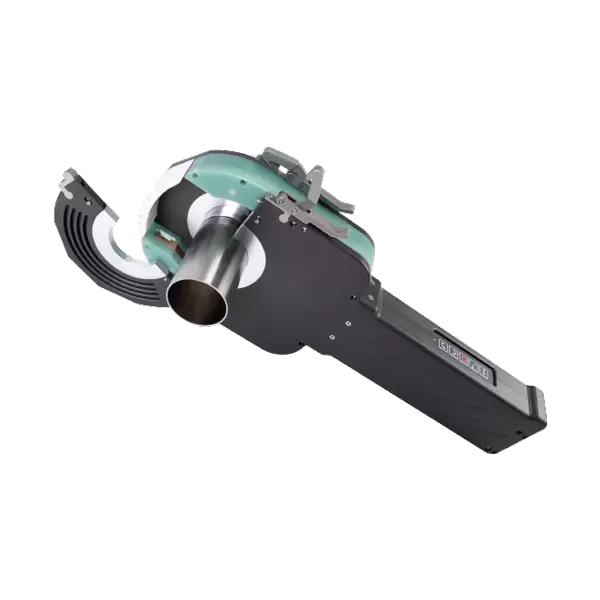
Field welding projects present unique challenges that are rarely encountered in controlled workshop environments. These include limited working space, variable environmental conditions, and strict installation timelines.
Portable orbital welding machines address these challenges in several ways.
One of the biggest advantages of portable orbital welding machines is their compact and lightweight design. Technicians can easily transport them between job sites, making them ideal for field installations.
Many modern systems are designed to be carried by a single operator, allowing quick setup even in difficult locations such as:
Offshore platforms
Industrial plants
Power generation facilities
Pipeline construction sites
Shipbuilding yards
This mobility significantly improves workflow efficiency during large-scale installation projects.
In traditional manual welding, weld quality often depends heavily on the skill and experience of the welder. However, portable orbital welding machines use automated control systems that ensure consistent welding parameters throughout the entire welding cycle.
This leads to several benefits:
Uniform weld penetration
Reduced defect rates
Repeatable welding results
Improved structural integrity
For industries with strict quality standards—such as pharmaceutical, semiconductor, and food processing systems—this consistency is extremely important.
Portable orbital welding machines can significantly increase productivity during field installations.
Once the welding parameters are programmed, the machine can complete each weld automatically while the operator prepares the next joint. This reduces downtime and increases overall welding speed.
Additional productivity benefits include:
Faster welding cycles
Reduced rework due to fewer defects
Lower dependence on highly specialized welders
Improved project timelines
For contractors working under tight deadlines, these advantages can translate into major cost savings.
Manual pipe welding often requires welders to work in uncomfortable positions for long periods of time, especially when dealing with overhead or vertical joints.
Portable orbital welding machines eliminate much of the physical strain involved in manual welding. The operator mainly supervises the system rather than performing the weld manually.
This not only reduces fatigue but also improves safety and long-term workforce sustainability.
Modern portable orbital welding machines incorporate advanced technology that enhances performance, usability, and reliability.
Many machines feature intelligent controllers that allow operators to store and manage welding programs. These programs control parameters such as:
Pulse current settings
Welding speed
Shielding gas timing
Heat input control
This makes it easy to repeat identical welds across multiple pipes or tubes.
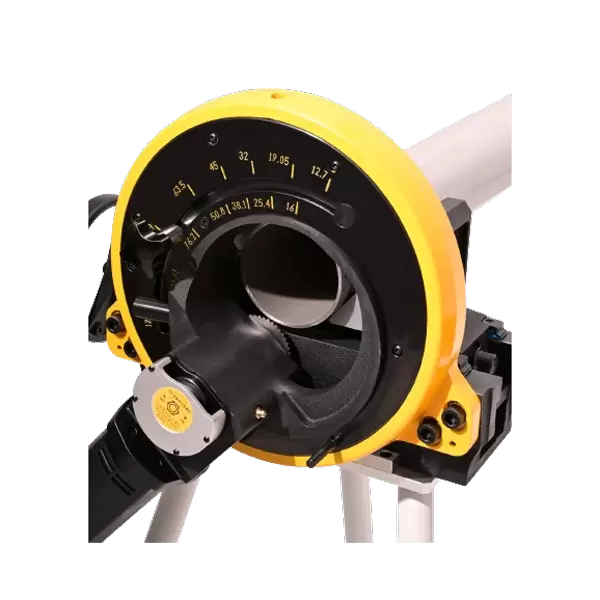
Portable orbital welding systems often include compact welding heads designed to operate in tight spaces. These heads can handle a wide range of pipe diameters and wall thicknesses, making them suitable for various industrial applications.
Some models also offer interchangeable welding heads for increased flexibility.
Most portable orbital welding machines use orbital TIG (Tungsten Inert Gas) welding, which is known for its high precision and clean weld quality.
Orbital TIG welding provides several advantages:
Excellent weld appearance
Minimal spatter
Strong metallurgical properties
Suitable for thin-wall tubing
This makes it especially useful for industries requiring sanitary or high-purity piping systems.
Many modern machines also include welding data logging features. These systems record important parameters during the welding process, allowing operators to track weld quality and maintain documentation for quality assurance.
This feature is particularly valuable in regulated industries where traceability is required.
Portable orbital welding machines are widely used across many industries where pipe and tube welding is required.
In the oil and gas industry, pipeline construction often takes place in remote areas where portability is essential. Orbital welding machines provide reliable weld quality while reducing installation time.
High-purity tubing systems used in pharmaceutical production must meet strict sanitary standards. Orbital welding produces smooth, contamination-free welds that meet these requirements.
Food-grade piping systems require hygienic welds that prevent bacterial growth. Orbital welding machines provide the precision needed for these critical applications.
Aerospace systems often use specialized materials such as titanium or stainless steel tubing. Portable orbital welding machines ensure high-quality welds that meet demanding performance standards.
Power plants require extensive piping systems that must withstand high pressure and temperature. Orbital welding provides the structural integrity required for these environments.
Selecting the right machine for on-site projects requires careful consideration of several factors.
Different machines support different pipe diameter ranges. It is important to choose equipment that can handle the sizes used in your project.
Ensure that the welding system is suitable for the materials you plan to weld, such as:
Stainless steel
Carbon steel
Titanium
Nickel alloys
Some machines offer fully automated welding programs, while others require more manual adjustment. The best choice depends on the complexity of your welding tasks.
Field projects may have limited access to electrical power. Portable machines should be compatible with available power sources or generators.
On-site projects require reliable equipment that can be easily maintained. Machines with modular components and simple maintenance procedures are often the best choice.
To achieve the best welding results in field environments, operators should follow several best practices.
Clean and properly aligned joints are essential for high-quality welds. Even the most advanced welding machines cannot compensate for poor joint preparation.
Operators should ensure that welding parameters match the material thickness and pipe diameter. Incorrect settings can lead to defects such as incomplete penetration or overheating.
Portable orbital welding machines should be inspected regularly to ensure that components such as cables, electrodes, and gas lines are functioning properly.
Although orbital welding systems are automated, trained operators are still essential for proper setup, monitoring, and troubleshooting.
Investing in operator training can greatly improve welding efficiency and reduce costly errors.
As automation and digital manufacturing technologies continue to evolve, portable orbital welding machines are becoming even more advanced.
Future innovations may include:
AI-assisted welding parameter optimization
Remote monitoring and diagnostics
Improved battery-powered portability
Advanced data analytics for quality control
These advancements will further enhance the efficiency and reliability of on-site welding operations.
Portable orbital welding machines have transformed the way field welding projects are performed. By combining automation, mobility, and precision welding technology, these machines enable contractors and engineers to achieve consistent, high-quality welds even in challenging on-site environments.
From pipeline installation to pharmaceutical tubing systems, portable orbital welding machines provide the reliability and efficiency needed to meet modern industrial standards. Their ability to reduce defects, increase productivity, and improve operator safety makes them an essential tool for many industries.
As technology continues to advance, portable orbital welding machines will play an increasingly important role in field fabrication and industrial construction, helping companies deliver faster, safer, and more reliable welding solutions for on-site projects.

Mr. Jeff Huang
15251441199
Miss Doria Zhu
15102105304
Miss Jina Wang
18261592800








 Language
 Back
Back
 Prev
Prev
 Next
Next
 Feb 26,2025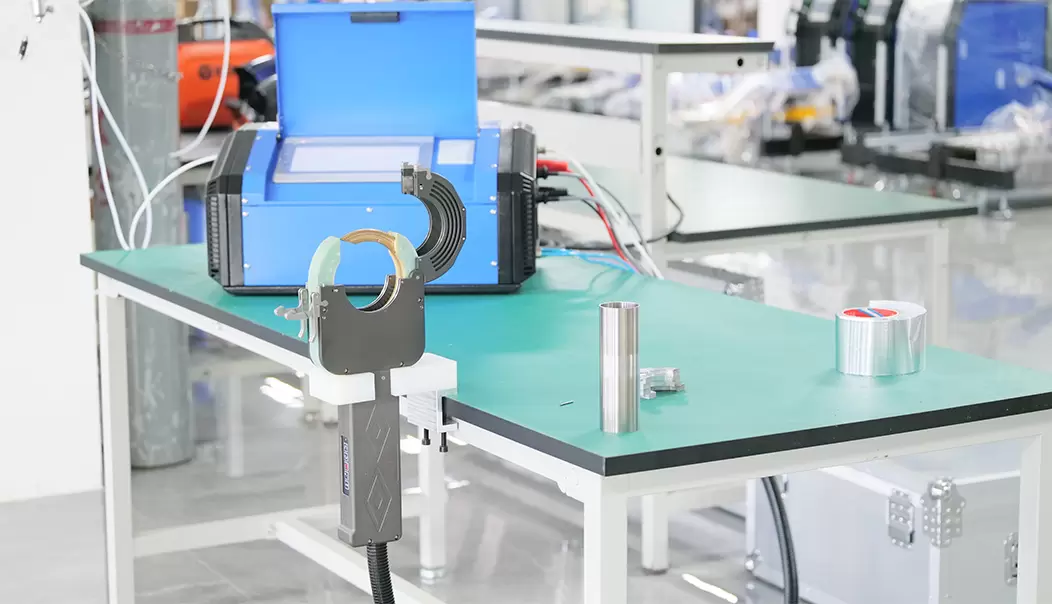
 Leave a Message