


In modern manufacturing, precision and consistency in welding are critical factors, particularly in industries such as aerospace, pharmaceuticals, nuclear energy, and high-tech pipe systems. Orbital welding machines have emerged as a transformative solution, enabling highly repeatable welds with minimal human error. However, to fully leverage their capabilities, operators must understand best practices, machine settings, and workflow optimizations. This article explores how to increase welding accuracy with orbital welding machines and achieve superior results in every welding project.
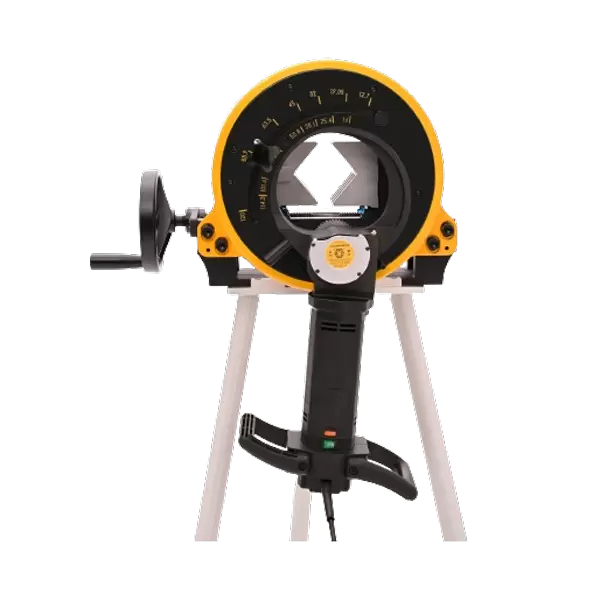
Orbital welding machines are automated welding systems that rotate a welding electrode around a stationary workpiece, usually a pipe or tube. Unlike manual welding, orbital welding ensures uniform welds by precisely controlling travel speed, current, and electrode position. These machines can perform TIG (Tungsten Inert Gas) welding, plasma welding, or other advanced welding techniques, depending on the application.
The core advantage of orbital welding machines lies in their automation, which eliminates inconsistencies caused by human factors. By maintaining constant parameters and precise alignment, orbital welding machines significantly enhance the quality, reproducibility, and accuracy of welds.
While orbital welding machines provide high precision, several factors influence welding accuracy. Understanding these factors allows operators to optimize their setup and minimize defects. Key factors include:
Calibration is the first step toward accurate welding. Operators should regularly verify machine settings, including rotational speed, current, and arc length. Even slight deviations can lead to inconsistent weld penetration or porosity. Most modern orbital welding machines include calibration routines and diagnostic tools to ensure settings match the specific pipe diameter and material type.
The electrode material, diameter, and shape significantly affect welding accuracy. Tungsten electrodes, commonly used in TIG welding, must be properly ground and matched to the material being welded. For stainless steel, a thoriated or lanthanated tungsten electrode is preferred, while copper or nickel alloys may require different types. Using the wrong electrode can cause arc instability, resulting in uneven welds.
Clean, properly prepared surfaces are crucial. Any dirt, oil, oxide layers, or moisture can compromise weld quality. Orbital welding machines rely on stable arc formation, and contaminants can interrupt the arc, causing defects such as undercutting, incomplete fusion, or porosity. Operators should deburr pipe edges, clean surfaces with appropriate solvents, and ensure proper alignment before welding.
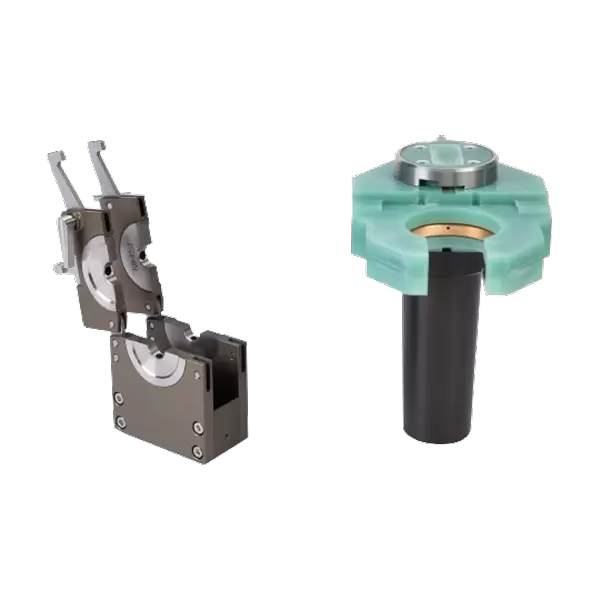
Shielding gas protects the weld pool from atmospheric contamination. Flow rate, type of gas, and delivery method are critical for accuracy. Inconsistent gas coverage can lead to oxidation, discoloration, or porosity. For stainless steel and similar alloys, high-purity argon or argon-helium mixtures are commonly used. Additionally, gas flow should be regulated to prevent turbulence, which can disturb the molten weld pool.
Orbital welding machines achieve precision only if the workpiece is stable and properly aligned. Custom fixtures or clamps should secure pipes or tubes to prevent movement during welding. Misalignment can lead to uneven weld penetration, incomplete fusion, or misoriented weld beads. Some machines also feature built-in alignment aids, such as laser guides or camera systems, to ensure perfect positioning.
Once the fundamentals are in place, operators can adopt specific techniques to maximize welding accuracy with orbital welding machines.
Many orbital welding machines allow operators to save welding profiles for specific materials, pipe diameters, and wall thicknesses. Pre-programmed profiles eliminate guesswork, reduce setup time, and ensure consistent parameters across multiple welds. Operators should adjust profiles only after thorough testing and validation.
Excessive heat can cause warping, burn-through, or distortion, while insufficient heat may result in incomplete fusion. Orbital welding machines can control heat input precisely by regulating current, voltage, and travel speed. Monitoring heat input ensures uniform weld penetration and minimizes metallurgical defects.
For stainless steel or high-alloy materials, back purging with inert gas is essential to protect the root side of the weld. Back purging prevents oxidation, maintains corrosion resistance, and ensures a clean, accurate weld. Proper purge volume and duration are critical and should match the pipe size and material specification.
Advanced orbital welding machines include real-time monitoring features such as arc sensors, current feedback, and weld tracking. These systems detect deviations from programmed parameters and allow immediate correction. Operators should continuously monitor the welding process to prevent errors before they become defects.
A well-maintained orbital welding machine performs more accurately and reliably. Routine maintenance includes checking cables, electrode holders, bearings, and electronic controls. Replacing worn components, cleaning optical sensors, and recalibrating the machine ensure consistent performance over time.
Certain industries demand near-perfect welds, making orbital welding machines indispensable:
Aerospace: High-precision tube assemblies in aircraft require consistent, defect-free welds to meet stringent safety standards.
Pharmaceutical and Food Processing: Sanitary piping systems require smooth, contamination-free welds. Orbital welding minimizes crevices where bacteria could accumulate.
Semiconductor Manufacturing: Ultra-high purity gas and fluid delivery systems require precise, leak-free welds.
Nuclear Industry: Pipes and vessels for nuclear applications require exact welding to meet regulatory and safety standards.
In these industries, even minor deviations in weld accuracy can result in system failure, product recalls, or safety hazards. Orbital welding machines offer the control and repeatability necessary to meet these demands.
While orbital welding machines automate much of the welding process, skilled operators are essential for achieving maximum accuracy. Training programs should cover:
Understanding machine functions and software controls
Interpreting welding parameters and adjusting profiles
Performing material preparation and fixture setup
Troubleshooting weld defects and machine errors
Experienced operators can combine technical knowledge with machine automation to achieve welds that are both precise and reliable.
Increasing welding accuracy with orbital welding machines is a combination of machine capability, proper setup, and operator expertise. By focusing on calibration, electrode selection, material preparation, shielding gas control, and precise fixturing, manufacturers can achieve consistent, high-quality welds. Advanced techniques such as pre-programmed profiles, heat input control, back purging, and real-time monitoring further enhance weld precision.
In industries where precision is non-negotiable, orbital welding machines are invaluable. Investing in the right equipment, maintaining it properly, and training skilled operators ensures that each weld meets the highest standards of quality and accuracy. By implementing these best practices, companies can reduce defects, improve efficiency, and maintain a competitive edge in manufacturing.

Mr. Jeff Huang
15251441199
Miss Doria Zhu
15102105304
Miss Jina Wang
18261592800








 Language
 Back
Back Prev
Prev
 Next
Next
 Mar 11,2025
 Leave a Message