


In modern industrial piping projects, achieving accurate and consistent weld preparation is essential for producing strong, reliable, and high-quality pipe connections. Whether working in power generation, oil and gas processing, shipbuilding, chemical plants, or pipeline construction, welding quality depends heavily on the condition of the pipe ends before welding begins. A properly prepared bevel helps create the correct groove geometry, improves weld penetration, and reduces the likelihood of defects during the welding process. This is where a portable pipe beveling machine becomes an important tool for professional pipe fabrication and installation.
Unlike conventional stationary beveling equipment, portable pipe beveling machines are designed to perform pipe-end preparation directly at the job site or in confined working environments. Their compact structure, flexible installation methods, and ability to machine different pipe sizes make them particularly useful for projects where transporting pipes to a central workshop is impractical. For contractors and fabrication teams that require consistent welding preparation, a portable pipe beveling machine offers an efficient way to improve machining accuracy while reducing unnecessary handling and preparation time.
Understanding how portable pipe beveling machines work, what features influence their performance, and how to select the right equipment can help businesses achieve better welding results and more efficient piping operations.
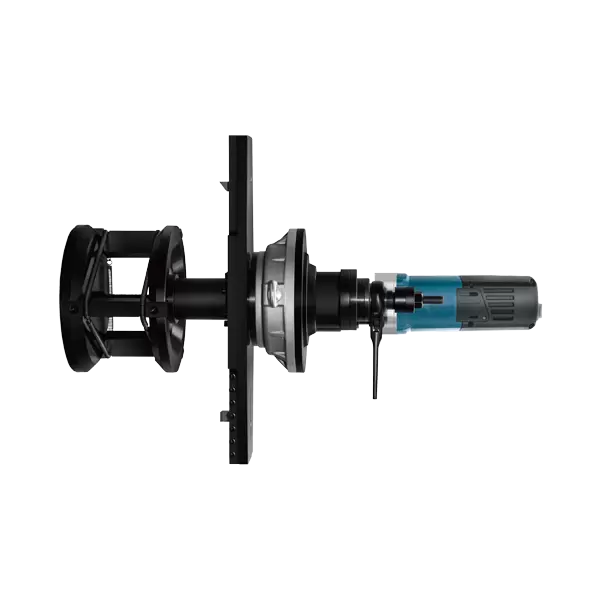
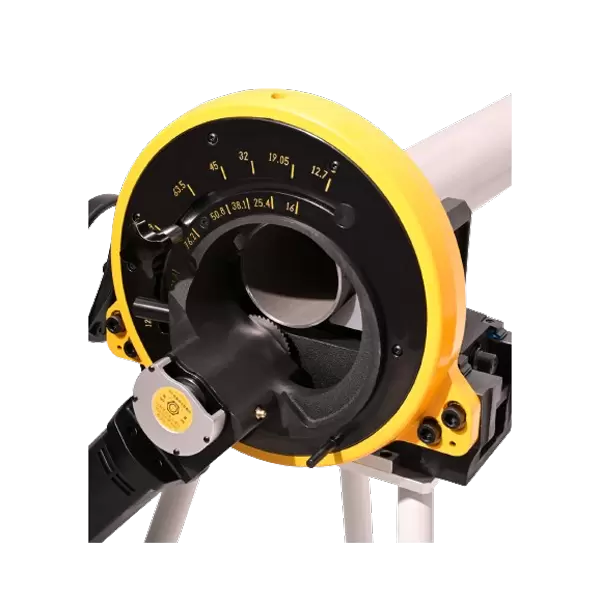
A portable pipe beveling machine is a specialized machining tool used to prepare the ends of metal pipes before welding. It removes material from the pipe edge at a specified angle, creating a beveled surface that allows welders to form a suitable joint between two pipe sections.
The beveling process is particularly important when welding thick-wall pipes. Without proper edge preparation, achieving sufficient weld penetration can be difficult. A correctly machined bevel provides the necessary groove space for welding materials to fill the joint, helping create a strong connection throughout the pipe wall.
Portable pipe beveling machines differ from large stationary beveling systems in their mobility and installation flexibility. Rather than requiring pipes to be transported to a fixed production line, portable equipment can be brought directly to the workpiece.
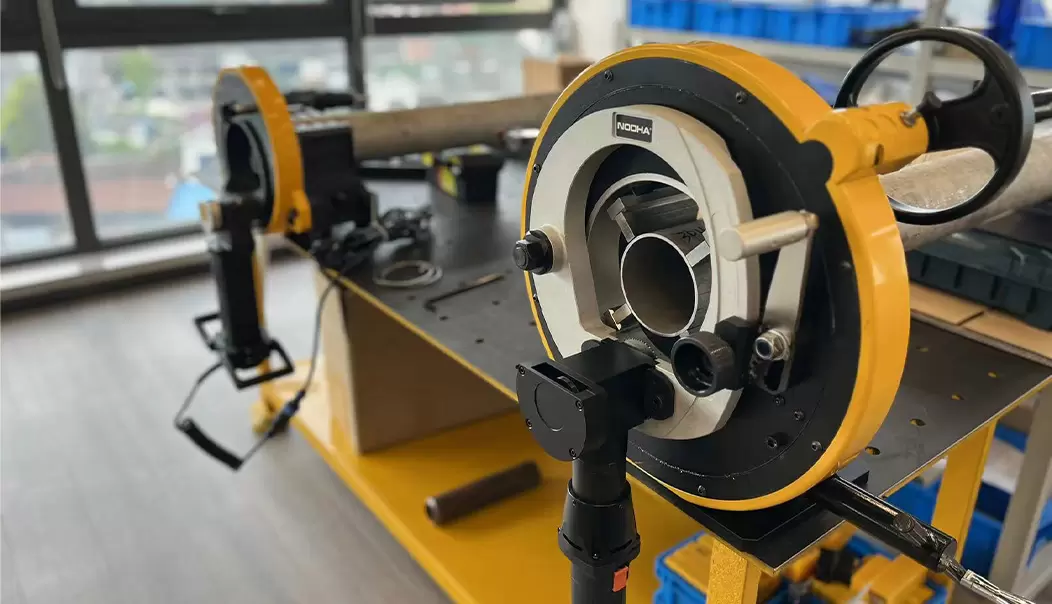
Depending on the machine design, it may be installed inside or outside the pipe. Some models use internal clamping mechanisms to secure the equipment, while others employ external clamping systems to hold the machine firmly around the pipe.
Common machining operations include:
Single-angle beveling: Creates a standard angled edge for conventional butt welding.
Compound beveling: Produces more complex edge profiles for specific welding requirements.
Facing: Removes irregularities from the pipe end to create a flat and even surface.
Counterboring: Machines the internal edge of the pipe to achieve the required joint geometry.
J-preparation: Creates a J-shaped groove profile for applications requiring specialized weld preparation.
The specific operations available depend on the machine configuration, tooling, and machining capacity.
Precision welding begins long before the welding torch or equipment is switched on. The geometry and surface condition of the pipe ends directly influence how effectively a weld can be completed.
Proper bevel geometry creates sufficient space for welding materials to enter the joint. This is particularly important for thick-wall pipes, where welding directly against square-cut edges may make complete penetration more difficult.
A consistent bevel angle and root face help welders maintain the required joint configuration, supporting more uniform weld penetration.
Poorly prepared pipe ends can contribute to several welding problems, including incomplete fusion, lack of penetration, excessive weld material, and inconsistent joint formation.
Using precision pipe beveling machines helps establish more consistent edge profiles before welding begins. Although beveling alone cannot eliminate welding defects, accurate preparation reduces one important source of variation.
In industrial piping systems, multiple pipe sections often need to be connected under the same welding specifications.
Manual grinding and cutting can produce variations in bevel angles, root faces, and surface finishes. These differences may affect welding procedures and inspection results.
A portable pipe beveling machine provides controlled machining, helping operators maintain repeatable bevel dimensions across multiple workpieces.
Properly prepared pipe ends are easier to align and fit together. This can reduce adjustments during assembly and help welding teams maintain a more predictable workflow.
For projects involving numerous pipe connections, improving preparation consistency can make a noticeable difference in overall fabrication efficiency.
Portable pipe beveling equipment offers several practical advantages for industrial fabrication and on-site installation.
One of the biggest benefits of portable pipe beveling machines is their ability to operate close to the actual installation location.
In pipeline construction, power stations, and large industrial facilities, moving long or heavy pipes to a workshop can require additional labor, lifting equipment, and transportation arrangements.
Portable equipment eliminates much of this unnecessary movement. Operators can bring the machine to the pipe and complete the required preparation directly at the installation site.
This flexibility is especially useful when working with existing piping systems that cannot easily be dismantled.
Precision is essential when preparing pipe ends for welding. Even relatively small variations in bevel geometry can affect joint fit-up and welding conditions.
Professional portable pipe beveling machines use controlled cutting mechanisms and suitable tooling to achieve consistent machining results.
The final accuracy depends on several factors, including machine rigidity, clamping stability, cutting tool condition, operator technique, and pipe material.
Selecting equipment with a stable structure and reliable positioning mechanism helps maintain machining consistency.
Traditional pipe-end preparation often involves manual cutting, grinding, and repeated measurements. Although these methods may be suitable for occasional work, they can become time-consuming when processing multiple pipes.
Portable pipe beveling machines automate much of the edge preparation process.
This reduces dependence on manual grinding and helps operators achieve more uniform results with less repetitive effort. It can also reduce excessive material removal caused by inconsistent manual operations.
Industrial piping systems are manufactured from various materials depending on operating conditions and application requirements.
Common materials include:
Carbon steel
Stainless steel
Alloy steel
Duplex stainless steel
Certain copper-based alloys
Other machinable metal materials
However, not every pipe beveling machine is suitable for every material. Cutting speed, tool geometry, machining force, and insert selection must be matched to the workpiece.
For example, stainless steel may require different cutting conditions from ordinary carbon steel because of its work-hardening characteristics.
Compared with large stationary pipe preparation equipment, portable models are generally easier to transport between working areas.
Their compact construction is particularly valuable for maintenance teams, field service contractors, and companies working across multiple project locations.
Depending on the machine type, installation may require only a suitable power source, appropriate clamping arrangements, and basic tool setup.
Portable pipe beveling machines are used across a wide range of industries where metal pipes require accurate edge preparation before welding.
Pipeline projects involve extensive pipe connections, often using thick-wall steel pipes that require carefully controlled bevel preparation.
A portable pipe beveling machine allows contractors to prepare pipe ends directly at the construction site, reducing the need to transport individual sections to a central workshop.
Consistent bevel geometry also helps welding teams maintain established joint preparation procedures throughout the project.
Power plants use complex piping systems to transport steam, water, fuel, and other process media.
These systems may operate under high temperatures and pressures, making welding quality and joint preparation particularly important.
Portable pipe beveling equipment is useful during new installations, equipment upgrades, and scheduled maintenance activities.
Chemical processing facilities frequently use stainless steel, alloy steel, and other specialized piping materials.
Proper pipe-end preparation helps ensure that welded joints meet the required fabrication specifications.
Portable beveling machines are especially useful when modifying existing pipe networks or installing replacement sections in restricted working areas.
Shipbuilding involves extensive piping systems for cooling, fuel supply, drainage, and other onboard applications.
The limited space inside ships can make the transportation and positioning of large stationary equipment difficult.
Compact pipe beveling machines provide a practical alternative for preparing pipe ends during installation and repair operations.
Existing piping systems often require replacement sections, localized modifications, or emergency repairs.
In these situations, dismantling an entire pipe assembly simply to prepare one pipe end may be impractical.
Portable pipe beveling equipment allows maintenance personnel to perform machining close to the work area, helping simplify repair procedures.
Choosing suitable pipe beveling equipment requires more than comparing machine dimensions or motor specifications. Buyers should evaluate the machining requirements, work environment, and long-term operating needs.
The first consideration is the outside or inside diameter range supported by the machine.
Different projects may involve small-diameter process pipes, medium-sized industrial pipelines, or large-diameter transmission pipes.
Before purchasing, confirm:
Minimum and maximum applicable pipe diameter.
Compatible pipe wall thickness.
Internal or external mounting requirements.
Clamping range and adjustment method.
A machine that cannot securely fit the workpiece may produce unstable machining results.
Pipe wall thickness directly affects machining requirements.
Thick-wall pipes generally require more substantial material removal and may place greater loads on the cutting system.
Buyers should check the machine's maximum machining capacity and confirm whether it can perform the required beveling operations without exceeding its design limitations.
For projects involving several wall thicknesses, selecting equipment with sufficient machining capacity can provide greater flexibility.
Different welding procedures require different edge preparation geometries.
Common bevel angles include 30°, 37.5°, and 45°, although the actual requirements depend on the applicable welding procedure and joint design.
Some pipe beveling machines support adjustable cutting angles, while others are designed for specific configurations.
Buyers should confirm whether the equipment can produce the required bevel profile and maintain consistent dimensions throughout the machining process.
Electric and pneumatic models each offer different operating characteristics.
Consider the available power supply, working environment, expected operating hours, and required machining performance.
For example, a construction site with a reliable electrical supply may favor an electric machine, while a facility with an established compressed-air system may consider pneumatic equipment.
The most suitable option is the one that matches the actual working conditions rather than simply the highest rated power.
Clamping stability has a direct influence on machining accuracy.
If a machine moves or vibrates excessively during cutting, the resulting bevel may become uneven.
Important design considerations include:
Clamping mechanism strength.
Machine body rigidity.
Alignment and centering arrangements.
Resistance to machining vibration.
Ease of installation and removal.
A stable machine helps maintain consistent cutting conditions and improves operator confidence.
Cutting tools are essential components of any pipe beveling system.
Different pipe materials and machining requirements may call for different cutting inserts, tool geometries, and cutting conditions.
Before purchasing, ask about available tooling options, replacement insert availability, tool life, and maintenance requirements.
Equipment that supports readily available replacement tools can help reduce interruptions during long-term operation.
The main purpose of portable pipe beveling equipment is to bring machining capabilities closer to the workpiece.
However, portability involves more than machine weight.
Consider the following:
Overall machine dimensions.
Installation and removal procedures.
Accessibility around the pipe.
Transportation between job sites.
Operator requirements.
Availability of suitable power or compressed air.
For maintenance operations in restricted environments, compact dimensions and straightforward installation can be particularly important.
Even high-quality equipment requires correct operation to achieve reliable results. Following suitable preparation and machining procedures can improve both safety and performance.
Check the pipe end for deformation, excessive corrosion, cracks, and surface contamination.
Remove loose scale, oil, dirt, and other materials that may interfere with clamping or machining.
The pipe should also be positioned securely to prevent movement during the operation.
Follow the manufacturer's installation instructions when mounting the machine.
For internal-mounted models, ensure that the clamping system engages the pipe wall evenly. For external-mounted models, verify that the machine is properly aligned with the pipe centerline.
Incorrect installation can result in uneven bevel geometry, unnecessary vibration, or damage to the equipment.
Cutting speed and feed rate should be adjusted according to the pipe material, wall thickness, tooling, and machine specifications.
Excessively aggressive cutting conditions may increase tool wear and vibration, while unsuitable cutting speeds can affect surface finish.
Operators should follow the manufacturer's recommended parameters and avoid exceeding the machine's rated capacity.
During operation, pay attention to unusual noise, vibration, cutting resistance, and changes in machine movement.
If abnormal conditions occur, stop the equipment and identify the cause before continuing.
Regular monitoring helps prevent unnecessary tool damage and supports consistent machining quality.
After machining, check the bevel angle, root face, surface condition, and overall joint geometry.
Use appropriate measuring tools to confirm that the prepared edge meets the relevant welding procedure requirements.
If necessary, make adjustments before the pipe proceeds to fit-up and welding.
Regular maintenance helps portable pipe beveling machines maintain reliable performance over extended operating periods.
Metal chips, dust, and cutting residue can accumulate around moving components and clamping mechanisms.
Remove these materials after machining and keep the machine clean, particularly around areas that influence positioning and movement.
Dull or damaged cutting inserts can increase machining resistance and reduce surface quality.
Check cutting edges for wear, chipping, and deformation. Replace damaged tools according to the manufacturer's recommendations.
Inspect gears, bearings, guide mechanisms, and other moving components for abnormal wear or looseness.
Lubricate components according to the maintenance schedule specified by the equipment manufacturer.
For electric machines, inspect power cables, connectors, switches, and motor components.
For pneumatic equipment, check air hoses, fittings, filters, and pressure conditions.
Maintaining the drive system helps reduce unexpected operating interruptions.
When the machine is not in use, store it in a clean and dry environment.
Protect exposed machining surfaces and accessories from moisture, dust, and impact. Proper storage is particularly important for portable equipment that frequently moves between project locations.
Some machining problems are caused not by equipment limitations but by improper setup or operation.
Choosing a machine without checking pipe specifications: Purchasing equipment based only on general diameter compatibility may lead to problems when actual wall thickness or material requirements differ.
Ignoring clamping alignment: Incorrect centering can produce inconsistent bevel dimensions and uneven cutting.
Using worn cutting inserts: Dull tooling increases cutting resistance and may negatively affect surface finish.
Applying unsuitable cutting parameters: Excessive feed rates or inappropriate cutting speeds can increase vibration and accelerate tool wear.
Skipping final inspection: A visually acceptable bevel does not necessarily meet the required welding preparation dimensions. Proper measurement is essential.
Avoiding these mistakes helps improve machining consistency and reduces the need for additional edge correction before welding.
Precision pipe-end preparation is a fundamental part of reliable welding, particularly in industrial applications involving thick-wall pipes, complex piping networks, and demanding installation environments. A portable pipe beveling machine makes this process more flexible by bringing controlled machining directly to the workpiece. With suitable equipment, operators can achieve consistent bevel geometry, reduce manual grinding, simplify on-site preparation, and improve the efficiency of welding operations.
Selecting the right machine requires careful consideration of pipe dimensions, material compatibility, bevel requirements, drive system, clamping stability, and working conditions. Equally important are correct operating procedures and regular maintenance, which help maintain machining accuracy and extend equipment service life.
For companies involved in pipeline construction, industrial maintenance, and precision pipe fabrication, investing in suitable pipe beveling machines can contribute to more consistent preparation standards and smoother production workflows. NODHA provides pipe processing and beveling equipment solutions designed for industrial machining requirements, supporting professionals who need practical and reliable tools for pipe-end preparation across different working environments.

Mr. Jeff Huang
15251441199
Miss Doria Zhu
15102105304
Miss Jina Wang
18261592800








 Language

 Back
 Prev
 Next
 Jul 31,2025
 Leave a Message