


Choosing the right cutting equipment is an important decision for manufacturers that process metal tubes and pipes. In industries where consistent cutting quality, dimensional accuracy, and production efficiency are essential, an automatic orbital cutting machine can help streamline tube preparation and improve manufacturing consistency. However, not every machine is suitable for every production environment. Differences in tube materials, diameters, wall thicknesses, cutting requirements, and automation levels can significantly affect equipment performance.
Before investing in an automatic orbital cutting machine, manufacturers should evaluate their current production needs and future development plans. The right equipment should deliver reliable cutting results, integrate smoothly into existing workflows, and support the required production capacity without introducing unnecessary complexity.
This guide explains the key factors to consider when selecting an automatic orbital cutting machine for industrial production, from material compatibility and cutting accuracy to automation features, maintenance requirements, and supplier evaluation.
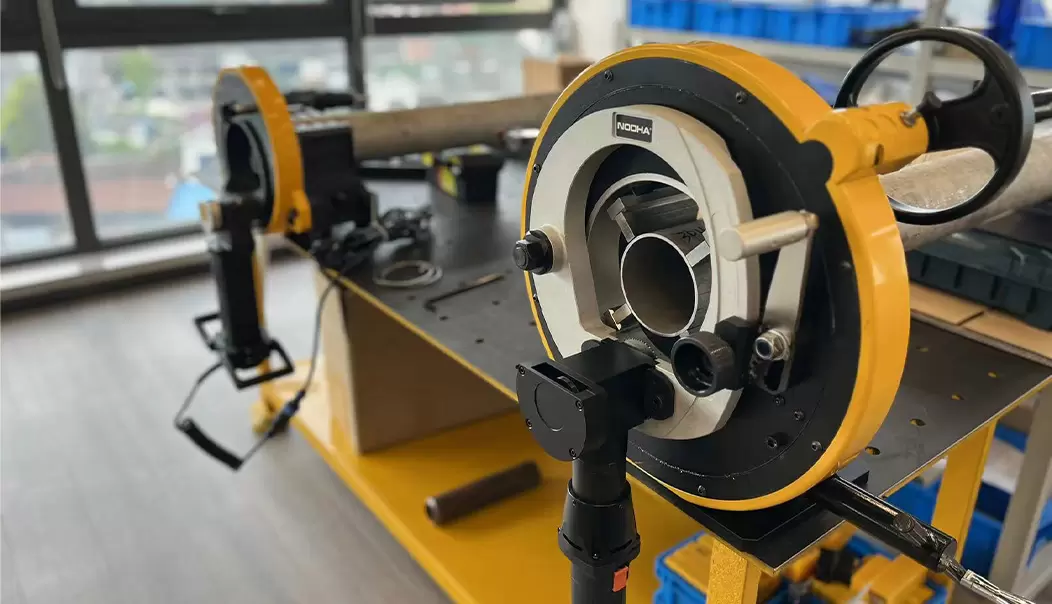
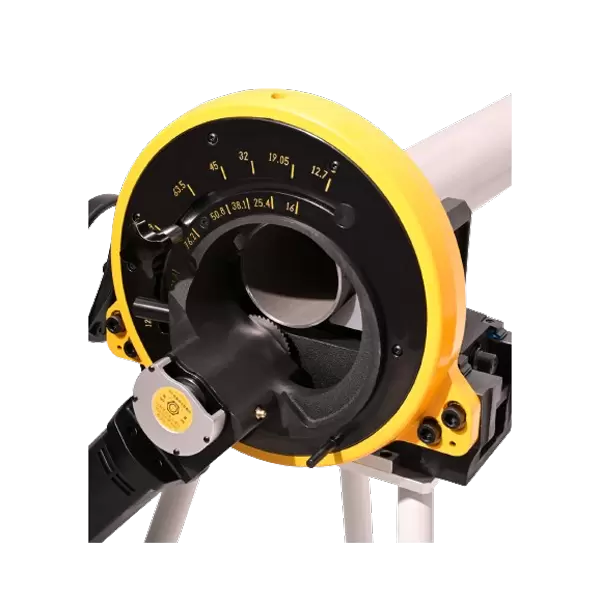
An automatic orbital cutting machine is designed to cut tubes or pipes through a controlled cutting process in which the cutting mechanism moves around the workpiece or follows an orbital path. Depending on the machine design, the tube may remain stationary while the cutting head rotates, or the cutting arrangement may use another configuration to achieve the required cut.
Unlike conventional cutting methods that rely primarily on manual positioning and operation, an automatic orbital cutting machine can incorporate programmed cutting parameters, controlled workpiece positioning, and automated cutting cycles. These features help reduce operator intervention and improve repeatability when processing multiple tubes to the same specifications.
The exact operating principle depends on the equipment type. Some orbital cutting systems are designed for cold cutting, while others use different cutting technologies. Buyers should therefore confirm the cutting method instead of assuming that every orbital cutting machine provides the same process capabilities.
For industrial production, understanding how the machine operates helps determine whether it is suitable for the required tube dimensions, material properties, and production volume. It also provides a foundation for comparing equipment specifications and evaluating the practical benefits of automation.
Material compatibility is one of the first considerations when choosing an automatic orbital cutting machine. Different materials have different mechanical properties, and these properties influence cutting forces, tool selection, heat generation, and the quality of the finished tube end.
Common materials processed in industrial tube manufacturing include stainless steel, carbon steel, aluminum, and copper. Some specialized production environments may also involve titanium or other high-performance alloys.
When evaluating an automatic orbital tube cutting machine, consider the following factors:
Material hardness: Harder materials may require specific cutting tools, suitable cutting parameters, and a machine with sufficient rigidity.
Wall thickness: Thin-wall tubes require controlled cutting conditions to minimize deformation, while thicker walls may require greater cutting capacity.
Material consistency: Variations in hardness, composition, or surface condition can affect cutting stability and tool life.
Surface requirements: Applications involving visible tube surfaces or precision assemblies may require particular attention to scratches, burrs, and edge quality.
Tool compatibility: The machine should support cutting tools appropriate for the materials used in your production process.
For example, manufacturers processing stainless steel tubing may prioritize clean edges, repeatable dimensions, and limited heat-related effects. Companies working with aluminum tubes may place greater emphasis on preventing surface damage and maintaining dimensional stability.
Before purchasing an industrial orbital cutting machine, prepare a list of all materials used in production. Ask the supplier to confirm compatibility and, where possible, conduct cutting tests using representative samples of your actual workpieces.
A machine's working range determines whether it can handle the tubes used in your production process. Selecting equipment based only on the most frequently processed tube size can create problems when new orders require different dimensions.
Review the manufacturer's specifications for minimum and maximum tube diameter, allowable wall thickness, and any restrictions related to specific materials. It is also important to understand whether the stated cutting range applies to every material or only to particular operating conditions.
Three dimensions deserve particular attention.
Tube outside diameter
The automatic orbital cutting machine must accommodate the full range of outside diameters required by your production schedule. If your factory processes several tube sizes, confirm whether the machine can switch between them quickly and whether additional fixtures or tooling are needed.
Wall thickness
The maximum supported wall thickness should be evaluated alongside the tube material and cutting method. A machine that can handle a particular outside diameter may not necessarily process every wall thickness within that diameter range.
Tube length and workpiece handling
Consider the length of the incoming tubes, the required finished lengths, and the available space for loading and unloading. Long workpieces may require additional supports, while short components may need specialized positioning or clamping arrangements.
When comparing automatic orbital cutting machines, do not rely solely on a headline specification. Ask the supplier to confirm the complete operating range for your specific tube materials, diameters, and wall thicknesses.
Cutting accuracy is essential when tubes must fit precisely into subsequent manufacturing or assembly operations. Inaccurate cuts can lead to additional finishing work, assembly difficulties, material waste, and production delays.
When selecting an automatic orbital cutting machine for industrial production, distinguish between cutting length accuracy, cut-face quality, and repeatability.
Cutting length accuracy refers to how closely the finished tube length matches the target dimension. This is particularly important when components must fit into fixtures or assemblies with limited dimensional tolerance.
Cut-face quality concerns the condition of the tube end after cutting. Depending on the application, important characteristics may include squareness, burr formation, deformation, and surface condition.
Repeatability describes the machine's ability to produce consistent results across repeated cutting cycles. A machine may achieve a satisfactory result on a single workpiece but perform less consistently during extended production runs if workpiece positioning, tooling, or operating conditions vary.
To evaluate these factors, request actual test results rather than relying only on general claims about precision. If the application requires tight tolerances, specify the acceptable dimensional range and inspection method before testing.
It is also worth examining the machine's clamping system. Secure, consistent clamping helps prevent tube movement during cutting and can contribute to more reliable results.
A well-matched automatic orbital cutting machine should meet the quality requirements of the finished component while maintaining stable performance under normal production conditions.
Automation is one of the main reasons manufacturers consider upgrading their tube-cutting equipment. However, the appropriate level of automation depends on production volume, product variety, labor availability, and the complexity of the manufacturing process.
A fully automated solution may be advantageous for repetitive, high-volume production, while a more flexible machine may be preferable for facilities handling frequent product changes and smaller batches.
Before choosing an automatic orbital cutting machine, consider the following automation features.
Automatic tube feeding reduces the need for operators to load each workpiece manually. An automated positioning system can move the tube to a programmed cutting length, helping maintain consistency across production batches.
When assessing these functions, confirm the supported tube lengths, positioning accuracy, and compatibility with the materials and dimensions used in your factory.
Programmable controls allow operators to save and reuse settings for recurring jobs. Depending on the machine, these may include cutting length, feed settings, cutting speed, or other process parameters.
Stored programs can reduce setup time when switching between established production tasks. They can also help standardize operating procedures across different shifts.
For high-volume production, unloading and collecting finished pieces can become a bottleneck even when cutting itself is fast. Automated discharge systems, collection conveyors, or other material-handling arrangements may help keep the production line moving.
If the cutting machine will operate as part of a larger manufacturing line, assess its compatibility with upstream feeding systems, downstream processing equipment, production control systems, and safety interlocks.
Automation should improve the overall workflow rather than simply increase the number of automated functions. A practical solution balances cutting performance, operator involvement, setup time, and the handling of finished parts.
A high cutting speed does not automatically translate into higher factory output. The total production cycle includes several activities beyond the cutting operation itself.
These may include loading the tube, positioning the workpiece, clamping, cutting, releasing the tube, unloading the finished component, and preparing for the next cycle. For facilities that process multiple product types, changeover time can also have a substantial effect on output.
When comparing an automatic orbital cutting machine with alternative equipment, ask suppliers to provide cycle-time estimates for representative workpieces. Ideally, these estimates should reflect the actual material, outside diameter, wall thickness, and target cutting quality.
You should also consider:
The time required to change tooling or fixtures.
The number of operators needed during normal production.
The time required to adjust cutting parameters between product batches.
The machine's ability to maintain performance during extended operating periods.
The impact of material loading and finished-part handling on total throughput.
For example, a machine that completes each cut quickly but requires frequent manual repositioning may offer less overall productivity than a system with a slightly longer cutting cycle and more efficient material handling.
Manufacturers should evaluate production efficiency at the process level, not simply by comparing the advertised cutting speed of different machines.
A reliable clamping system is essential for controlling tube movement during cutting. If the workpiece shifts, rotates unexpectedly, or becomes deformed, the resulting cut may not meet the required dimensional or quality standards.
When choosing an automatic orbital pipe cutting machine, examine how the tube is supported and secured throughout the cutting cycle.
The clamping arrangement should suit the range of tube diameters and wall thicknesses being processed. Thin-wall tubes may require careful control of clamping force to prevent deformation, while heavier workpieces may need more substantial support to maintain stability.
Also consider whether the machine uses adjustable fixtures, interchangeable clamping components, or dedicated tooling for different workpiece geometries.
Workpiece handling becomes particularly important when processing long tubes or operating at high production volumes. Poorly supported tubes can introduce positioning inconsistencies and make loading more difficult for operators.
If your production includes frequent changes in tube size, ask the supplier how much time is required to adjust the clamping system. Quick, repeatable changeovers can improve equipment utilization and reduce the likelihood of setup errors.
A practical evaluation should include testing representative workpieces under normal operating conditions, with particular attention to positioning stability and the condition of the finished tube ends.
An automatic orbital cutting machine should be easy for operators to set up, monitor, and adjust. An unnecessarily complicated control system can increase training requirements and make routine production less efficient.
When reviewing the control interface, consider whether operators can enter cutting dimensions, select stored programs, monitor machine status, and identify alarms without excessive manual intervention.
A clear interface is especially valuable for manufacturers that process multiple product specifications. If the equipment supports recipe storage, operators may be able to retrieve validated settings for recurring jobs instead of entering parameters from scratch each time.
Other useful features may include:
Clear display of operating status and machine alarms.
Access controls for important parameter changes.
Diagnostic information for troubleshooting.
Production counters or cycle records.
Communication functions for integration with factory systems, where required.
The exact functions available will vary by machine model. Buyers should verify them against actual production needs rather than treating every advanced control feature as essential.
Training and documentation also deserve attention. Ask whether the supplier provides operating instructions, maintenance guidance, troubleshooting procedures, and technical training for relevant personnel.
An accessible control system can make it easier to standardize operating practices, reduce setup errors, and support consistent production across shifts.
The initial purchase price is only one part of the cost of operating an automatic orbital cutting machine. Maintenance, tooling, consumables, downtime, and operator training can all affect the equipment's long-term economic value.
Before making a purchasing decision, ask the manufacturer about routine inspection requirements, recommended maintenance intervals, and the expected service life of key components under suitable operating conditions.
Pay particular attention to cutting tools and other wear components. Their replacement frequency may depend on the material being processed, cutting parameters, production volume, and maintenance practices.
A useful maintenance assessment should cover:
Routine servicing: Determine which components require regular cleaning, lubrication, inspection, or adjustment.
Tool replacement: Understand the replacement procedure, tooling availability, and whether changing tools requires specialized skills.
Spare parts: Check the availability of commonly required components and the supplier's process for providing replacements.
Troubleshooting: Find out whether operators can identify common problems using the machine's diagnostic functions and technical documentation.
Technical support: Confirm how the supplier handles equipment faults, remote assistance, and on-site service when necessary.
A machine that is straightforward to maintain can reduce interruptions and make maintenance planning easier. However, maintenance simplicity should never replace the need to meet the required cutting quality and production capacity.
When comparing different automatic orbital cutting machines, estimate operating costs over a realistic service period and consider how downtime could affect delivery commitments.
Safety must be considered before installing any industrial cutting equipment. An automatic orbital cutting machine may involve rotating mechanisms, sharp cutting tools, powered clamping systems, and moving workpieces. The risks depend on the machine design and the surrounding production environment.
Buyers should review the manufacturer's documented safety provisions and determine whether the machine is appropriate for the intended workplace.
Depending on the equipment design and applicable regulations, relevant features may include protective guards, interlocked access doors, emergency stops, and controls designed to prevent unintended operation.
It is also important to assess how operators load materials, remove finished tubes, clear jams, and perform routine maintenance. Safety arrangements should account for these tasks rather than focusing only on the cutting cycle.
Before purchasing, verify the documentation and conformity requirements applicable to the destination market. Installation, electrical connections, compressed-air systems where applicable, and integration with existing production lines should also be reviewed by qualified personnel.
A suitable machine should support efficient production while allowing operators and maintenance staff to work according to established safety procedures.
Selecting the right equipment involves evaluating both the machine and the supplier behind it. A manufacturer with relevant technical experience may be better positioned to help you match the equipment configuration to your actual production requirements.
When evaluating automatic orbital cutting machine manufacturers, look beyond general product descriptions and promotional claims.
Start by reviewing the supplier's experience with the materials and tube dimensions relevant to your application. Ask whether the manufacturer can provide technical documentation, detailed machine specifications, and examples of comparable applications.
It is also useful to assess the supplier's ability to support equipment customization. Depending on your production requirements, you may need a particular clamping arrangement, feeding configuration, cutting range, control function, or connection to an existing line.
Before placing an order, clarify the following points:
Which tube materials and dimensions can the proposed machine process?
What cutting accuracy and repeatability can be demonstrated under specified conditions?
What functions are included in the standard configuration?
Which accessories or additional systems are required?
What training, warranty, and technical support are available?
What are the expected delivery, installation, and commissioning arrangements?
If possible, arrange a sample cutting test using your own workpieces. This allows your technical team to inspect the finished cuts, observe the operating process, and discuss any limitations before committing to the equipment.
A supplier that understands your manufacturing requirements can help reduce the risk of purchasing a machine that performs well under general conditions but does not suit your specific application.
The most suitable automatic orbital cutting machine is not necessarily the one with the lowest purchase price. Manufacturers should consider the full cost of acquiring, operating, maintaining, and eventually upgrading the equipment.
Total cost of ownership may include the machine itself, transportation, installation, operator training, tooling, consumables, energy consumption, maintenance, and production downtime.
Labor requirements and material waste should also be considered when comparing equipment configurations. An automated system may require a larger initial investment but could reduce repetitive manual tasks or improve consistency in a high-volume environment. Whether these benefits justify the investment depends on actual production conditions.
To make a meaningful comparison, estimate the following:
Expected annual production volume.
Average production cycle time for representative workpieces.
Setup and changeover time between product types.
Routine maintenance and tooling expenses.
Expected downtime and its impact on production schedules.
Potential reductions in scrap, rework, or manual handling.
Use realistic operating assumptions rather than relying solely on theoretical machine capacity. If the machine will process several types of tubes, calculate performance for the main product groups separately.
A structured cost assessment makes it easier to compare different automatic orbital cutting machines and identify the configuration that offers the best balance between production requirements, operating costs, and long-term flexibility.
Ultimately, choosing the right automatic orbital cutting machine means finding a solution that matches your production requirements, improves cutting consistency, and supports long-term operational efficiency. By carefully evaluating cutting performance, automation capabilities, material compatibility, and maintenance needs, manufacturers can make a more confident investment decision. With its focus on industrial cutting equipment and tube processing solutions, NODHA can be considered when exploring equipment options for different manufacturing applications. Working with an experienced supplier helps ensure that your selected machine aligns with your production goals and delivers reliable performance as your business grows.

Mr. Jeff Huang
15251441199
Miss Doria Zhu
15102105304
Miss Jina Wang
18261592800








 Language

 Back
 Prev
 Next

 Mar 28,2025

 Leave a Message