


Motor power is one of the most important specifications to consider when selecting an orbital cutting machine, but it is also one of the specifications that is easiest to misunderstand. A higher wattage does not automatically mean faster cutting, better accuracy, or higher productivity in every application. Instead, motor power determines how much capacity the machine has to maintain stable cutting performance when the blade encounters resistance from the pipe material.
This becomes particularly important when processing stainless steel tubes and pipes with different diameters and wall thicknesses. Thin-wall tubing may require relatively moderate cutting force, while thicker-wall stainless steel pipes place a greater load on the blade and motor. In these applications, having sufficient motor power can help maintain stable blade rotation and consistent cutting performance.
Understanding how motor power affects an orbital cutting machine can therefore help buyers choose equipment that matches their actual production requirements rather than simply selecting the highest-rated model.
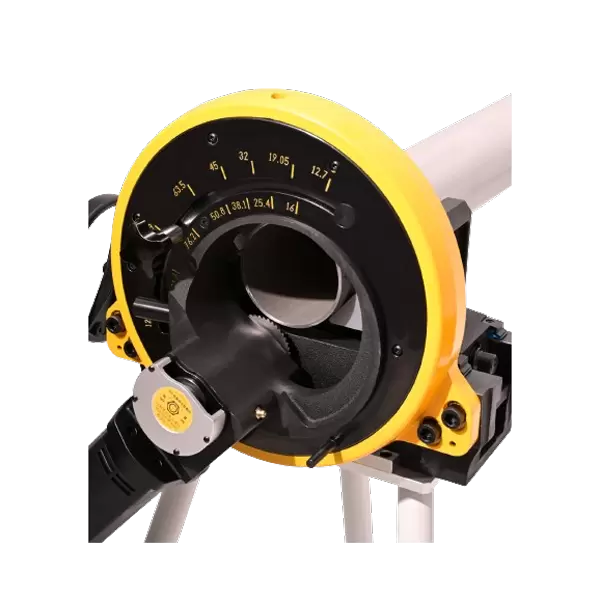
Motor power refers to the amount of mechanical energy that the drive motor can deliver to the cutting mechanism. It is commonly expressed in watts (W) or kilowatts (kW).
In an orbital cutting machine, the motor drives the cutting system while the cutting head or blade moves around the workpiece. Unlike conventional straight-cutting equipment, an orbital cutting machine is designed to create a circumferential cut around tubes or pipes while maintaining controlled movement.
The motor needs to provide sufficient torque and rotational speed to keep the cutting process stable. However, the actual power requirement depends on several factors, including:
For example, cutting a thin stainless steel tube does not require the same motor performance as cutting a thick-wall carbon steel pipe. This is why motor power should always be evaluated together with the machine's overall cutting capacity.
One of the most noticeable effects of motor power is its influence on cutting speed.
When the motor has sufficient power and torque, the cutting system can maintain stable movement under load. This allows the machine to operate at an appropriate cutting speed without significant loss of performance.
A more powerful motor can be particularly beneficial when processing:
However, motor power does not determine cutting speed by itself.
If the motor is powerful but the blade, transmission system, or machine structure is not designed for high-speed operation, simply increasing motor power will not necessarily make the orbital cutting machine faster.
The ideal configuration balances motor output with blade speed, feed rate, cutting geometry, and control accuracy.
For production environments, this balance is important because the goal is not simply to achieve the highest possible rotational speed. The goal is to achieve a consistent cutting cycle while maintaining acceptable edge quality and tool life.
Motor power is closely related to the cutting force available during operation.
When a cutting tool enters a material, it encounters resistance. Harder materials and thicker walls generally require greater cutting force. If the motor cannot provide enough torque, the cutting system may slow down when resistance increases.
This can lead to several problems.
First, the cutting process may become unstable. Second, the tool may experience increased stress. Third, the operator may need to reduce the feed rate to prevent the machine from stalling or overloading.
A properly sized motor provides sufficient torque to maintain stable cutting pressure even when the load changes.
This is particularly important for orbital pipe cutting machines used in industrial production. Pipes may have different wall thicknesses and material grades, so the motor must be capable of handling the expected range rather than only the easiest cutting condition.
Higher motor power can contribute to better cutting quality, but only when the machine is correctly designed around that power.
Cutting quality depends on several variables:
If an orbital cutting machine has enough motor power to maintain stable cutting pressure, the blade is less likely to slow down unexpectedly during the cut. This can help produce more consistent edges and reduce irregularities.
However, excessive power can also create challenges if the machine lacks adequate control.
For example, an overly aggressive cutting system may generate unnecessary vibration, accelerate tool wear, or make it more difficult to control the cutting process. Therefore, the objective should be controlled power, not simply maximum power.
When comparing motors, buyers often focus only on wattage. Torque deserves equal attention.
Motor power describes the rate at which work can be performed, while torque represents the rotational force available to drive the cutting mechanism.
For orbital cutting applications, torque is especially important when cutting materials with high resistance.
A motor with adequate torque can maintain stable blade movement when the cutting load increases. This is useful when an orbital cutting system is processing thick-wall pipe or harder metal alloys.
The relationship between speed and torque also matters. Depending on the motor and transmission design, increasing rotational speed can affect the available torque. A well-designed machine therefore uses the motor, gearbox, drive system, and cutting head as an integrated system.
This is one reason why two orbital cutting machines with similar motor power ratings can produce different real-world results.
Different materials create different levels of cutting resistance.
For example, aluminum is generally easier to cut than stainless steel. Carbon steel and alloy steel may require more cutting force depending on their thickness and mechanical properties.
Stainless steel deserves particular attention because it can generate substantial cutting resistance and heat during machining.
For applications involving stainless steel tubes, an orbital tube cutting machine needs adequate motor capacity to maintain stable cutting performance without excessive load on the drive system.
For thinner materials, a lower-power motor may be completely sufficient. In these cases, choosing an unnecessarily powerful machine may not provide a significant productivity advantage.
The best approach is to match motor capacity to the actual material range rather than assuming that maximum power is always the best option.
Wall thickness is another major factor affecting motor requirements.
Consider two pipes with the same outside diameter. One has a thin wall, while the other has a significantly thicker wall. Although their external dimensions are similar, the cutting resistance can be very different.
A thicker wall means that the cutting tool must remove or penetrate more material during each revolution. This increases the load on the motor and cutting mechanism.
As wall thickness increases, the machine may need:
Therefore, buyers should never evaluate an orbital cutting machine based only on maximum pipe diameter. The specified wall thickness range is equally important.
Large-diameter workpieces can also place additional demands on the drive system.
As the cutting diameter increases, the orbital cutting mechanism must travel around a larger circumference. Depending on the machine design, this can affect the required movement speed, torque, and overall cutting cycle.
For an orbital pipe cutting machine designed for larger workpieces, the motor should be matched with the mechanical structure and transmission system.
A high-power motor alone cannot compensate for an undersized drive mechanism or insufficient machine rigidity.
This is why professional buyers should examine the complete technical specification rather than focusing on one number in the product datasheet.
For manufacturers, motor power can also influence overall production efficiency.
If a machine is underpowered for the intended application, operators may need to reduce cutting speed to avoid overload. This increases cycle time and can reduce production capacity.
For example, a machine that requires significantly more time to complete each cut may become a bottleneck in a high-volume production line.
An appropriately powered orbital cutting machine can maintain a stable cutting cycle while reducing unnecessary interruptions.
However, production efficiency should be evaluated using the complete cutting cycle rather than motor power alone.
Important factors include:
A machine with slightly lower motor power but better automation and process control may outperform a higher-powered machine in actual production.
Generally, a higher-rated motor has the potential to consume more electrical energy, especially when operating under heavy loads. However, rated motor power should not be confused with actual energy consumption during every cutting cycle.
A motor does not necessarily operate continuously at its maximum rated output.
Energy consumption depends on:
Modern orbital cutting machines may use efficient motor and control systems to adjust performance according to operating conditions.
For manufacturers concerned about energy efficiency, it is therefore better to evaluate power consumption under realistic production conditions rather than comparing motor wattage alone.
Motor performance can also affect cutting tool life.
An underpowered motor may struggle to maintain stable cutting movement. When the cutting load fluctuates, the tool can experience uneven forces. This may contribute to premature wear.
On the other hand, excessive cutting force or overly aggressive operation can also shorten tool life.
The ideal situation is a stable cutting process in which the motor provides sufficient torque without forcing the blade to operate outside its intended conditions.
This makes proper motor sizing an important part of tool management.
A well-matched orbital cutting system can help manufacturers achieve a better balance between cutting speed, tool life, and production output.
Modern orbital cutting machines rely on more than mechanical power.
The control system determines how the motor responds to changing cutting conditions. Speed regulation, acceleration, feed control, and overload protection can all influence machine performance.
For example, a variable-speed drive can allow the machine to adjust motor speed according to different materials or workpiece sizes.
This flexibility is valuable for manufacturers that process multiple types of tubes or pipes.
Instead of operating the motor at one fixed setting, the machine can be configured for different cutting conditions. This helps improve process consistency and makes better use of the available motor capacity.
An undersized motor may cause several operational problems.
The operator may need to lower the feed rate to prevent motor overload.
When cutting resistance becomes too high, the motor may struggle to maintain movement.
Changes in motor speed under load can negatively affect cutting consistency.
An unstable cutting process can place additional stress on the blade and other components.
Longer cutting cycles can reduce overall production capacity.
For occasional light-duty cutting, these limitations may not be significant. For continuous industrial production, however, they can become costly.
Oversizing is generally less problematic than underpowering, but it is not always the most economical choice.
An excessively powerful motor may increase:
If the application involves thin-wall tubing and relatively soft materials, a very high-power motor may provide little practical benefit.
The better strategy is to select a motor with enough reserve capacity for the intended application without paying for unnecessary performance.
When selecting an orbital cutting machine, buyers should evaluate motor power alongside the following factors.
Determine whether the machine will cut stainless steel, carbon steel, aluminum, copper, or other materials.
Identify the largest tube or pipe diameter that the machine needs to process.
This is one of the most important specifications when determining the required cutting force.
A machine used for occasional fabrication may have different requirements from one operating continuously on a production line.
Consider the required cycle time and whether the machine can maintain the desired speed under actual load.
Blade type, diameter, tooth geometry, and material can all influence cutting resistance.
Motor power must be supported by an appropriately rigid frame, cutting head, and transmission system.
A precise control system can help the motor operate efficiently across different cutting conditions.
If the company expects to process thicker materials or larger pipes in the future, some additional motor capacity may be worthwhile.
Motor power is an important specification, but it should never be treated as the single indicator of orbital cutting machine performance.
A machine's real capability comes from the interaction between its motor, drive system, cutting head, blade, structure, controls, and workholding system.
For example, two machines may both use a 1,500 W motor but have very different cutting capabilities because of differences in transmission efficiency, blade design, control accuracy, and machine rigidity.
For buyers, this means that a complete technical evaluation is more useful than comparing motor ratings alone.
Ask the manufacturer about the recommended material range, maximum wall thickness, cutting diameter, rated cutting speed, continuous operating capability, and suitable tooling.
Different industries have different cutting requirements.
Tube manufacturers may prioritize high throughput and repeatability. Fabrication workshops may need flexibility across different materials and diameters. Construction-related applications may place greater emphasis on portability and ease of operation.
An orbital tube cutting machine intended for precision fabrication may therefore have a different motor configuration from a heavy-duty industrial orbital cutting system.
The right machine is the one that provides sufficient power for the actual workload while maintaining the required cutting accuracy and operational efficiency.
Motor power has a direct influence on the performance of orbital cutting machines, particularly when processing stainless steel tubes with different diameters and wall thicknesses. The right motor configuration can help maintain cutting speed, torque, stability, and consistent results under different operating conditions. However, higher power is not always better.
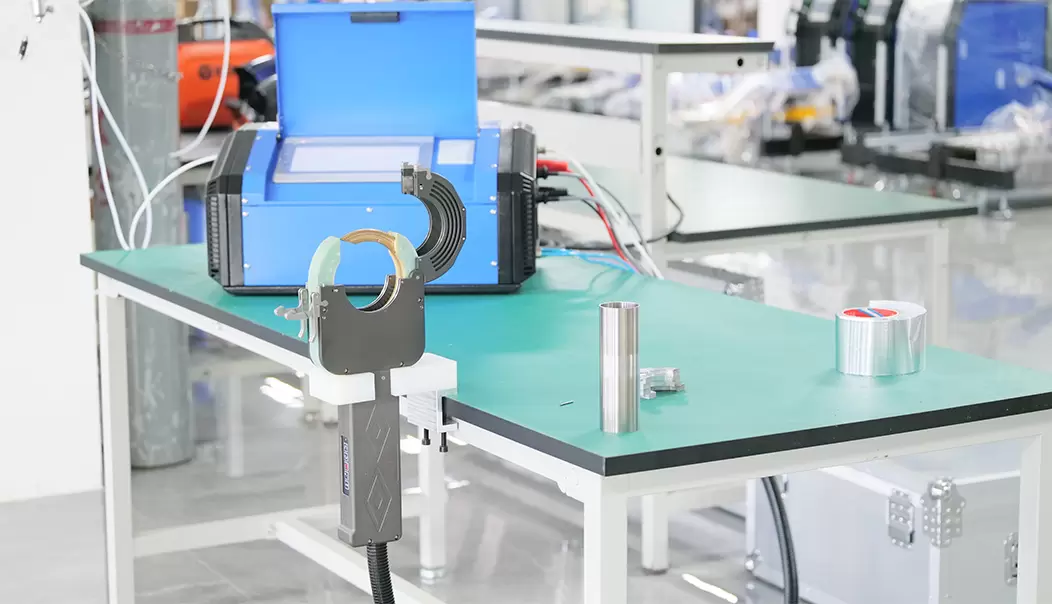
For manufacturers looking for different power options for stainless steel tube processing, NODHA provides second-generation orbital cutting technology with 1300W and customized 1500W brushless motor configurations. These options allow the machine to be matched to different application requirements while maintaining stable and efficient cutting performance. By selecting the appropriate motor configuration based on actual processing needs, manufacturers can achieve a practical balance between cutting capability, productivity, and equipment efficiency.

Mr. Jeff Huang
15251441199
Miss Doria Zhu
15102105304
Miss Jina Wang
18261592800








 Language
 Back
Back Prev
Prev
 Next
Next
 Feb 04,2026
 Leave a Message