


Cutting thicker-walled stainless steel pipes is more demanding than processing thin-wall tubing. As wall thickness increases, the cutting blade has to remove more material, which increases resistance and places a greater load on the motor and transmission system. For manufacturers and fabricators that regularly process stainless steel pipes, this raises an important question: can a 1500W orbital cutting machine provide enough power for thicker-wall applications?
In many cases, a 1500W configuration can provide the additional cutting capacity needed for thicker-walled stainless steel pipes. However, motor power alone does not determine the actual cutting capability of an orbital cutting machine. Pipe diameter, wall thickness, stainless steel grade, blade design, cutting speed, clamping stability, and machine construction all affect the result.
Understanding how these factors work together is important when selecting an orbital tube cutting machine for heavier stainless steel cutting applications.
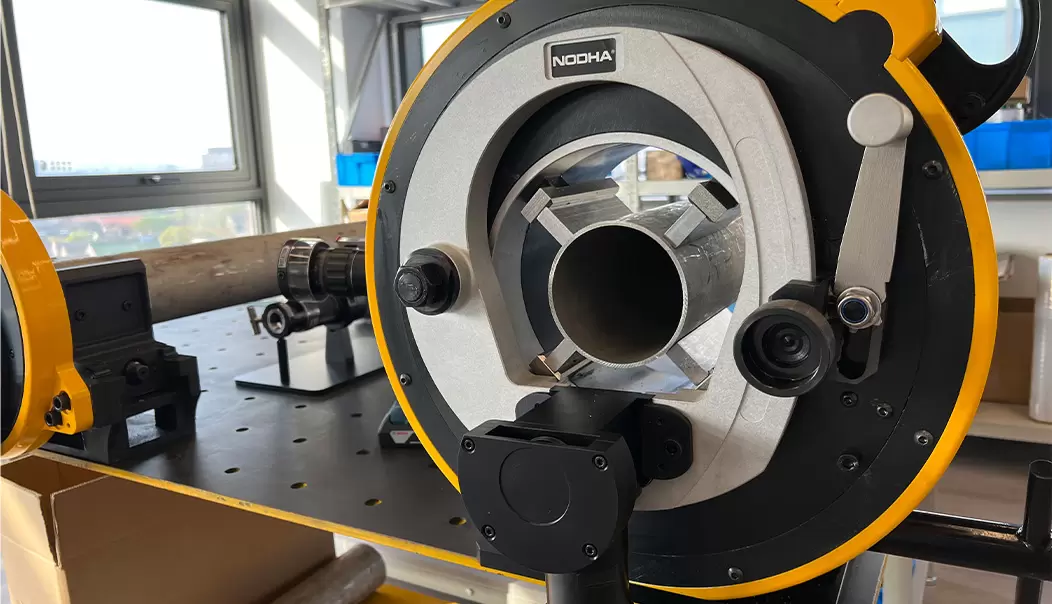
The basic cutting principle remains the same whether the pipe wall is thin or thick, but the cutting load changes significantly.
When an orbital cutting machine processes a thin-wall stainless steel tube, the blade passes through a relatively small amount of material. The cutting resistance is therefore comparatively low, allowing the motor to maintain blade rotation with less load.
A thicker-wall pipe presents a different situation.
The blade has to remain engaged with more stainless steel as it travels around the pipe. This increases the force required to maintain the cutting process. If the available motor power is insufficient, the blade may experience a greater reduction in rotational speed under load.
This can affect productivity and cut consistency.
Thicker-wall stainless steel pipe cutting therefore places greater demands on the entire cutting system, including:
Motor output
Transmission efficiency
Blade design
Cutting speed
Machine rigidity
Pipe clamping
Heat management
Blade wear resistance
This is why simply looking at the maximum pipe diameter of an orbital pipe cutting machine is not enough. A machine may accommodate a particular diameter while having a different practical capability depending on wall thickness.
In an orbital cutting machine, motor power directly affects the machine's ability to maintain stable cutting when the blade encounters resistance from the pipe wall. This becomes more important as stainless steel pipe wall thickness increases.
A 1500W motor provides a higher power output than a 1300W configuration, giving the cutting system greater capacity to handle increased resistance during the cutting process. When the blade is working through a thicker stainless steel wall, maintaining stable rotation is important for consistent material removal and controlled cutting.
However, the benefit of a 1500W motor should not be interpreted simply as “more power means faster cutting.” The available motor power needs to work together with the blade, transmission system, cutting speed, and machine structure. If these components are not properly matched, increasing motor power alone will not guarantee better cutting results.
For thicker-wall stainless steel pipes, the main advantage of a higher-power configuration is the additional operating capacity it provides when cutting loads increase. This can help the machine maintain more stable performance under demanding conditions compared with a lower-power configuration.
This is also why motor selection should be based on the actual application. A 1300W brushless motor may be sufficient for many thin-wall tube cutting applications, while a 1500W configuration becomes more relevant when thicker-wall stainless steel pipes require greater cutting capacity.
It is tempting to use wall thickness as the primary indicator when evaluating an orbital cutting machine for stainless steel pipe.
It is important, but it is not the only variable.
Consider two pipes with the same 5 mm wall thickness. One may have a relatively small outside diameter, while the other may have a much larger diameter. The cutting path and overall operating conditions are different.
Similarly, two pipes with the same dimensions may behave differently if they are made from different stainless steel grades.
For this reason, equipment selection should normally consider at least four basic parameters:
The pipe diameter determines the size of the cutting path and whether the machine can physically accommodate the workpiece.
Wall thickness directly affects the amount of material that the blade must cut through.
Different stainless steel grades can have different machining characteristics, affecting blade selection and cutting parameters.
A machine used for occasional cutting has different requirements from one operating continuously in a production environment.
These parameters should be evaluated together when selecting orbital cutting machines.
Motor power becomes increasingly important as cutting resistance increases.
During cutting, the motor needs to maintain the rotational movement of the blade despite resistance from the pipe wall. When the wall becomes thicker, the load placed on the cutting system increases.
A higher-power motor gives the machine more available capacity to handle this load.
This can provide several practical benefits.
First, the blade can maintain more stable operation when cutting resistance increases. Second, the machine has greater power capacity for applications where thicker material is processed. Third, the operator has more flexibility when selecting cutting parameters appropriate for heavier-wall pipe.
But power is only effective when the mechanical system can use it efficiently.
A poorly matched blade, unstable pipe clamping, or excessive feed pressure can still produce poor cutting results even when the machine has a 1500W motor.
This is why professional stainless steel pipe cutting should be viewed as a complete system rather than a simple motor-power comparison.
The choice between 1300W and 1500W should be based on the actual application.
A 1300W brushless motor may be appropriate for applications involving relatively light cutting loads, including many thin-wall stainless steel tube applications.
A 1500W configuration provides additional power for applications where cutting resistance is higher.
The difference becomes particularly relevant when the application involves thicker-wall stainless steel pipes or a wider range of pipe specifications.
Instead of asking which motor is universally better, consider the following:
1300W may be considered when:
The application mainly involves thin-wall tubing.
Cutting loads remain relatively moderate.
The required pipe range falls comfortably within the machine specification.
Maximum cutting power is not the primary requirement.
1500W may be considered when:
Thicker-wall stainless steel pipes are part of the production range.
Cutting resistance is higher.
The machine needs additional power capacity.
The application involves a broader range of stainless steel pipe specifications.
This application-based approach is more useful than choosing a motor solely because it has a higher wattage.
A powerful motor cannot compensate for an unsuitable cutting blade.
The blade is the component that directly engages with the stainless steel. Its tooth geometry, material, thickness, and design all influence how efficiently material can be removed.
For thin-wall tubing, blade selection may focus on producing a clean and controlled cut without excessive deformation.
For thicker-wall stainless steel pipes, the blade must also withstand a higher cutting load.
An appropriate blade can help transfer the motor's available power into the cutting process more efficiently.
Blade wear should also be considered. As a blade becomes dull, cutting resistance increases. The motor then has to work harder to maintain the cutting process.
For this reason, users evaluating an orbital tube cutting machine should look beyond motor wattage and ask what blade configurations are recommended for their actual stainless steel pipe specifications.
In many applications, thicker-wall material requires more careful control of cutting speed and feed.
A common mistake is assuming that more motor power should automatically result in faster cutting.
That is not necessarily the case.
The purpose of additional power is to provide greater capacity for handling cutting resistance. The actual cutting speed should still be matched to the material, wall thickness, blade, and machine design.
If the feed is too aggressive, the cutting system may experience excessive load. If the feed is too slow, the blade may spend unnecessary time in contact with the material.
A controlled cutting process helps maintain a balance between productivity and cut quality.
For thick-wall stainless steel pipe cutting, the goal should therefore be stable material removal rather than simply maximizing speed.
Pipe stability becomes increasingly important as cutting loads increase.
An orbital cutting machine moves around the pipe while the blade performs the cutting operation. The pipe must remain securely positioned throughout the process.
If the workpiece moves or vibrates excessively, the blade may not maintain consistent engagement with the material.
This can result in:
Uneven cutting
Increased burr formation
Poor dimensional consistency
Additional blade wear
Reduced cut-end quality
A rigid clamping system is therefore an important part of a professional orbital pipe cutting machine.
This is especially relevant for thicker-wall pipes because the cutting force can be greater than that encountered when processing thin-wall tubing.
The motor, cutting head, and clamping mechanism must work together as one system.
Cutting capability is not measured only by whether the blade can pass through the pipe wall.
For many stainless steel applications, the quality of the finished tube end is equally important.
A clean and consistent cut can simplify subsequent processes such as welding, assembly, or further tube preparation.
In applications where stainless steel pipes are used in food processing, pharmaceutical systems, semiconductor equipment, or other controlled environments, the quality and consistency of tube preparation can be particularly important.
An orbital cutting machine can help provide repeatable cutting results when the machine, blade, and operating parameters are properly matched to the application.
For thicker-wall pipe, achieving a consistent cut may require greater attention to blade condition and cutting parameters than with thin-wall tubing.
This depends on the machine's specified operating range.
A machine designed with sufficient power and an appropriate mechanical structure may be able to process different wall thicknesses using suitable cutting configurations.
This flexibility can be valuable for manufacturers that do not work with only one pipe specification.
Instead of maintaining separate equipment for every wall thickness, an orbital cutting machine with a suitable power configuration can potentially cover a broader range of applications.
However, users should not assume that changing the blade alone will turn any machine into a thick-wall pipe cutting system.
The motor capacity, cutting head, pipe diameter range, clamping system, and machine structure must all support the intended application.
To accommodate different cutting requirements, NODHA introduces second-generation technology with more motor configuration options.
The system offers brushless motor options of 1300W and 1500W. The customized 1500W motor provides more power and is suitable for cutting thicker-wall stainless steel pipes.
This configuration gives users an option when their applications require greater cutting capacity rather than relying on a single motor specification for every type of tube.
For applications involving thinner-wall stainless steel tubing, the 1300W configuration may be suitable depending on the actual pipe specifications. For thicker-wall stainless steel pipes, the 1500W option provides additional power capacity.
The important point is that the motor configuration can be selected according to the application, while other factors such as blade selection, pipe dimensions, and cutting conditions still need to be considered.
Thicker stainless steel pipes can be found across a variety of industrial processing and fabrication applications.
Food and beverage processing equipment may use stainless steel pipework because of its corrosion resistance and cleanability.
Pharmaceutical systems can require stainless steel piping with controlled fabrication and consistent tube preparation.
Semiconductor-related applications can involve demanding tube-processing requirements where dimensional consistency and welding preparation are important.
Industrial fluid systems may also use thicker-wall stainless steel pipes when mechanical strength and durability are required.
These applications do not necessarily require the same cutting configuration.
The appropriate orbital cutting machine depends on the pipe dimensions, material, production volume, and required cut quality.
This is one reason flexible motor configurations can be useful for manufacturers serving different applications.
If your application involves thicker-wall stainless steel pipes, several specifications should be confirmed before purchasing equipment.
Check the manufacturer's specified cutting range for the actual material and pipe dimensions you intend to process.
Confirm that the machine can accommodate the required outside diameters.
Different grades can have different cutting characteristics, so the machine and blade should be evaluated accordingly.
Ask which blade specifications are recommended for thicker-wall stainless steel pipe cutting.
Determine whether a 1300W or 1500W configuration better matches the expected cutting load.
Make sure the pipe can be held securely during the cutting process.
If the pipe will be welded after cutting, consider the required squareness, burr level, and consistency of the tube end.
A machine used for occasional cutting may have different requirements from one used continuously for industrial production.
These factors provide a much more accurate basis for equipment selection than motor wattage alone.
A 1500W orbital cutting machine can be a suitable option when thicker-wall stainless steel pipes create higher cutting loads.
The additional motor power provides greater capacity compared with a 1300W configuration, which can be useful when processing heavier-wall material.
However, 1500W should not be treated as a universal answer to every thick-wall cutting requirement. The actual capability depends on the relationship between motor power, blade design, pipe diameter, wall thickness, material grade, machine rigidity, clamping stability, and cutting parameters.
For manufacturers comparing orbital cutting machines, the most reliable approach is to start with the actual pipe specifications and production requirements.
If thicker-wall stainless steel pipe is a regular part of the application, a higher-power configuration such as a customized 1500W motor can provide additional cutting capacity. If the production range mainly consists of thin-wall tubing, a 1300W configuration may already meet the required operating conditions.
The key is to match the machine to the application rather than selecting equipment based on motor power alone.

Mr. Jeff Huang
15251441199
Miss Doria Zhu
15102105304
Miss Jina Wang
18261592800








 Language
 Back
Back Prev
Prev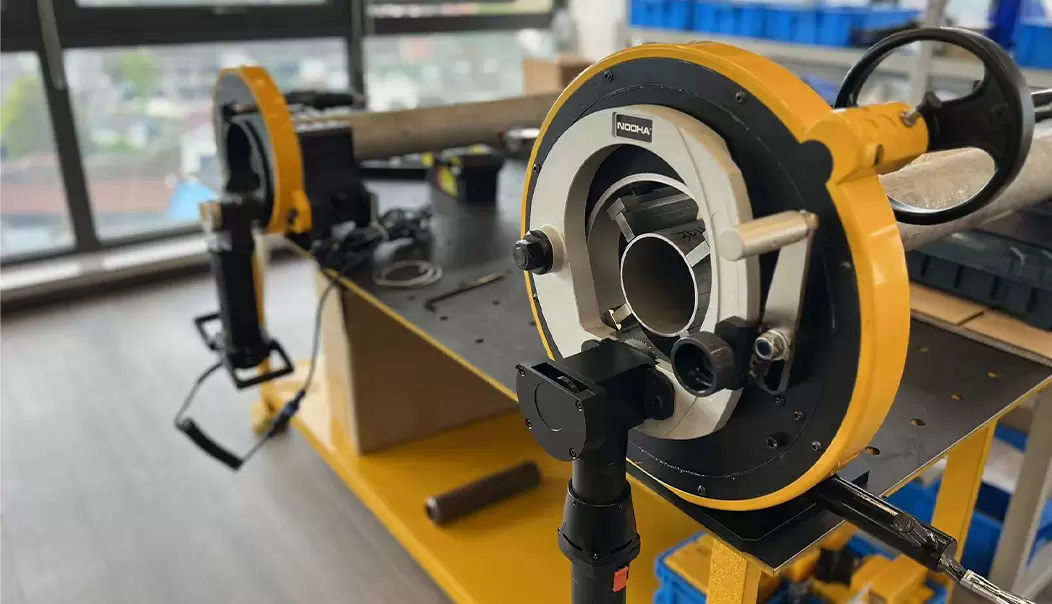
 Next
Next
 Feb 11,2025
 Leave a Message