


Welding plays a critical role in modern industrial applications, particularly when dealing with high-purity piping, stainless steel tubing, and other precision-critical components. Two widely used welding methods in these scenarios are orbital welding and TIG (Tungsten Inert Gas) welding. While both methods are capable of producing high-quality welds, the question arises: which technique delivers better consistency? This article examines the key differences, advantages, limitations, and practical applications of orbital welding machines versus traditional TIG welding to help manufacturers and engineers make informed decisions.
TIG welding, also known as Gas Tungsten Arc Welding (GTAW), is a manual welding process where a non-consumable tungsten electrode produces the weld. The weld pool is shielded from atmospheric contamination by an inert gas, typically argon or helium. TIG welding is renowned for its precision, versatility, and ability to produce clean welds on a variety of metals, including stainless steel, aluminum, and titanium.
High-quality, precise welds – TIG welding allows precise control over the weld bead, heat input, and filler material.
Versatility – Can weld a wide range of metals and thicknesses.
Visual inspection-friendly – Clean welds with minimal spatter make it easy to assess quality.
Low contamination risk – The inert gas shielding protects welds from oxidation.
Highly operator-dependent – Weld quality is heavily influenced by the skill and consistency of the welder.
Slower process – Manual TIG welding is slower than automated welding methods, especially for long welds.
Limited repeatability – Even experienced welders can produce slight variations in weld consistency.
Not ideal for batch production – Large-scale, repetitive welds are time-consuming and expensive.
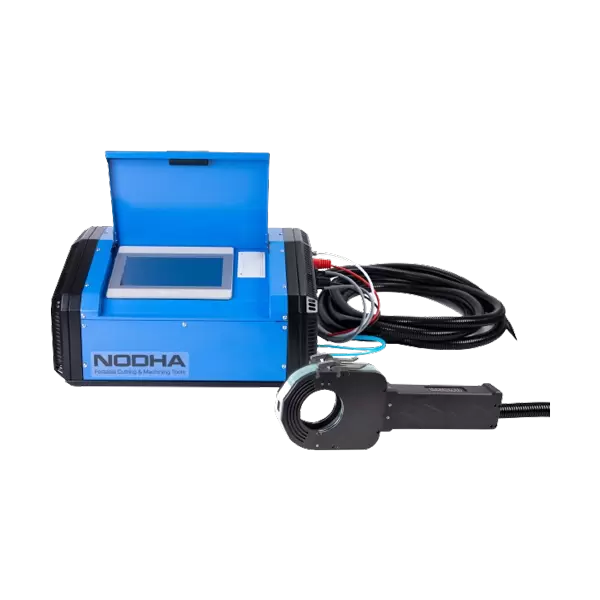
Orbital welding is an automated welding process in which the welding torch rotates around a fixed workpiece, such as a pipe or tube. Orbital welding machines use pre-programmed parameters to control welding current, voltage, speed, and rotation. The system ensures precise and repeatable welds, often used in critical industries like pharmaceuticals, semiconductor manufacturing, and aerospace.
Highly consistent welds – Pre-programmed parameters eliminate human error and produce uniform results every time.
Automated precision – Machines control heat input, rotation speed, and filler wire feed automatically.
High repeatability – Ideal for batch production and multiple identical welds.
Suitable for confined spaces – Compact orbital weld heads can operate in areas difficult for manual TIG welding.
Documentation and traceability – Many orbital welding machines can log welding data for quality control and regulatory compliance.
Higher initial investment – Orbital welding machines are more expensive than manual TIG setups.
Limited flexibility – Designed primarily for tubular or circular workpieces; not ideal for irregular geometries.
Setup and programming required – Initial setup time can be significant for new projects.
Maintenance and calibration – Requires regular calibration to maintain weld precision.
| Feature | TIG Welding | Orbital Welding Machine |
|---|---|---|
| Control | Manual (operator skill-dependent) | Automated (program-controlled) |
| Consistency | Variable, depends on welder | Very high, repeatable |
| Speed | Slower for long or repetitive welds | Faster for standardized welds |
| Best Applications | Custom or irregular joints | Tubular pipes, high-volume production |
| Cost | Lower initial cost | Higher initial cost |
| Flexibility | Highly flexible, any shape | Limited to cylindrical/pipe shapes |
| Documentation | Manual logs | Automated data logging |
While TIG welding provides high-quality welds, the consistency is inherently limited by human factors. Even experienced welders may introduce slight variations in bead size, heat input, or travel speed. Over multiple welds, these variations can accumulate, particularly in high-volume production.
Orbital welding machines, on the other hand, automate the entire welding process. Once a weld program is set:
Torch travel speed is constant.
Heat input is precisely controlled.
Filler wire feed is automated.
Full circumferential welds are completed with minimal deviation.
This level of automation ensures that every weld meets predefined specifications, achieving uniformity and reducing the risk of defects. For industries with strict quality and regulatory standards, orbital welding offers unmatched reproducibility compared to manual TIG welding.
Despite the advantages of orbital welding in consistency, manual TIG welding still has its place:
Custom or complex geometries – Non-cylindrical or irregular workpieces are often easier to weld manually.
Low-volume or one-off projects – For a few pieces, investing in orbital welding equipment may not be cost-effective.
On-the-fly adjustments – Skilled welders can adapt to unforeseen issues, like fit-up variations or surface imperfections.
Portable or remote locations – A handheld TIG welder is easier to transport to field sites with limited space.
Pharmaceutical Piping
Tubing often requires clean, leak-free, and repeatable welds.
Orbital welding ensures uniformity and traceable records, critical for regulatory compliance.
Aerospace and Semiconductor
High-precision, high-purity tubing is common.
Orbital welding minimizes human error and produces defect-free welds repeatedly.
Custom Fabrication or Small Repairs
TIG welding excels when handling unusual angles, tight spaces, or one-off repairs.
Skilled operators can adapt the process quickly without programming a machine.
TIG Welding: Lower initial investment, but labor-intensive for large-scale production. Quality depends on operator skill, which may increase training costs.
Orbital Welding: Higher upfront cost for machinery and programming, but saves labor over time, reduces scrap, and ensures consistent, traceable welds. Long-term ROI is favorable for batch production or critical applications.
When comparing orbital welding machines and manual TIG welding, the clear winner in consistency and repeatability is the orbital welding machine. By automating key parameters such as travel speed, heat input, and rotation, orbital welding ensures uniform weld quality across multiple joints. This makes it the preferred choice for critical applications, high-volume production, and regulated industries.
However, TIG welding remains indispensable for custom fabrication, irregular shapes, and small-scale or field repairs, where human skill and adaptability are required.
Ultimately, the choice between orbital welding and TIG welding depends on application type, volume, precision requirements, and budget. Many companies adopt a hybrid approach, using orbital machines for standardized production and TIG welding for specialized or irregular welds. By understanding the strengths and limitations of both methods, manufacturers can optimize welding quality, efficiency, and cost-effectiveness.
NODHA, as a professional manufacturer of orbital welding machines, is committed to delivering high-quality, reliable, and consistent welding solutions. Leveraging advanced automation technology, NODHA ensures precise, repeatable welds for critical industrial piping applications, helping clients improve efficiency and maintain strict quality standards.

Mr. Jeff Huang
15251441199
Miss Doria Zhu
15102105304
Miss Jina Wang
18261592800








 Language
 Back
Back
 Prev
Prev Next
Next
 Feb 04,2026
 Leave a Message