


The offshore engineering and shipbuilding industries operate in some of the most demanding environments in the world. Structural integrity, safety, and durability are paramount, as components must withstand harsh marine conditions, high pressures, and corrosive materials. Welding plays a critical role in ensuring these standards, and among the most advanced technologies employed today is orbital welding. Orbital welding machines have revolutionized the way pipes and tubing are joined, providing unparalleled precision, consistency, and efficiency. This article explores the applications, advantages, and considerations of orbital welding machines in offshore engineering and shipbuilding.
Orbital welding machines are automated welding systems that rotate the welding electrode or the workpiece around a fixed axis, usually the pipe or tube. Unlike traditional manual welding, orbital welding allows for precise control of welding parameters such as speed, current, voltage, and filler material feed. The technology ensures high-quality, repeatable welds that meet stringent industrial standards.
Key features of orbital welding machines include:
Automated control: Precise regulation of welding parameters for consistent results.
360-degree coverage: Continuous welds around the circumference of pipes and tubes.
Adaptability to materials: Suitable for stainless steel, titanium, nickel alloys, and other high-performance metals.
Documentation and traceability: Automatic recording of weld data for quality assurance.
Welding is the backbone of offshore engineering and shipbuilding, particularly in the construction of pipelines, pressure vessels, ship hulls, and platform structures. The industries face unique challenges, including:
Harsh environmental conditions: Saltwater, high humidity, and fluctuating temperatures increase corrosion risks.
High-pressure systems: Offshore pipelines and pressurized tanks require welds that can withstand extreme internal pressures.
Safety-critical applications: Weld failures can lead to catastrophic accidents, environmental hazards, and significant economic losses.
Complex structures: Ships and offshore platforms contain intricate pipe networks that require high-precision welding.
In this context, orbital welding machines offer solutions that manual welding cannot match, particularly for high-quality tubular connections and confined-space operations.
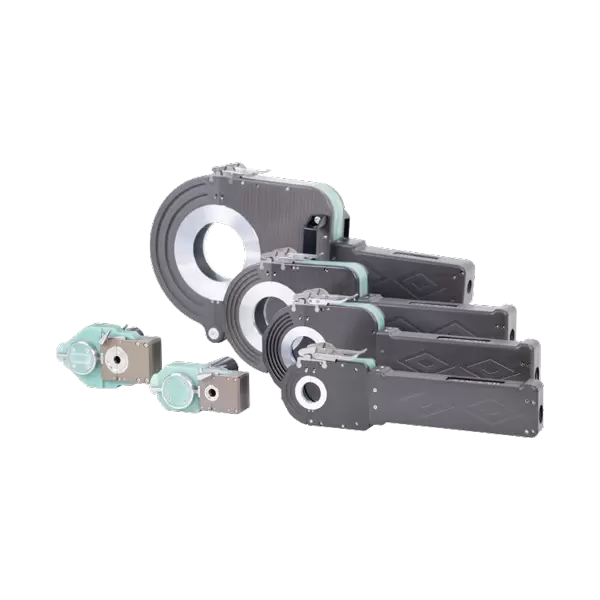
Offshore oil and gas production involves the construction of extensive subsea pipelines for transporting crude oil and natural gas. These pipelines must resist internal pressure, external corrosion, and mechanical stress from ocean currents and seabed conditions.
Orbital welding machines are employed to:
Weld high-alloy and stainless steel pipes with consistent, defect-free joints.
Minimize human error in remote or submerged environments.
Ensure welds meet industry standards such as API 1104 and ISO 15614-1.
Automated orbital welding improves the reliability of subsea pipelines, which are critical to operational safety and environmental protection.
Offshore platforms require pressure vessels for gas separation, crude oil storage, and chemical processing. These vessels often involve thin-walled stainless steel or nickel alloy piping.
Orbital welding machines provide:
Precision welding for thin-walled pipes, reducing the risk of burn-through or warping.
Consistent weld quality for high-pressure applications, ensuring vessel integrity.
Documentation for inspection and certification purposes.
Hydraulic systems on offshore platforms control heavy machinery, cranes, and valves, while cooling systems manage heat generated by equipment. These systems often involve intricate networks of small-diameter pipes.
Orbital welding machines are ideal for:
Joining small-diameter or complex pipe configurations.
Ensuring leak-free welds in critical hydraulic and cooling circuits.
Increasing efficiency by reducing the need for rework and inspections.
Ship hulls, particularly those made of high-strength steel or corrosion-resistant alloys, require extensive welding along seams and bulkheads. Although traditional arc welding is commonly used for large plates, orbital welding is employed for:
Joining internal piping for ballast, fuel, and water systems.
Ensuring consistent welds in confined spaces where manual welding is difficult.
Improving structural integrity by reducing the likelihood of weld defects.
Modern ships contain complex piping systems for fuel, water, air, and hydraulics. Orbital welding machines provide:
Precision and repeatability for long pipe runs.
Reduced downtime by minimizing weld rejections.
Compliance with maritime safety standards such as DNV GL rules.
Certain naval and luxury vessels utilize titanium, duplex stainless steel, and other high-performance alloys for enhanced corrosion resistance and weight reduction. Manual welding of these materials is challenging due to high sensitivity to heat input. Orbital welding machines:
Control heat input to prevent warping and cracking.
Produce high-quality welds that are leak-free and corrosion-resistant.
Allow for automated, traceable welding processes that meet naval certification requirements.
Consistency and Precision: Automated control ensures each weld is identical, reducing the risk of defects.
High Productivity: Single operators can manage multiple welds simultaneously, improving project efficiency.
Quality Assurance: Built-in monitoring and data recording facilitate inspection and certification.
Safety: Remote operation reduces worker exposure to hot surfaces, fumes, and confined-space hazards.
Adaptability: Suitable for a wide range of materials, pipe sizes, and welding positions.
Cost Efficiency: Fewer defects, less rework, and higher reliability lead to long-term cost savings.
While orbital welding offers many advantages, successful implementation requires:
Proper training: Operators must understand machine setup, parameter selection, and material properties.
Material compatibility: Certain exotic alloys require specialized welding programs and shielding gases.
Maintenance: Regular calibration and maintenance are essential to maintain precision.
Quality control: Continuous monitoring of weld parameters ensures compliance with industry standards.
As offshore engineering and shipbuilding continue to evolve, orbital welding technology is expected to advance in several ways:
Integration with robotics and automation systems for large-scale assembly lines.
Real-time monitoring and AI-assisted welding to optimize parameters dynamically.
Enhanced portability and compact designs for offshore applications with space constraints.
Expansion into additive manufacturing hybrid welding for next-generation marine components.
These developments will further solidify orbital welding machines as a cornerstone of high-quality, efficient, and safe construction in these industries.
Orbital welding machines have become indispensable in offshore engineering and shipbuilding due to their precision, consistency, and adaptability. From subsea pipelines and pressure vessels to ship hulls and complex pipe networks, these machines enhance quality, reduce risk, and improve efficiency. As industry demands for safety, performance, and environmental compliance grow, orbital welding technology will continue to play a pivotal role, enabling the construction of durable and reliable offshore and maritime infrastructure.
By adopting orbital welding, offshore engineering and shipbuilding companies can ensure long-lasting, high-quality welds, reduce operational risks, and maintain compliance with international standards. The future promises even greater integration of automation and intelligence, further expanding the applications and benefits of orbital welding in these critical industries.
NODHA, as a professional provider of advanced welding solutions, specializes in delivering high-precision shipbuilding welding and automated pipe welding systems. Our orbital welding machines are widely used in the marine industry welding sector, ensuring consistent, defect-free joints for complex pipe networks and subsea structures. With a focus on quality, efficiency, and safety, NODHA supports offshore platforms, naval vessels, and subsea pipeline projects, helping engineers achieve reliable and long-lasting welds in demanding environments.

Mr. Jeff Huang
15251441199
Miss Doria Zhu
15102105304
Miss Jina Wang
18261592800








 Language
 Back
Back
 Prev
Prev
 Next
Next
 Jun 16,2026

 Leave a Message