


Pipe beveling is an essential process in pipe fabrication, industrial maintenance, and pipeline construction. Before two pipes can be joined through welding, their ends often need to be prepared with a specific angle to create a suitable weld groove. A properly machined bevel helps ensure adequate weld penetration, consistent joint geometry, and reliable connection quality. As industrial projects increasingly require higher welding standards and greater production efficiency, selecting the right pipe preparation equipment has become an important consideration.
However, not all pipe beveling machines are designed for the same applications. Some are developed for on-site maintenance and confined working environments, while others are intended for high-volume workshop production or specialized tube preparation. Differences in mounting methods, power sources, machining capabilities, and pipe size ranges determine how each machine performs in practical applications.
So, what are the different types of pipe beveling machines, and how should manufacturers and contractors choose the right equipment? Understanding their operating principles and application requirements can help businesses improve pipe preparation efficiency and achieve more consistent welding results.
A pipe beveling machine is an industrial tool designed to machine the ends of pipes and tubes into specific angles or profiles before welding. Instead of leaving a straight, square-cut edge, the machine removes material from the pipe end to create a beveled surface. Common bevel angles include 30°, 37.5°, and 45°, although the required angle depends on the welding procedure, material thickness, and joint design.
The primary purpose of pipe end beveling is to prepare the workpiece for reliable welding. When joining thick-wall pipes, a square edge may prevent sufficient weld penetration. Creating a suitable bevel provides access for welding materials and helps form the required joint structure.
Modern pipe beveling equipment can perform several machining operations, including:
Single-angle beveling: Creates an angled surface along the pipe edge for standard welding preparation.
Compound beveling: Produces multiple angles to accommodate specific welding procedures.
Facing: Machines the pipe end to achieve a flat and even surface.
Counterboring: Removes material from the internal diameter when required by the joint design.
Cutting and beveling: Combines pipe cutting and edge preparation in one machining operation.
Depending on the machine design, these operations can be performed on different pipe materials, including carbon steel, stainless steel, alloy steel, and other industrial metals.
Pipe beveling machines can be classified according to their mounting methods, power systems, and machining applications. Understanding these categories makes it easier to identify the equipment that best matches a particular pipe fabrication or maintenance project.
ID-mounted pipe beveling machines, also known as internal diameter-mounted pipe bevellers, are designed to secure themselves inside the pipe rather than around its external surface.
These machines typically use an expandable mandrel inserted into the open end of the pipe. When the operator tightens the draw nut or clamping mechanism, the mandrel expands against the internal pipe wall. This creates a stable mounting position and helps align the machine concentrically with the pipe bore.
Once securely mounted, the cutting tool moves toward the pipe end and removes material to produce the required bevel angle.
Key characteristics of ID-mounted pipe beveling machines:
Internal clamping provides stable positioning during machining.
Self-centering mechanisms help maintain alignment with the pipe bore.
Suitable for preparing pipe ends without requiring extensive external clamping arrangements.
Interchangeable cutting bits can accommodate different bevel angles and machining requirements.
Available in different configurations for various pipe diameters and wall thicknesses.
One major advantage of an internal pipe beveling machine is its ability to work on pipes where external access is limited. It is particularly useful for maintenance operations, pipeline fabrication, and industrial installations involving large or heavy pipe sections.
ID-mounted pipe bevellers are also commonly used for preparing pipe ends in power generation, chemical processing, oil and gas, and other industries where consistent weld preparation is important.
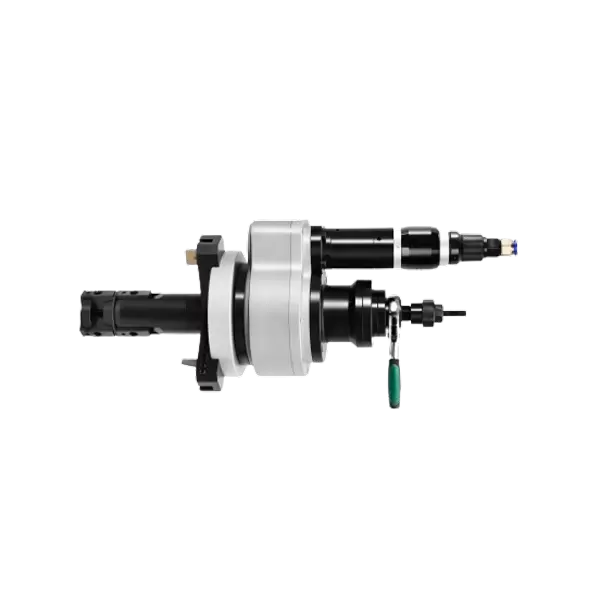
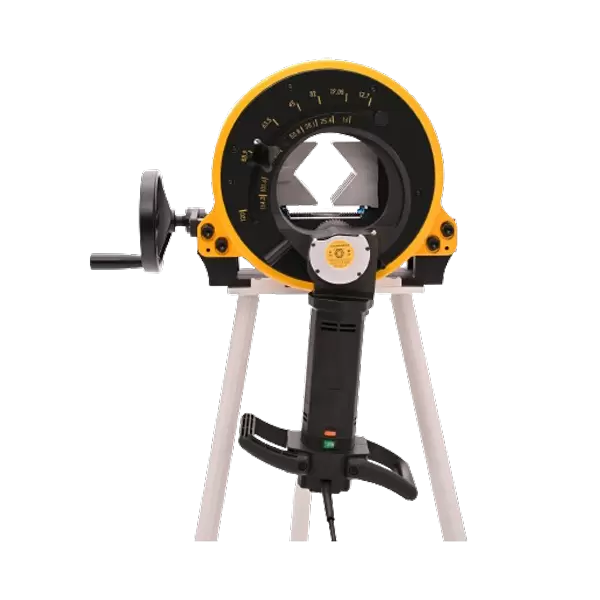
OD-mounted pipe beveling machines use the outer diameter of a pipe as their primary mounting surface. Unlike ID-mounted equipment, these machines secure themselves around the external pipe wall through specially designed clamping mechanisms.
The machine is positioned over the pipe end and tightened to achieve a stable connection. A rotating cutting head or machining tool then removes material from the pipe edge to create the required bevel profile.
This mounting arrangement is particularly useful when the internal diameter of the pipe is inaccessible or when the pipe geometry makes internal clamping impractical.
Key characteristics include:
External clamping allows machining without relying on internal pipe access.
Suitable for applications involving different internal pipe conditions.
Can accommodate specific pipe diameter ranges depending on the machine configuration.
Provides an alternative solution for pipe preparation in demanding industrial environments.
Supports different beveling operations through suitable cutting tools.
OD-mounted pipe bevellers are often selected for field machining, industrial maintenance, and pipe fabrication projects where the outside of the pipe is more accessible than the inside.
For contractors working with complex pipeline systems, the ability to select between internal and external mounting methods can provide greater flexibility in equipment planning.
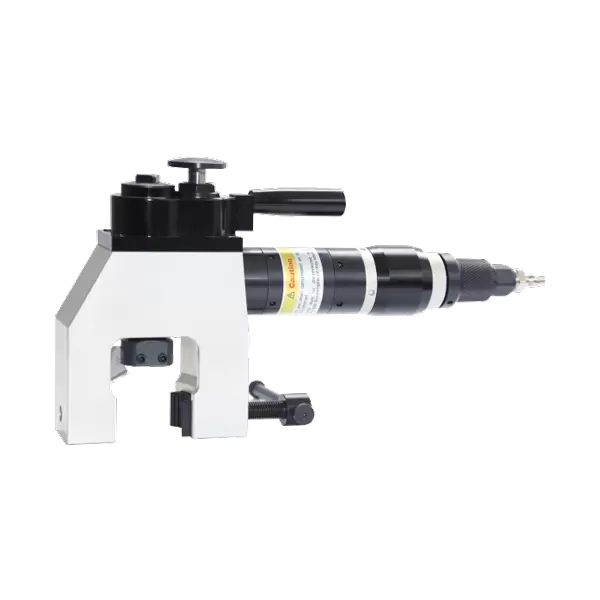
Portable pipe beveling machines are designed to perform pipe end preparation directly at the job site or in different workshop locations. Their compact construction and relatively convenient installation make them suitable for projects where transporting pipes to a fixed machining station would be difficult.
Unlike large stationary equipment, a portable pipe beveling machine can be brought to the workpiece. This is especially valuable when dealing with installed pipelines, large-diameter pipes, or heavy components that are expensive and time-consuming to move.
Portable pipe beveling equipment is available in different mounting configurations, including ID-mounted and OD-mounted designs. Depending on the model, it may also use electric, pneumatic, or hydraulic power.
Main advantages of portable pipe beveling machines:
Convenient transportation between different working locations.
Reduced need to move heavy pipes to centralized machining facilities.
Suitable for on-site pipe preparation and maintenance.
Flexible installation for various industrial applications.
Helps improve workflow efficiency during pipeline construction and repair.
Portable pipe bevellers are widely used in oil and gas pipelines, power plants, shipbuilding, petrochemical facilities, and industrial piping systems.
When selecting a portable pipe beveling machine, buyers should pay attention to its weight, mounting arrangement, pipe diameter range, cutting capacity, and power requirements. These factors directly influence whether the machine can operate effectively under actual site conditions.
Stationary pipe beveling machines are generally installed in workshops or dedicated pipe fabrication facilities. They are designed for processing pipes in a fixed working area, making them suitable for production environments where multiple pipe sections need to be prepared repeatedly.
Depending on the equipment design, pipes may be positioned manually or through mechanical feeding and clamping systems. The machine then performs the required end preparation according to predefined machining parameters.
Compared with portable pipe beveling equipment, stationary machines may offer greater structural stability and more convenient integration into production lines.
Typical applications include:
Large-scale pipe fabrication workshops.
Industrial piping manufacturing.
Steel structure and pressure vessel production.
Repetitive pipe end preparation.
Manufacturing facilities with standardized welding procedures.
One important consideration is the balance between production volume and equipment flexibility. A stationary pipe end beveling machine can be an effective choice when machining operations are concentrated in one location. However, it may be less practical for projects that require frequent movement between different job sites.
CNC pipe beveling machines use computer numerical control systems to manage machining movements and processing parameters. They are designed to improve repeatability and reduce the amount of manual adjustment required during production.
Depending on the system configuration, operators can enter or select machining parameters such as bevel angles, cutting paths, pipe dimensions, and other processing requirements. The control system then coordinates the machining process to produce the specified pipe end geometry.
Some CNC systems combine cutting, beveling, and other pipe preparation operations, allowing manufacturers to handle more complex fabrication requirements.
Key advantages of CNC pipe beveling equipment include:
Consistent machining results across repeated production batches.
Reduced dependence on manual positioning and adjustment.
Greater control over bevel dimensions and machining parameters.
Improved suitability for complex pipe end profiles.
Potential integration with automated pipe fabrication systems.
CNC pipe beveling machines are particularly relevant to manufacturers handling large production volumes or strict dimensional requirements.
However, not every pipe preparation project requires CNC automation. For smaller batches, maintenance work, or on-site operations, a portable mechanical pipe beveling machine may provide a more practical solution.
Integrated pipe cutting and beveling machines combine two important pipe preparation operations into one piece of equipment.
Traditional workflows may require operators to cut a pipe to the required length first and then transfer it to another machine for beveling. An integrated pipe cutting and beveling tool can simplify this process by performing both operations within the same equipment setup.
This approach helps reduce repeated positioning and handling, which can be particularly beneficial when preparing pipes at installation sites or in maintenance environments.
Important features may include:
Combined cutting and beveling functionality.
Reduced equipment changeover between operations.
More convenient pipe preparation workflows.
Improved consistency between cutting and beveling positions.
Suitability for specific pipe diameter and wall thickness ranges.
Integrated pipe cutting and beveling equipment is useful in pipeline maintenance, industrial plant construction, and fabrication projects where both operations are regularly required.
Before purchasing this type of machine, buyers should confirm whether it supports the required pipe material, cutting depth, bevel angle, and operating conditions.
Heat exchanger tube facing machines are specialized pieces of equipment used to prepare the ends of tubes in heat exchanger manufacturing and maintenance.
Although tube facing and conventional pipe beveling are not identical operations, they share an important objective: producing accurately machined tube ends that meet assembly and welding requirements.
Heat exchanger equipment often contains numerous tubes arranged in confined spaces. Preparing these tube ends requires tools that can operate within restricted working conditions while maintaining machining accuracy.
Depending on the equipment configuration, a tube facing machine may perform operations such as:
Tube end facing.
Squaring and leveling.
Internal or external edge preparation.
Tube end beveling for specific joining procedures.
These machines are commonly used in power generation, chemical processing, petrochemical facilities, and heat exchanger manufacturing.
For maintenance contractors, specialized tube facing equipment can help simplify tube preparation and support repair work without removing entire heat exchanger assemblies from their installation locations.
Besides mounting methods and machining functions, pipe beveling machines can also be classified according to their power systems. The choice of power source affects operating convenience, working environment requirements, and overall equipment suitability.
Electric pipe beveling machines use an electric motor to drive the cutting mechanism. They are commonly selected for workshop operations and job sites where a suitable electrical power supply is available.
Their main advantages include convenient operation, consistent motor-driven performance, and relatively straightforward power connections. Depending on the model, electric pipe bevellers can support different pipe sizes and machining requirements.
When selecting an electric pipe beveling machine, operators should check its voltage, power rating, motor performance, and compatibility with the working environment.
Pneumatic pipe beveling machines use compressed air to power the cutting mechanism. They are often suitable for industrial environments where compressed air systems are already available.
One advantage of pneumatic equipment is that it does not rely on an electric motor at the machining head. This can make it a practical option for certain industrial environments with specific electrical equipment restrictions.
However, a stable compressed air supply is essential. Buyers should evaluate the required air pressure, airflow capacity, hose arrangement, and operating conditions before selecting a pneumatic pipe beveler.
Hydraulic pipe beveling machines use hydraulic power to drive machining operations. They can be suitable for heavy-duty applications where a hydraulic power unit is available and the machine is designed for the required cutting workload.
Hydraulic systems are commonly used in industrial machinery that requires controlled mechanical force and reliable power transmission.
When evaluating hydraulic pipe beveling equipment, it is important to consider the power unit, hydraulic pressure, hose connections, maintenance requirements, and compatibility with the intended machining operation.
Different pipe beveling machines offer different capabilities. Choosing the right equipment requires more than comparing machine specifications. Buyers should evaluate how the machine will be used in actual production or maintenance conditions.
The first consideration is the size of the pipes that need to be processed. Every pipe beveling machine has a defined working range, and its clamping system must be compatible with the pipe dimensions.
Buyers should check both the internal and external diameter requirements, as well as the maximum wall thickness that the cutting system can handle.
For projects involving multiple pipe sizes, selecting equipment with a suitable operating range or interchangeable mounting components can provide greater flexibility.
Different materials have different machining characteristics. Carbon steel, stainless steel, alloy steel, and other metals may require different cutting tools, speeds, and machining parameters.
For example, stainless steel machining requires appropriate tooling and operating conditions to maintain cutting quality and avoid unnecessary tool wear.
Therefore, buyers should confirm whether the selected pipe beveling machine is compatible with the materials used in their projects.
Not all welding applications use the same bevel geometry. Depending on the welding procedure, a pipe may require a single bevel, compound bevel, or another specialized edge profile.
Before purchasing equipment, manufacturers should identify the required bevel angles, root face dimensions, and machining tolerances.
The availability of suitable cutting bits and customized tooling is also worth considering, particularly for specialized pipe fabrication projects.
The working environment has a direct influence on equipment selection.
For example, pipeline maintenance projects may require portable pipe beveling machines that can be transported and installed at different locations. In contrast, a large fabrication workshop may benefit more from stationary or automated machining equipment.
Other considerations include available electrical power, compressed air supply, workspace limitations, and accessibility around the pipe.
Production requirements should also influence the choice of equipment.
For repetitive machining operations, manufacturers may prioritize consistent bevel geometry, stable cutting performance, and reduced setup time.
For field maintenance, ease of installation, portability, and adaptability to different pipe conditions may be more important.
The most suitable pipe beveling machine is not necessarily the one with the highest level of automation. It is the one that meets the project's machining requirements while maintaining a practical operating workflow.
Cutting tools are essential components of pipe beveling equipment. Their quality and compatibility influence machining results, tool life, and maintenance frequency.
Buyers should check whether replacement cutting bits are readily available and whether customized tooling can be supplied for different materials or bevel profiles.
It is also advisable to understand the machine's maintenance procedures, lubrication requirements, and availability of technical support before making a purchasing decision.
There is no single pipe beveling machine that is suitable for every industrial application. The ideal choice depends on the pipe dimensions, machining requirements, production volume, and working environment.
The following comparison provides a general reference for equipment selection.
Machine Type | Main Application | Key Advantage |
|---|---|---|
ID-Mounted Pipe Beveller | Internal mounting and pipe end preparation | Self-centering internal clamping |
OD-Mounted Pipe Beveller | Pipes with accessible external surfaces | External mounting flexibility |
Portable Pipe Beveller | On-site machining and maintenance | Easy transportation |
Stationary Pipe Beveller | Workshop fabrication | Stable production setup |
CNC Pipe Beveller | Automated and repetitive machining | High repeatability |
Integrated Cutting & Beveling Tool | Combined pipe cutting and beveling | Reduced handling steps |
Heat Exchanger Tube Facing Machine | Tube end preparation | Specialized tube machining |
For contractors working on installed pipelines, portable ID-mounted or OD-mounted machines are often practical options. Manufacturers handling repetitive workshop production may prefer stationary or CNC pipe beveling equipment.
For applications involving heat exchanger tubes, dedicated tube facing machines can provide a more appropriate solution than general-purpose pipe bevelers.
Understanding the different types of pipe beveling machines is essential for selecting suitable equipment for industrial pipe fabrication, welding preparation, and on-site maintenance. From ID-mounted and OD-mounted pipe bevellers to portable, stationary, CNC, and integrated cutting and beveling machines, each design offers different advantages depending on the application.
When evaluating pipe beveling equipment, businesses should consider pipe dimensions, material compatibility, beveling requirements, power sources, working environments, and maintenance needs. A well-matched machine can help improve preparation efficiency, maintain consistent machining quality, and support more reliable welding operations.
For companies seeking dependable solutions for industrial pipe preparation, NODHA provides a range of portable pipe beveling machines, including ID-mounted pipe bevellers, OD-mounted pipe bevellers, integrated pipe cutting and beveling tools, and heat exchanger tube facing machines. With more than 25 years of industry experience, NODHA focuses on providing practical on-site machining equipment and pipe preparation solutions for different industrial requirements. Exploring the right equipment configuration with an experienced manufacturer can help businesses achieve more efficient and consistent pipe end preparation.

Mr. Jeff Huang
15251441199
Miss Doria Zhu
15102105304
Miss Jina Wang
18261592800








 Language

 Back
 Prev
 Next

 Nov 20,2024
 Leave a Message