


When searching for an orbital cutting machine, price is naturally one of the first factors buyers consider. However, unlike some standard industrial tools, orbital cutting machines do not have one universal price. Different models can vary significantly in configuration, cutting capacity, construction, automation, and application range, all of which influence the final quotation.
For this reason, asking only “What is the price of an orbital cutting machine?” may not be enough when comparing different suppliers. A better approach is to understand what determines the cost of orbital cutting machines and which specifications actually matter for your application.
An orbital cutting machine designed for small-diameter thin-walled tubes, for example, may have a very different configuration from a heavy-duty machine designed for larger pipes and demanding production environments. Similarly, a manually operated machine and a highly customized automated system should not be evaluated using the same pricing standard.
This article explains the major factors that influence the cost of an orbital cutting machine and provides practical guidance for buyers who are comparing different models and suppliers.
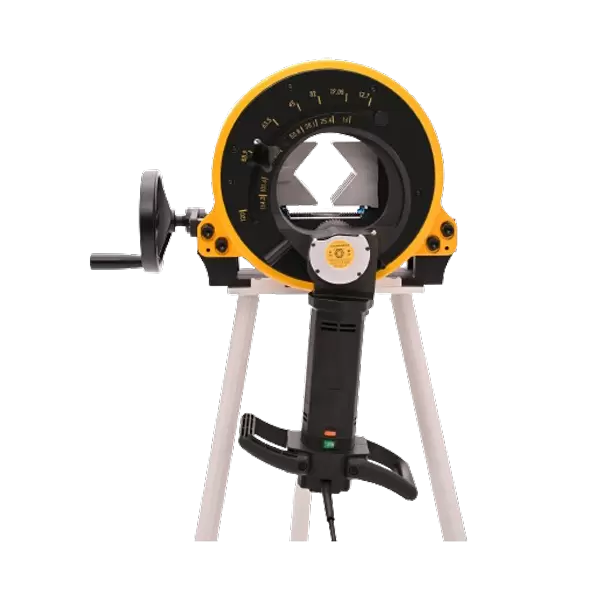
An orbital cutting machine is specialized equipment designed to cut pipes or tubes by rotating a cutting tool around the workpiece. This cutting method allows the machine to achieve controlled and consistent results while minimizing deformation and improving the quality of the pipe end.
Compared with conventional cutting methods, professional orbital pipe cutting machines are often selected when manufacturers require better cutting accuracy, repeatability, and surface quality.
Depending on the design, an orbital cutting machine may be used for:
Stainless steel pipe cutting
Thin-walled tube cutting
Precision pipe processing
Burr-free or low-burr cutting
Pipe cutting for welding preparation
Cutting and beveling
Industrial tube fabrication
The machine's intended application is one of the first factors that determines its overall cost.
One of the most important factors affecting the cost of an orbital cutting machine is the range of pipe diameters it can process.
A compact machine designed for smaller tubes generally has a simpler mechanical structure than a machine capable of processing large-diameter pipes.
When the applicable pipe diameter increases, the machine may require:
Larger clamping components
A stronger machine body
Higher cutting power
Larger cutting tools
More robust transmission components
Stronger support structures
As a result, buyers should pay close attention to the minimum and maximum pipe outside diameter supported by the machine.
A wider cutting range can provide greater flexibility, but it may also increase the equipment investment. Therefore, it is usually better to choose a machine that matches your actual pipe-processing requirements instead of automatically selecting the largest available model.
Pipe diameter is only one part of the cutting requirement. Wall thickness is equally important when determining the appropriate orbital cutting machine.
Thin-walled stainless steel tubes require controlled clamping and cutting to prevent deformation. Thicker pipes, on the other hand, require greater cutting force and a more powerful drive system.
When comparing orbital cutting machines, buyers should therefore provide both:
Pipe outside diameter
Pipe wall thickness
For example, two machines may support the same pipe diameter range, but their maximum wall thickness capabilities may be different.
This difference can have a direct effect on the machine's motor, cutting system, structural strength, and overall configuration.
The material of the pipe can also influence machine selection and cost.
Different materials have different cutting characteristics. Stainless steel, carbon steel, aluminum, copper, and specialized alloys may require different cutting parameters and tooling.
For applications involving stainless steel, buyers may specifically look for a stainless steel pipe cutting machine designed to produce clean and accurate cuts without excessive deformation.
If the machine needs to process multiple materials, the supplier may need to recommend a different blade configuration, cutting speed, motor specification, or tooling system.
Therefore, material compatibility should always be included when requesting a quotation.
Motor power is another important factor affecting the configuration of an orbital cutting machine.
A higher-power motor can provide greater cutting capability, particularly when the equipment needs to process larger pipe diameters or thicker walls.
However, higher motor power does not automatically mean better value.
If a manufacturer primarily processes small-diameter thin-walled tubes, purchasing a machine with excessive power may not provide meaningful benefits.
On the other hand, insufficient motor power can result in slower cutting, reduced productivity, and greater stress on the equipment.
A professional orbital tube cutting machine should therefore have a motor specification that matches the materials, dimensions, and production requirements of the application.
Cutting accuracy is another factor that can influence equipment cost.
For some general fabrication applications, a basic cutting result may be sufficient. However, industries such as pharmaceutical processing, food and beverage, semiconductor manufacturing, and other precision-oriented applications may require highly consistent pipe ends.
A higher-quality orbital cutting system may be designed to provide:
Accurate cutting angles
Consistent pipe dimensions
Better repeatability
Reduced deformation
Cleaner pipe ends
Improved welding preparation
When evaluating equipment, buyers should consider the required cutting tolerance rather than simply comparing the machines by appearance or motor power.
The more demanding the accuracy requirements, the more important the mechanical design and cutting system become.
The clamping system is an often-overlooked factor when comparing orbital cutting machine costs.
A pipe must be securely held during cutting, but excessive clamping force can deform thin-walled tubing.
Professional orbital cutting equipment may use specially designed clamping systems to improve stability while minimizing deformation.
Depending on the model, the machine may feature:
Aluminum clamping components
Stainless steel clamping components
Multi-point clamping
Self-centering clamping
Interchangeable clamping pads
Customized fixtures
A more sophisticated clamping system can increase the overall equipment cost, but it can also have a direct impact on cutting quality.
For manufacturers processing thin-walled stainless steel tubes, this is particularly important.
The physical construction of the machine also affects its cost.
A rigid machine structure can help reduce vibration during operation and maintain cutting stability.
Important components may include:
Machine body
Cutting head
Transmission system
Bearings
Clamping mechanism
Motor
Guide components
Control system
A machine built with higher-quality components and more robust mechanical structures may require a greater initial investment.
However, stronger construction can potentially provide advantages in terms of durability, stability, and long-term reliability.
This is why buyers should avoid comparing machines based only on their external appearance or basic specifications.
Not every orbital cutting machine is designed for the same operation.
Some models are primarily intended for straight pipe cutting, while others can combine cutting with beveling.
A machine that supports both cutting and beveling can reduce the number of separate processing steps required before welding.
This can be particularly useful when pipe ends need to be prepared for subsequent welding operations.
However, additional functionality also means additional mechanical components and tooling, which can affect the final quotation.
If beveling is not required for your application, a simpler cutting-only configuration may be a more practical choice.
The degree of automation is another major factor affecting the cost of an orbital cutting machine.
Manual equipment typically requires the operator to perform several tasks, including positioning, clamping, cutting, and unloading.
More advanced equipment may incorporate functions such as:
Automatic positioning
Automatic feeding
Programmable operation
Automatic length control
CNC control
Production data management
Automation can improve production efficiency and reduce repetitive manual work, but it also increases system complexity.
For occasional or low-volume cutting, a manual orbital pipe cutting machine may be perfectly adequate.
For high-volume production, automation may provide greater value because it can improve consistency and reduce labor requirements.
Therefore, buyers should evaluate automation according to production volume rather than assuming that the most automated machine is always the best option.
Cutting speed is another consideration when evaluating equipment.
For a workshop processing only a limited number of pipes, cutting speed may not be a major concern.
For manufacturers operating continuous production lines, however, even small differences in processing time can have a significant impact on overall productivity.
A machine designed for higher productivity may require:
More powerful motors
Better transmission systems
More efficient cutting tools
Improved heat management
More robust mechanical components
Therefore, production volume should be clearly communicated to the supplier when requesting an orbital cutting machine quotation.
Cutting tools are another component that can influence the total investment.
Different pipe materials and wall thicknesses may require different cutting tools or blades.
When comparing orbital cutting machines, buyers should find out:
Which cutting tools are included
What materials the standard tools support
How long the tools are expected to last
Whether replacement tools are readily available
Whether special tooling is required for certain applications
A machine with a lower initial cost may not necessarily have the lowest long-term operating cost if its consumables are expensive or difficult to source.
Therefore, tooling should be considered as part of the total cost of ownership.
Another factor is how many different pipe sizes the machine needs to process.
If a manufacturer works with only one or two pipe diameters, a relatively simple configuration may be sufficient.
However, manufacturers working with a wide range of pipe sizes may need additional clamping components, fixtures, or interchangeable tooling.
Some orbital cutting machines are designed with flexible clamping systems specifically to accommodate multiple pipe diameters.
This flexibility can increase the initial equipment cost, but it may also make the machine more useful across different projects.
Customization is another important reason why orbital cutting machine quotations can vary.
Industrial customers may have requirements that are different from standard configurations.
For example, a buyer may request:
Customized pipe diameter ranges
Special clamping systems
Specific motor configurations
Customized fixtures
Special voltage requirements
Additional safety features
Private-label manufacturing
Special tooling
Modified machine structures
The more customized the machine is, the more engineering and manufacturing work may be required.
For this reason, a customized orbital cutting machine should be evaluated based on the complete configuration rather than compared directly with a standard machine.
The machine itself is only one part of the purchase.
Accessories can also affect the total quotation.
Depending on the application, buyers may need:
Additional clamping sets
Cutting blades
Beveling tools
Pipe supports
Positioning fixtures
Storage cases
Replacement parts
Special adapters
When comparing quotations from different orbital cutting machine manufacturers, always check what is included in the standard package.
A quotation with a lower machine price may become less attractive if many essential accessories must be purchased separately.
Price should not be considered separately from supplier support.
Industrial equipment is expected to operate reliably over a long period, so technical assistance and spare-part availability can have a significant effect on the overall value of the purchase.
A professional orbital cutting machine supplier should ideally be able to provide:
Product selection support
Operation instructions
Technical documentation
Troubleshooting assistance
Spare parts
Maintenance guidance
Warranty support
If a machine experiences unexpected downtime, fast technical support can help reduce production losses.
Therefore, two suppliers offering similar equipment should not necessarily be evaluated only by their initial quotations.
The manufacturer's experience can also influence the overall cost of an orbital cutting machine.
Experienced manufacturers may have more mature designs, established quality-control systems, specialized production capabilities, and stronger technical support.
This does not mean that the most expensive brand is automatically the best choice.
Instead, buyers should look at the manufacturer's:
Production experience
Product range
Quality-control process
Engineering capabilities
Export experience
Customer support
Spare-part availability
A reliable orbital cutting machine manufacturer should be able to clearly explain why a particular model is suitable for your application.
If you want an accurate quotation, simply asking a supplier “How much does an orbital cutting machine cost?” may not provide enough information.
Instead, prepare the following details before contacting the manufacturer.
Tell the supplier exactly what materials you plan to cut.
Provide the minimum and maximum outside diameter.
Give the actual wall thickness range.
Explain whether you need:
Straight cutting
Precision cutting
Burr-free cutting
Beveling
Cutting and beveling
Provide an approximate daily or monthly production volume.
Explain whether manual operation is sufficient or whether automated functions are required.
Mention any requirements related to voltage, tooling, clamping, fixtures, packaging, or customization.
The more complete the information, the more accurately an orbital cutting machine supplier can recommend a suitable configuration.
So, what is the price of an orbital cutting machine?
Rather than focusing on one fixed number, buyers should understand that the final quotation is determined by a combination of technical and commercial factors.
The most important considerations include pipe diameter, wall thickness, material, motor power, cutting accuracy, clamping system, machine construction, cutting speed, automation, beveling capability, tooling, accessories, customization, and after-sales service.
For this reason, two machines that look similar may have very different quotations because their actual configurations and intended applications are different.
The best way to choose among different orbital cutting machines is to start with your production requirements and then compare the machines according to their actual capabilities. A properly selected orbital pipe cutting machine should not only meet today's cutting requirements but also provide reliable performance, consistent results, and reasonable operating costs over its service life.
Ultimately, the right purchasing decision is not about finding the cheapest machine. It is about finding the right combination of cutting capability, precision, productivity, reliability, and long-term value for your specific pipe-processing application.

Mr. Jeff Huang
15251441199
Miss Doria Zhu
15102105304
Miss Jina Wang
18261592800








 Language
 Back
Back
 Prev
Prev
 Next
Next
 Jun 16,2026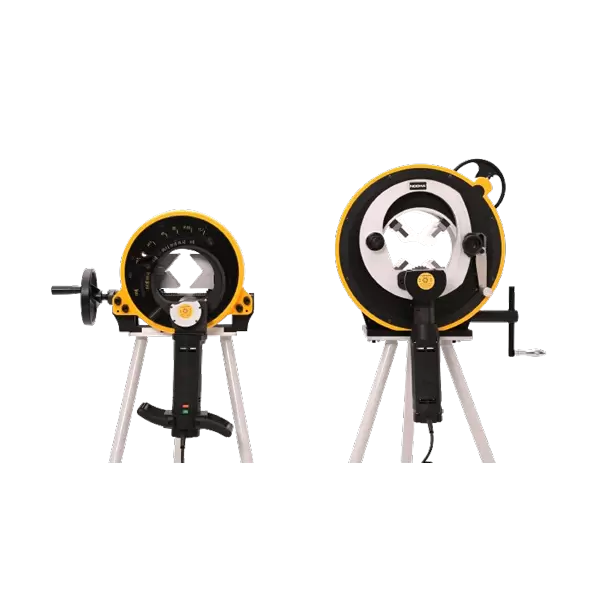
 Leave a Message