


Choosing the right orbital cutting machine is an important decision for manufacturers, contractors, and industrial fabricators that process metal pipes and tubes. While cutting accuracy, tube capacity, and machine performance are often the first factors buyers consider, there is another decision that can have a major impact on daily operations: should you choose a portable or stationary orbital cutting machine?
Both machine types use orbital cutting technology to produce accurate and repeatable cuts, but they are designed for different working environments and production requirements. A portable orbital cutting machine is generally designed for flexibility, on-site fabrication, and applications where equipment needs to be moved between locations. A stationary machine, on the other hand, is better suited to workshops, fabrication facilities, and production lines where cutting operations take place in a fixed location.
Neither option is automatically better. The right choice depends on factors such as tube size, production volume, workspace, cutting frequency, portability requirements, automation needs, and the type of projects you handle.
This guide compares portable and stationary orbital cutting machines and explains the key factors industrial buyers should consider before making a purchasing decision.
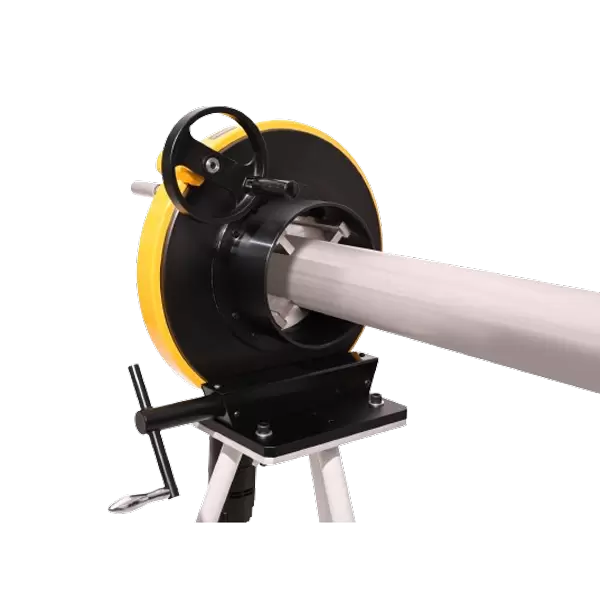
An orbital cutting machine is a specialized pipe and tube cutting system designed to make precise cuts around the circumference of a workpiece. Instead of manually moving a cutting tool around the tube, the cutting head travels in an orbital path while the tube is securely positioned.
This controlled cutting process provides several advantages, including:
Consistent cutting accuracy
Reduced burr formation
Better control of tube geometry
Improved preparation for welding
Repeatable cutting performance
Reduced operator dependence
Orbital cutting equipment is commonly used for stainless steel tubing, thin-walled pipes, high-purity tubing, and other precision applications.
Depending on the machine design, an orbital pipe cutting machine can be installed permanently in a workshop or designed as a portable unit for field applications.
The fundamental difference between the two machine types is mobility.
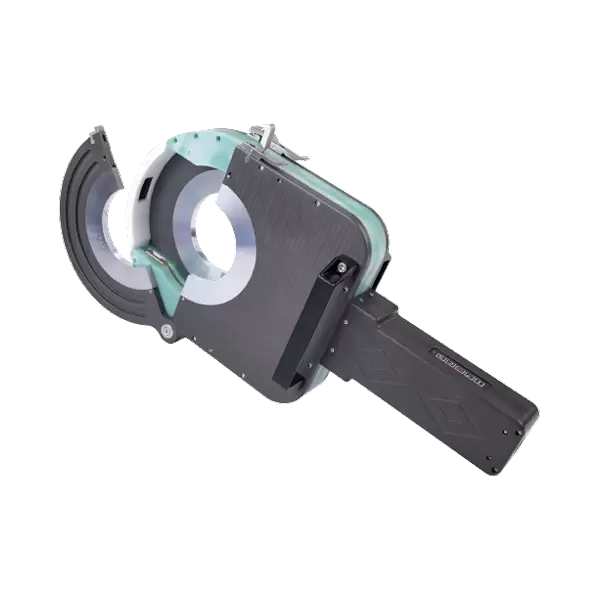
A portable orbital tube cutting machine is designed to be transported and used in different locations. It generally has a compact structure and is easier to install directly at the worksite.
A stationary machine is installed in a fixed production area. It typically provides a more stable working platform and can be integrated into a dedicated fabrication workflow.
The choice therefore comes down to a simple but important question:
Does your production require mobility, or does it benefit more from a dedicated and stable cutting workstation?
To answer that question properly, buyers need to look beyond machine size and consider the complete production process.
Portable equipment is particularly useful when pipe cutting needs to take place outside a traditional workshop.
One of the biggest advantages of a portable orbital cutting machine is the ability to bring the equipment directly to the workpiece.
This can be valuable for:
Construction projects
Pipeline installation
Plant maintenance
Equipment repair
Shipbuilding
Field fabrication
Instead of removing large pipes from the installation area and transporting them to a workshop, operators can perform cutting operations on site.
This can save time and reduce unnecessary handling.
Contractors often work on several projects at different locations. Moving a stationary machine between sites is generally impractical.
A portable orbital cutting system offers greater flexibility because it can be:
Transported between facilities
Installed near the work area
Used for temporary projects
Stored when not required
For businesses handling different industrial projects, this flexibility can be more valuable than maximum production capacity.
Maintenance work often involves existing pipe systems that cannot easily be removed.
For example, a technician may need to replace a section of stainless steel tubing within an operating facility. Transporting the entire pipe assembly to a workshop would be inefficient or impossible.
A portable orbital pipe cutting machine allows technicians to process the tube near its installed position, provided the working environment and safety requirements permit it.
This makes portable equipment particularly attractive for maintenance departments and service contractors.
The most obvious benefit is mobility. Operators can move the equipment to where the work needs to be performed.
This can reduce:
Material transportation
Handling time
Installation delays
Dependence on a central workshop
A portable machine can support both planned and unexpected jobs.
For companies that handle custom fabrication or maintenance work, this flexibility can help improve resource utilization.
Portable equipment generally requires less permanent floor space than a large stationary production system.
This can be useful for:
Smaller workshops
Maintenance departments
Mobile fabrication teams
Temporary production areas
When cutting needs to be performed at a construction or installation site, portability becomes a major advantage.
Instead of designing the entire workflow around the machine, the machine can be positioned according to the project requirements.
Portable equipment also has limitations that buyers should consider.
A compact portable orbital cutting machine is designed primarily for flexibility. It may not provide the same production throughput as a larger stationary system equipped with automated feeding and dedicated fixtures.
If a factory needs to cut hundreds or thousands of tubes every day, a stationary system may be more suitable.
Portable equipment may require more operator involvement in:
Positioning
Clamping
Machine setup
Material handling
This is not necessarily a problem for low-volume work, but it can become a limitation in continuous production.
Field environments may not provide the same stability and cleanliness as a dedicated workshop.
Operators may need to deal with:
Limited working space
Uneven surfaces
Dust
Temperature changes
Restricted access
Therefore, buyers should ensure that the portable machine is appropriate for the actual environment in which it will be used.
A stationary orbital cutting machine is generally better suited to manufacturers with a dedicated production facility and consistent cutting requirements.
If pipe cutting is performed continuously throughout the working day, a stationary system can provide a more efficient production setup.
It can be positioned permanently and optimized for a specific workflow.
This is particularly useful for:
Tube fabrication companies
Industrial manufacturers
Stainless steel pipe workshops
Equipment manufacturers
Large-scale production facilities
If the same types of tubes are processed repeatedly, a stationary machine can be configured around those specific requirements.
For example, a manufacturer may regularly process 316L stainless steel tubing within a specific diameter and wall-thickness range.
The machine can be set up with appropriate:
Clamping systems
Cutting tools
Machine parameters
Workholding arrangements
This reduces setup time and improves process consistency.
Stationary equipment offers more opportunities for automation.
Depending on the machine design, it may be integrated with:
Tube feeding systems
Automatic positioning
Measurement systems
Material handling equipment
Orbital welding systems
For manufacturers moving toward automated production, this can be an important advantage.
A fixed installation provides a stable working platform.
This can help reduce vibration and improve cutting consistency, particularly when processing demanding materials or performing repetitive production work.
A dedicated workstation can be optimized for fast and repeatable production.
Operators spend less time moving equipment and preparing the work area, allowing more time to focus on actual tube processing.
A stationary setup makes it easier to establish standardized procedures.
Manufacturers can define:
Standard cutting parameters
Machine setup procedures
Inspection methods
Maintenance schedules
This is especially useful for companies operating formal quality management systems.
For manufacturers planning to increase automation, stationary equipment is generally easier to integrate into a controlled production environment.
This can improve:
Production speed
Repeatability
Labor efficiency
Process monitoring
The biggest disadvantage is obvious: the equipment stays in one location.
If large pipes must be processed at different sites, moving the workpiece to the machine can create additional logistics and handling costs.
A stationary cutting system requires a dedicated workspace.
The facility may need to provide enough room for:
Machine installation
Tube loading
Material storage
Operator access
Finished product handling
Stationary systems designed for high-volume production may include automation, advanced fixtures, and integrated control systems.
These features can increase the initial investment.
However, the additional cost may be justified when production volume is high enough to benefit from greater efficiency.
The portable-versus-stationary decision should be based on your actual production requirements rather than machine appearance or purchase price alone.
Start by evaluating how often the machine will be used.
If cutting is occasional or project-based, portability may be more valuable.
If cutting is performed continuously, a stationary orbital tube cutting machine may provide better productivity.
The machine must be compatible with the dimensions of the tubes you process.
Consider:
Minimum diameter
Maximum diameter
Wall thickness
Material type
Required cutting tolerance
Thin-walled stainless steel tubes may require particularly careful clamping and cutting control.
Ask where most cutting operations take place.
If your work is mainly performed:
In a workshop → stationary equipment may be preferable
At construction sites → portable equipment may be more practical
Across multiple locations → portable equipment offers greater flexibility
Workshop space can influence machine selection.
A compact portable system may be appropriate if permanent floor space is limited.
For larger manufacturing facilities, a stationary cutting cell may provide a more efficient long-term solution.
Consider your future production plans.
If your company expects to integrate automated tube handling or orbital welding, a stationary machine may provide a better foundation.
If your main priority is manual flexibility, a portable solution may be sufficient.
Do not compare machines based only on purchase price.
Consider the total cost of ownership, including:
Installation
Transportation
Maintenance
Cutting tools
Spare parts
Labor
Downtime
Productivity
A portable machine may reduce transportation costs, while a stationary system may reduce labor costs in high-volume production.
The best choice is the one that provides the strongest overall value for your specific workflow.
The following comparison provides a simple overview:
| Factor | Portable Orbital Cutting Machine | Stationary Orbital Cutting Machine |
|---|---|---|
| Mobility | Excellent | Limited |
| Field Work | Excellent | Poor |
| Workshop Production | Good | Excellent |
| High-Volume Production | Moderate | Excellent |
| Space Requirements | Lower | Higher |
| Automation Potential | Moderate | High |
| Setup Flexibility | High | Moderate |
| Process Standardization | Good | Excellent |
| Maintenance Applications | Excellent | Limited |
| Production Line Integration | Limited | Excellent |
There is no universal winner. The best orbital cutting machine depends on the balance between mobility and productivity.
For some businesses, the answer may be yes.
Large industrial organizations may benefit from maintaining both portable and stationary cutting capabilities.
For example, a manufacturing facility may use a stationary machine for:
High-volume tube production
Standardized components
Repetitive cutting operations
At the same time, a portable unit can support:
Equipment maintenance
Field installation
Emergency repairs
Special projects
This approach allows companies to match the equipment to the application instead of forcing one machine to handle every task.
Once you understand which configuration is more appropriate, it is important to discuss your requirements with an experienced manufacturer.
Ask about:
Supported tube diameters
Compatible materials
Wall thickness range
Cutting accuracy
Clamping options
Tool specifications
Machine weight
Power requirements
Maintenance requirements
Customization options
Operator training
Spare parts availability
A capable orbital cutting machine manufacturer should be able to explain how its equipment performs under your specific operating conditions.
Instead of simply asking for a product catalog, provide detailed information about your tubes, production volume, working environment, and required cutting quality. This allows the manufacturer to recommend a more suitable configuration.
Before making the final purchase, it is useful to evaluate the complete workflow.
For a portable machine, ask:
Can operators easily transport it?
Is setup quick enough for field work?
Does it provide sufficient cutting capacity?
Can it operate reliably in the intended environment?
For a stationary system, ask:
Is enough installation space available?
Can the machine support expected production volume?
Can it integrate with other equipment?
Is the machine configuration suitable for future automation?
These questions can prevent a common purchasing mistake: choosing a machine based on specifications alone without considering how it will actually be used.
Choosing between a portable and stationary orbital cutting machine ultimately depends on your production environment, tube processing requirements, workload, and long-term manufacturing plans.
A portable orbital cutting machine is an excellent option when mobility, field fabrication, maintenance, and flexible deployment are important. It allows operators to bring precision cutting capabilities directly to different work locations and can be particularly useful for contractors and maintenance teams.
A stationary orbital cutting machine is generally a better choice for manufacturers that operate dedicated workshops and require high-volume, repeatable, and standardized tube processing. Its stable installation and greater automation potential make it well suited to production environments where efficiency and consistency are priorities.
Before purchasing, evaluate tube dimensions, material, production volume, workspace, automation requirements, and total operating costs. Most importantly, choose equipment based on your actual production process rather than simply selecting the smallest or most powerful machine.
Whether you need a portable orbital pipe cutting machine for field applications or a stationary orbital tube cutting machine for high-volume manufacturing, the right configuration can improve cutting accuracy, reduce rework, and create more consistent preparation for downstream welding and assembly.
For industrial buyers, the goal is not simply to find an orbital cutting machine with impressive specifications. The real goal is to select a cutting solution that fits your workflow today while providing enough flexibility and performance to support your production needs in the future.

Mr. Jeff Huang
15251441199
Miss Doria Zhu
15102105304
Miss Jina Wang
18261592800








 Language
 Back
Back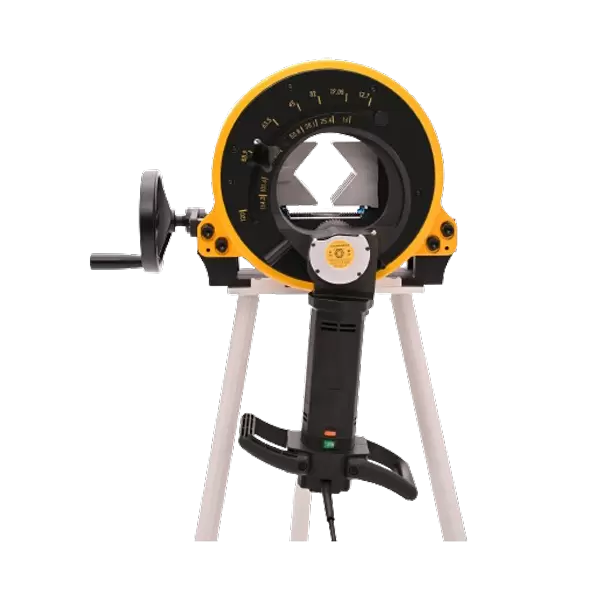
 Prev
Prev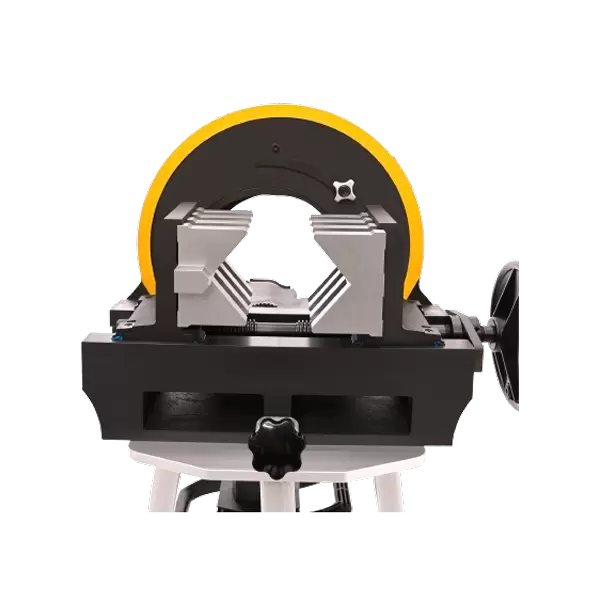
 Next
Next
 Dec 25,2024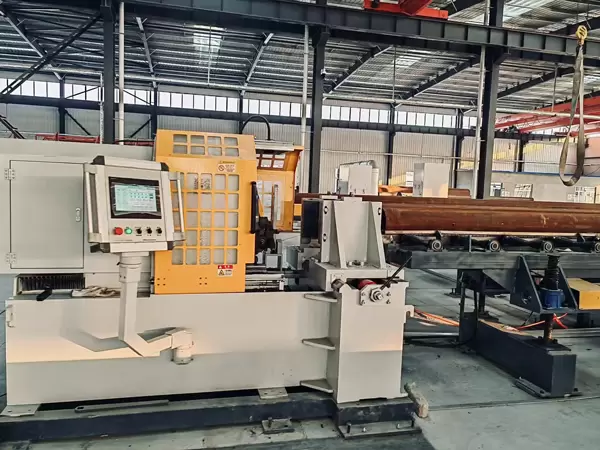
 Leave a Message