


In industrial pipe fabrication, the quality of pipe-end preparation has a direct impact on welding efficiency, joint consistency, and the reliability of completed piping systems. Pipe beveling machines play an important role in this process by machining pipe edges into specific angles and profiles before welding. Whether used in pipeline construction, power generation, shipbuilding, or chemical processing facilities, these machines must deliver stable cutting performance and accurate bevel geometry under different working conditions.
However, the performance of pipe beveling machines is influenced by more than motor power or equipment design. Factors such as pipe material, wall thickness, cutting tool condition, clamping stability, machining parameters, and operator experience all contribute to the final result. Even a high-quality machine may produce inconsistent bevels if it is incorrectly installed or operated under unsuitable conditions.
For manufacturers, fabrication contractors, and industrial maintenance teams, understanding these influencing factors is essential when selecting equipment and establishing machining procedures. This article examines the key elements that affect pipe beveling machine performance and explains how to improve machining accuracy, operational efficiency, and equipment service life.
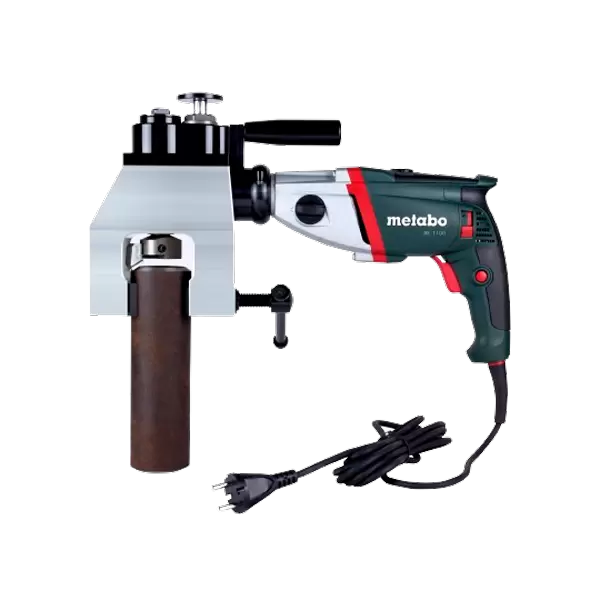
The material being processed is one of the most important factors affecting the performance of pipe beveling machines. Different metals have different mechanical properties, including hardness, toughness, thermal conductivity, and work-hardening behavior. These characteristics influence cutting resistance, tool wear, and the machining parameters required to achieve a satisfactory bevel.
Carbon steel is widely used in industrial piping systems because of its mechanical strength, availability, and relatively straightforward machining characteristics.
Most conventional pipe beveling machines can process carbon steel when equipped with suitable cutting tools and operated within their specified capacity.
However, carbon steel pipes may have different hardness levels depending on their grade, manufacturing process, and heat treatment. Higher-strength materials may require more cutting force and appropriate tooling to maintain stable machining performance.
Stainless steel is commonly used in chemical processing, food production, pharmaceutical facilities, and other applications requiring corrosion resistance.
Compared with many carbon steel grades, stainless steel can present greater machining challenges because of its tendency to work-harden during cutting.
If cutting parameters are unsuitable, the material may harden locally, increasing cutting resistance and accelerating tool wear. Selecting appropriate carbide inserts, maintaining a consistent feed rate, and avoiding unnecessary tool rubbing can help improve beveling results.
Alloy steel pipes are often used in high-temperature, high-pressure, and demanding industrial environments.
Their machining characteristics vary according to alloy composition and heat treatment. Some materials require more careful selection of cutting tools and machining parameters to prevent excessive wear or poor surface quality.
Before processing special materials, operators should confirm that the selected pipe beveling machine and tooling are suitable for the material grade.
Pipe dimensions directly influence machining requirements and determine whether a particular machine can operate effectively.
Different pipe beveling machines are designed for different diameter ranges. Some models are intended for small-diameter pipes, while others are developed for medium- and large-diameter industrial pipelines.
The pipe diameter affects several aspects of the machining process:
Machine installation and positioning.
Internal or external clamping requirements.
Cutting tool accessibility.
Machine alignment and stability.
Available working space around the pipe.
If the machine is not properly matched to the pipe diameter, operators may experience installation difficulties, unstable clamping, or inconsistent bevel geometry.
Therefore, buyers should always check the minimum and maximum applicable pipe diameters before selecting pipe beveling equipment.
Wall thickness determines how much material must be removed during bevel preparation.
Thick-wall pipes generally require greater cutting depth and may generate higher machining resistance. This places additional demands on the machine's motor, transmission components, cutting tools, and structural rigidity.
For thin-wall pipes, excessive cutting force or unsuitable feed rates may cause deformation or damage to the pipe edge.
A suitable pipe beveling machine should therefore match both the pipe diameter and wall thickness rather than being selected based on diameter alone.
Cutting tools are directly responsible for removing material and forming the required bevel profile. Their quality and condition have a significant influence on machining efficiency, surface finish, and dimensional accuracy.
Different cutting tools are designed for different materials and machining conditions.
Carbide inserts are commonly used in industrial pipe beveling applications because they offer good hardness and wear resistance. However, the appropriate insert grade and geometry depend on the material being processed and the cutting conditions.
Important considerations include:
Insert material and hardness.
Cutting edge geometry.
Insert shape and dimensions.
Tool compatibility with the machine.
Suitability for the workpiece material.
Using an unsuitable insert may increase cutting resistance, produce an uneven surface, or shorten tool life.
As machining continues, cutting edges gradually become dull or damaged.
A worn insert requires more force to remove material and may generate additional heat during operation. This can lead to rough bevel surfaces, increased vibration, and inconsistent cutting results.
Operators should inspect cutting tools regularly and replace inserts when wear reaches the manufacturer's recommended limit.
Even high-quality inserts cannot deliver consistent results if they are incorrectly installed.
Loose fasteners, improper insert positioning, or incorrect tool alignment can cause vibration and uneven material removal.
Following the machine manufacturer's tool installation instructions helps maintain stable cutting conditions and reduces the risk of equipment damage.
The drive system determines how effectively a pipe beveling machine converts power into cutting movement.
Different machines use electric, pneumatic, or other drive configurations depending on their intended applications.
Motor power influences the machine's ability to handle machining loads.
When processing thick-wall pipes or harder materials, sufficient power is important for maintaining stable cutting performance.
However, higher motor power does not automatically mean better machining quality. The actual performance also depends on transmission efficiency, spindle design, cutting tool selection, machine rigidity, and operating parameters.
Buyers should evaluate motor specifications together with the machine's rated pipe size and machining capacity.
Electric pipe beveling machines are widely used in workshops and industrial sites where a suitable electrical supply is available.
Their performance is influenced by motor capacity, voltage stability, operating speed, and overload protection.
For continuous machining applications, an appropriately rated motor can help maintain consistent operation and reduce unexpected interruptions.
Pneumatic pipe beveling machines use compressed air to power the cutting mechanism.
Their performance depends heavily on air pressure, air flow, and the capacity of the compressed-air supply.
Insufficient air pressure may reduce cutting speed or cause unstable operation. Air quality also matters because excessive moisture and contamination can affect pneumatic components.
For this reason, the air supply system should meet the equipment manufacturer's requirements.
Clamping stability is another critical factor affecting the accuracy of pipe beveling machines.
During machining, cutting forces act on the pipe and equipment. If the machine is not securely positioned, unwanted movement may occur, resulting in uneven bevel angles or inconsistent surface finishes.
Internal-mounted pipe beveling machines use an expansion mechanism to secure the equipment against the inner wall of the pipe.
The clamping system must provide sufficient contact and positioning stability without damaging the pipe.
Uneven expansion or incorrect installation may cause the machine to become off-center, affecting the final bevel geometry.
External-mounted machines secure themselves around the outside diameter of the pipe.
Proper adjustment is necessary to ensure that the machine remains aligned with the pipe centerline.
Before machining, operators should verify that the clamping mechanism is firmly engaged and that the equipment does not move under normal operating loads.
Incorrect alignment can produce several machining problems:
Uneven bevel depth.
Inconsistent bevel angles.
Irregular pipe-end surfaces.
Excessive cutting tool wear.
Increased machine vibration.
For precision pipe-end preparation, operators should check machine positioning before starting the cutting process.
Machining parameters have a direct influence on cutting efficiency, surface quality, and tool life.
Two important parameters are cutting speed and feed rate.
Cutting speed refers to the relative speed between the cutting edge and the workpiece surface.
If the cutting speed is too high, excessive heat may accelerate tool wear and negatively affect machining stability.
If it is too low, the machining process may become inefficient, particularly when processing materials that require specific cutting conditions.
The appropriate speed depends on the workpiece material, tool specification, machine design, and machining operation.
Feed rate determines how quickly the cutting tool advances into the material.
An excessively high feed rate can increase cutting forces, generate vibration, and produce a rough surface finish.
On the other hand, an unnecessarily low feed rate may increase machining time and, under certain conditions, cause excessive tool rubbing rather than efficient material removal.
Operators should follow the manufacturer's recommended parameters and adjust them according to actual machining conditions.
Consistency is particularly important when processing multiple pipes for the same project.
Using repeatable cutting conditions helps maintain similar bevel dimensions and surface quality across different workpieces.
For large-scale pipe fabrication, establishing standard machining procedures can reduce variations between operators and production batches.
The mechanical structure of a pipe beveling machine determines how well it resists cutting forces and maintains positioning accuracy during operation.
A machine with insufficient rigidity may experience excessive vibration or deformation under machining loads.
The machine body should provide adequate strength to support the cutting mechanism and clamping system.
Material selection, structural design, manufacturing accuracy, and assembly quality all influence overall rigidity.
For demanding applications involving thick-wall pipes, a robust machine structure is particularly important.
Gears, bearings, guide systems, and other transmission components influence the smoothness of machine movement.
Poorly maintained or low-quality components may introduce backlash, excessive friction, or unstable movement.
These issues can affect cutting accuracy and increase maintenance requirements.
The dimensional accuracy of critical components also influences the final machining result.
Properly manufactured spindle assemblies, positioning mechanisms, and tool holders help maintain stable movement and repeatable cutting performance.
When evaluating pipe beveling machines, buyers should consider overall construction quality rather than focusing only on external appearance or rated power.
The required bevel profile determines how the pipe edge must be machined before welding.
Different welding processes and joint designs require different edge geometries.
Common configurations include:
Single V bevel: A conventional angled preparation used in many butt-welding applications.
Double V bevel: A preparation with bevels on both sides, often considered for thicker materials to manage weld volume and joint preparation.
J bevel: A curved preparation used in specific welding applications.
Compound bevel: A combination of different angles designed for particular joint requirements.
Common bevel angles include 30°, 37.5°, and 45°, although the correct specification depends on the welding procedure and applicable standards.
A pipe beveling machine must be capable of producing the required profile within the specified dimensional tolerances.
Operators should also consider the root face, root opening, and bevel depth because these dimensions work together to determine the final joint geometry.
Selecting equipment based only on its ability to produce a certain angle may be insufficient if the project requires more complex edge preparation.
The performance of pipe beveling machines is not determined by equipment specifications alone. Operator experience and working procedures also play an important role.
Even advanced machining equipment requires correct installation, parameter adjustment, and routine inspection.
Operators should understand how to install the machine, adjust the clamping system, position the cutting tools, and verify alignment.
Incorrect setup may cause machining errors even when the equipment itself is functioning properly.
Experienced operators are better able to recognize how different pipe materials respond to machining.
For example, stainless steel and carbon steel may require different cutting conditions. Understanding these differences helps operators make appropriate adjustments.
Standardized operating procedures help reduce variations between different operators and working shifts.
These procedures should cover equipment inspection, machine installation, cutting parameter selection, machining operation, and finished bevel inspection.
Training operators to follow consistent procedures can improve both productivity and machining reliability.
Regular maintenance and suitable working conditions are essential for maintaining long-term machine performance.
During continuous industrial operation, dust, metal chips, and cutting residue can accumulate around moving components.
Without regular cleaning and lubrication, these contaminants may increase friction and accelerate component wear.
A practical maintenance routine should include:
Cleaning the machine after each machining operation.
Inspecting cutting inserts for wear or damage.
Checking fasteners and clamping components.
Lubricating moving parts according to manufacturer instructions.
Inspecting electrical connections or pneumatic lines.
Checking bearings and transmission components.
Replacing worn parts when necessary.
Preventive maintenance helps identify potential problems before they cause unexpected downtime.
The working environment can also affect equipment reliability.
High humidity may contribute to corrosion, while excessive dust and metal particles can interfere with moving components.
Temperature fluctuations may influence lubrication conditions and the performance of certain machine components.
For outdoor pipeline construction, operators should also consider weather protection and safe equipment storage.
Keeping pipe beveling equipment clean, dry, and properly maintained helps preserve its operating condition.
Understanding the factors that influence machine performance is only the first step. Applying suitable operating and maintenance practices is equally important.
The following measures can help improve machining consistency and operational efficiency.
Before purchasing or using a machine, confirm the pipe diameter, wall thickness, material, and required bevel profile.
Avoid selecting equipment based on a single specification, such as maximum pipe diameter.
A machine should be capable of handling the complete range of machining requirements expected in the project.
Choose cutting inserts according to the material and machining operation.
Inspect the cutting edges regularly and replace damaged or excessively worn inserts.
Maintaining suitable tooling conditions helps reduce cutting resistance and improve surface finish.
Follow the manufacturer's recommendations for cutting speed, feed rate, and machining depth.
Avoid excessive cutting loads, particularly when processing thick-wall pipes or harder materials.
Where multiple pipe materials are involved, establish suitable parameter settings for each material group.
Check the clamping mechanism and machine centerline before machining.
A properly secured machine is less likely to experience unwanted movement or vibration during operation.
Develop a regular inspection schedule covering cutting tools, moving components, drive systems, and clamping mechanisms.
Consistent maintenance helps extend equipment service life and reduces the likelihood of unexpected failures.
The performance of pipe beveling machines is determined by a combination of equipment design, workpiece characteristics, cutting tool quality, machining parameters, clamping stability, and operating procedures. Each factor influences the accuracy, efficiency, and consistency of pipe-end preparation. Paying attention to these details helps industrial manufacturers and contractors reduce machining variations, improve welding preparation, and maintain reliable production workflows.
When selecting pipe beveling equipment, buyers should look beyond individual specifications and evaluate how the machine performs under their actual working conditions. Proper equipment matching, standardized operating procedures, suitable tooling, and preventive maintenance are all essential for achieving consistent results over the long term. With experience in pipe cutting, beveling, and end-preparation technologies, NODHA provides industrial pipe processing equipment solutions for different machining requirements, helping fabrication professionals improve preparation accuracy and operational efficiency across a wide range of piping applications.

Mr. Jeff Huang
15251441199
Miss Doria Zhu
15102105304
Miss Jina Wang
18261592800








 Language

 Back
 Prev
 Next

 Mar 21,2025

 Leave a Message