


In modern industrial pipe fabrication, orbital cutting machines have become essential equipment for achieving high-precision, burr-free, and weld-ready pipe ends. They are widely used in industries such as pharmaceuticals, semiconductors, food processing, shipbuilding, aerospace, and high-purity gas systems.
Compared with traditional pipe cutting tools, orbital cutting machines offer significant advantages: higher accuracy, cleaner cuts, reduced operator dependency, and improved production efficiency. However, these benefits can only be fully realized when the equipment is used correctly.
In real-world production environments, many performance issues do not come from the machine itself, but from operational mistakes, improper setup, or lack of maintenance. Even a high-end orbital cutting machine can produce poor results if misused.
This article explores the most common mistakes operators make when using orbital cutting machines and explains how to avoid them to ensure safe operation, consistent quality, and maximum efficiency.
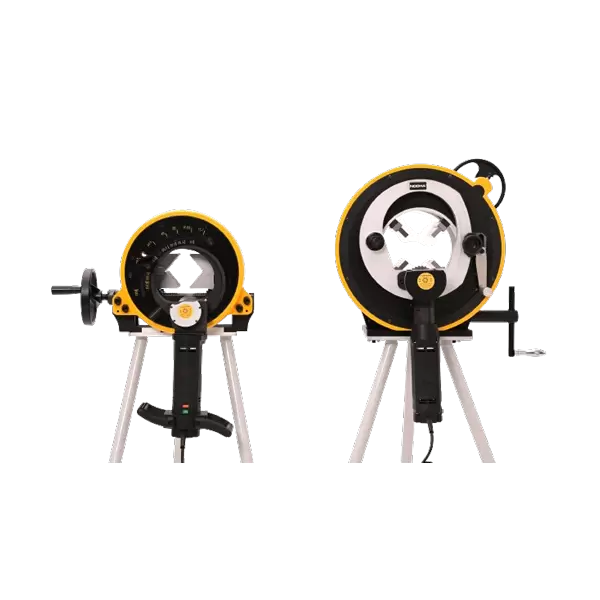
One of the most frequent mistakes is selecting an orbital cutting machine that does not match the pipe specifications.
Orbital cutting machines are designed with specific ranges for:
Pipe diameter
Wall thickness
Material type (stainless steel, carbon steel, alloys)
Cutting capacity
If the machine is not suitable for the pipe:
The cutting head may not fully engage the pipe surface
Excessive vibration can occur
Blade wear increases significantly
Cutting accuracy decreases
Pipe deformation may happen
For example, using a light-duty orbital cutting machine on thick-wall stainless steel tubing can overload the system and lead to unstable cutting results.
Always:
Check the machine specification sheet
Match pipe diameter and wall thickness
Confirm material compatibility
Choose appropriate orbital cutting machines for industrial or precision use
Proper clamping is one of the most critical factors in orbital cutting performance. Unfortunately, it is often overlooked.
Over-tightening the pipe
Under-tightening the pipe
Misaligned pipe positioning
Using incorrect clamp inserts
Improper clamping can lead to:
Pipe oval deformation
Uneven cutting surface
Inaccurate bevel angles
Excessive vibration during cutting
Increased risk of burr formation
Since orbital cutting machines rely on precise rotational motion around a fixed pipe, even small misalignment can affect the entire cutting process.
To ensure stable operation of orbital cutting machines:
Use self-centering clamps whenever possible
Ensure pipe is fully seated before tightening
Avoid excessive clamping force on thin-walled pipes
Double-check alignment before starting the machine
The cutting blade is the heart of any orbital cutting machine, yet many operators continue using worn or damaged blades.
Poor cut quality
Increased burr formation
Higher cutting resistance
Overheating of the cutting zone
Reduced machine efficiency
In orbital cutting machines, blade sharpness directly affects:
Cutting precision
Surface finish quality
Weld preparation readiness
Operators should:
Inspect blades before each operation
Replace blades according to usage cycles
Avoid using chipped or cracked blades
Store blades properly to prevent damage
A well-maintained blade ensures orbital cutting machines deliver consistent, high-quality results.
Another common mistake is applying too much feed pressure during operation.
Many operators assume that increasing pressure will speed up cutting. In reality, it often leads to worse results.
Blade overheating
Pipe deformation
Poor surface finish
Reduced tool life
Increased machine vibration
Orbital cutting machines are designed for controlled, steady feed rates, not forceful cutting.
For optimal performance:
Allow the machine to cut at its designed feed speed
Avoid forcing the cutting head into the pipe
Maintain steady and consistent movement
Let the orbital cutting machine handle material removal naturally
This ensures smoother cutting and longer equipment lifespan.
Many operators overlook pipe cleaning before cutting.
Oil or grease contamination
Rust or oxidation layers
Dirt and dust accumulation
Welding residue from previous operations
Dirty pipe surfaces can:
Reduce clamping stability
Affect cutting accuracy
Increase blade wear
Lead to uneven orbital cutting machine performance
Before using orbital cutting machines:
Clean pipe surfaces thoroughly
Remove coatings or debris
Ensure dry and stable contact areas
Verify surface condition before clamping
Clean pipes always result in better cutting performance.
Alignment errors are a major source of cutting defects in orbital cutting machines.
Cutting head not centered properly
Pipe not aligned with machine axis
Loose guide rail setup
Incorrect positioning of cutting track
Non-square pipe ends
Uneven bevel angles
Increased burr formation
Poor weld fit-up
Since orbital cutting machines rely on circular motion around a fixed axis, alignment accuracy is critical.
Use built-in alignment guides
Check centering before operation
Verify pipe axis positioning
Perform test rotation if necessary
Even the most advanced orbital cutting machines require regular maintenance to perform optimally.
Skipping cleaning after use
Ignoring lubrication requirements
Failing to inspect moving parts
Delaying part replacement
Reduced cutting precision
Increased mechanical wear
Unexpected machine downtime
Higher repair costs
Clean machine after every operation
Lubricate moving components regularly
Inspect clamps, rails, and cutting heads
Follow manufacturer maintenance schedules
Proper maintenance ensures long-term reliability of orbital cutting machines.
Orbital cutting machines are relatively easy to use, but still require proper training.
Incorrect setup procedures
Unsafe operation practices
Poor cutting quality
Increased risk of accidents
Even small mistakes in setup or operation can significantly affect:
Cutting accuracy
Machine lifespan
Workplace safety
Production efficiency
Machine setup procedures
Safety protocols
Blade installation and replacement
Material handling techniques
Emergency shutdown procedures
Well-trained operators consistently achieve better results with orbital cutting machines.
Not all pipes behave the same during cutting.
Different materials require different handling approaches:
Stainless steel
Carbon steel
Alloy steel
Thin-walled tubing
Using the same cutting settings for all materials.
Poor surface finish
Excessive tool wear
Inconsistent cutting quality
Operators should:
Adjust feed rate based on material
Select appropriate blade type
Optimize cutting speed for each application
Orbital cutting machines perform best when parameters are tailored to material properties.
Safety is often underestimated in cutting operations.
Not wearing PPE
Bypassing safety guards
Operating without inspection
Ignoring warning signals
Operator injury
Equipment damage
Production interruption
Always wear protective equipment
Follow lockout procedures when servicing
Keep hands away from rotating parts
Use emergency stop functions when needed
Safe operation is a fundamental requirement when using orbital cutting machines.
When operators follow proper procedures and avoid common mistakes, orbital cutting machines deliver their full potential:
Clean, square pipe ends
Accurate bevel angles
Consistent dimensional quality
Faster setup times
Reduced rework
Fewer production delays
Reduced mechanical wear
Fewer breakdowns
Lower maintenance costs
Burr-free edges
Improved weld penetration
Stronger pipe connections
Fewer accidents
Stable machine operation
Controlled working environment
Orbital cutting machines are powerful tools that deliver high precision, efficiency, and reliability in pipe cutting applications. However, their performance depends heavily on proper operation and maintenance.
Common mistakes such as incorrect clamping, poor blade management, excessive pressure, misalignment, and lack of training can significantly reduce machine effectiveness and compromise cutting quality.
By understanding and avoiding these errors, operators can ensure that orbital cutting machines consistently deliver:
High-quality cuts
Burr-free pipe ends
Stable and repeatable performance
Safe and efficient operation
As industries continue to demand higher precision and cleaner fabrication standards, mastering the correct use of orbital cutting machines is essential for maintaining competitive production quality and long-term operational success.

Mr. Jeff Huang
15251441199
Miss Doria Zhu
15102105304
Miss Jina Wang
18261592800








 Language
 Back
Back
 Prev
Prev
 Next
Next
 Oct 10,2024
 Leave a Message