


The oil, gas, and chemical industries operate under some of the most demanding engineering conditions in the world. Pipelines in these sectors must handle high pressure, extreme temperatures, corrosive substances, and continuous long-term operation. Any failure in pipe integrity can lead to severe safety risks, environmental damage, and costly downtime.
Because of these strict requirements, every stage of pipeline fabrication must meet extremely high standards of accuracy and reliability. One of the most critical steps in this process is pipe cutting and preparation, which directly affects welding quality and long-term system performance.
Traditional cutting methods often fail to meet the precision and cleanliness standards required in these industries. This is where orbital cutting machines have become essential equipment in modern pipeline fabrication.
In oil, gas, and chemical projects, orbital cutting machines provide high-precision, burr-free, and cold-cut pipe preparation that ensures strong welds, safe operation, and long service life.
This article explores how orbital cutting machines are used in oil, gas, and chemical industries, their technical advantages, key applications, and why they are now considered a standard tool in industrial pipeline construction.
In industrial pipeline systems, pipe cutting is not just a mechanical step—it is a structural foundation for the entire pipeline network.
A poor-quality cut can lead to:
Weak welding joints
Misalignment during installation
Leakage under pressure
Corrosion at the cut edge
Reduced structural integrity
In oil, gas, and chemical environments, these issues can escalate into:
Production shutdowns
Fire or explosion risks
Environmental contamination
High maintenance costs
Therefore, precision pipe cutting is essential for ensuring both safety and efficiency.
Orbital cutting machines are specifically designed to eliminate these risks by delivering controlled, repeatable, and high-quality pipe cuts.
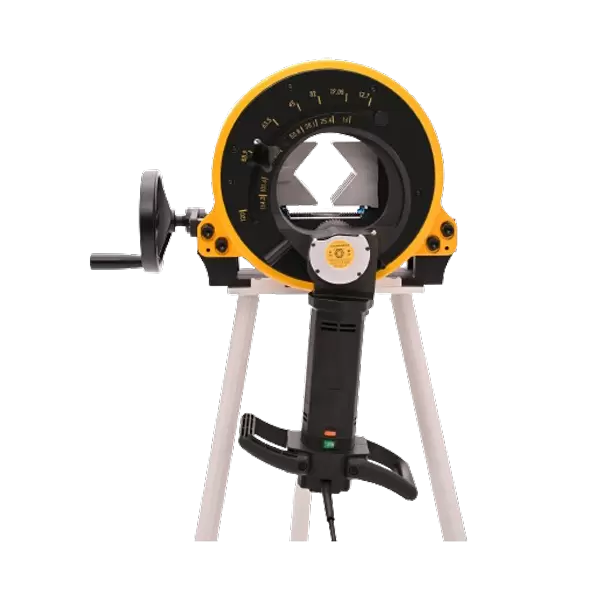
Orbital cutting machines are specialized pipe processing systems that use a rotating cutting head to cut around a stationary pipe.
Instead of rotating the pipe itself, the machine:
Secures the pipe in a stable clamping system
Rotates a cutting tool 360 degrees around the pipe
Applies controlled cutting pressure
Produces a precise and uniform cut
This design ensures:
High stability
Reduced operator error
Consistent cutting accuracy
Superior surface quality
In oil, gas, and chemical industries, orbital cutting machines for pipe cutting applications are widely used for both onshore and offshore projects.
Oil and gas pipelines often operate under extremely high pressure. Even minor defects in pipe preparation can lead to catastrophic failure.
Orbital cutting machines ensure:
Square and accurate pipe ends
Perfect weld preparation surfaces
Consistent dimensional control
This improves the reliability of high-pressure pipeline systems.
Chemical and petrochemical pipelines often transport corrosive fluids such as acids, hydrocarbons, and chemical mixtures.
Poor cutting quality can introduce:
Micro-cracks
Heat-affected zones
Oxidation layers
These defects accelerate corrosion.
Orbital cutting machines use cold cutting technology, which prevents heat damage and preserves material integrity.
In these industries, most pipelines rely on high-integrity welding methods such as TIG or orbital welding.
Weld quality depends heavily on pipe end preparation.
Orbital cutting machines provide:
Burr-free edges
Smooth bevel-ready surfaces
Consistent pipe alignment
This ensures stronger and more reliable welds.
One of the most important features of orbital cutting machines is their ability to produce burr-free pipe ends.
Burrs in pipelines can:
Contaminate transported fluids
Interfere with welding processes
Cause turbulence in fluid flow
Create corrosion points
By using orbital cutting machines, operators achieve clean and precise pipe edges that eliminate these risks.
Traditional cutting methods generate heat, which can:
Alter metal structure
Create oxidation layers
Reduce corrosion resistance
Orbital cutting machines typically use cold cutting techniques, ensuring:
No thermal deformation
No discoloration
No heat-affected zones
This is especially important for stainless steel and alloy pipelines used in chemical environments.
In large-scale pipeline systems, alignment accuracy is crucial.
Orbital cutting machines ensure:
Perfectly square cuts
Tight dimensional tolerances
Consistent geometry across pipe sections
This precision reduces installation errors and improves welding efficiency.
Pipeline materials vary in thickness and composition. Improper clamping can cause deformation.
Orbital cutting machines use:
Self-centering clamps
Multi-point support systems
Adjustable fixture designs
These systems ensure:
No pipe ovalization
Stable cutting conditions
Uniform pressure distribution
Oil, gas, and chemical projects often take place in challenging environments such as:
Offshore platforms
Desert pipelines
Remote chemical plants
Orbital cutting machines reduce dependency on operator skill, ensuring:
Consistent cutting quality
Lower training requirements
Reduced human error
In oil and gas transportation systems, orbital cutting machines are used for:
Pipeline construction
Refinery piping systems
Offshore platform installations
Maintenance and repair operations
They ensure high-strength welded joints capable of handling extreme pressure.
Petrochemical facilities require pipelines that can safely transport:
Crude oil derivatives
Chemical solvents
Reactive gases
Orbital cutting machines help ensure:
Leak-proof welding preparation
Corrosion-resistant pipe joints
Long-term operational stability
In chemical plants, even small contamination can cause serious issues.
Orbital cutting machines provide:
Clean pipe cutting
Burr-free surfaces
Controlled fabrication quality
This improves system safety and chemical purity.
Refineries operate under extreme conditions involving heat, pressure, and corrosive substances.
Orbital cutting machines ensure:
Accurate pipe fit-up
Strong weld integrity
Reduced maintenance requirements
Offshore oil platforms require durable pipeline systems that can withstand:
Saltwater corrosion
High pressure
Mechanical vibration
Orbital cutting machines support reliable pipeline fabrication in these harsh environments.
| Feature | Orbital Cutting Machines | Traditional Cutting Methods |
|---|---|---|
| Cutting Precision | High | Medium to Low |
| Burr Formation | Minimal | Common |
| Heat Damage | None (cold cutting) | High |
| Pipe Deformation | Very Low | High Risk |
| Weld Preparation Quality | Excellent | Inconsistent |
| Field Suitability | High | Limited |
This comparison clearly shows why orbital cutting machines are preferred in oil, gas, and chemical industries.
When selecting orbital cutting machines for industrial applications, consider the following:
Supports different pipeline specifications.
Ensures durability in harsh environments.
Provides stable cutting performance.
Guarantees consistent cutting quality.
Important for offshore and remote projects.
Improves overall pipeline fabrication efficiency.
The evolution of orbital cutting machines in oil, gas, and chemical industries is moving toward:
Automated pipe cutting and welding integration
Digital monitoring and diagnostics
Smart parameter adjustment systems
AI-assisted cutting optimization
Remote operation capabilities
These advancements will further improve safety, efficiency, and precision in pipeline construction.
Oil, gas, and chemical industries demand the highest levels of safety, precision, and reliability in pipeline systems. Pipe cutting is a fundamental step that directly influences welding quality, system integrity, and long-term performance.
Orbital cutting machines have become a critical solution in these industries because they provide:
Burr-free pipe cutting
Cold cutting without heat damage
High precision and repeatability
Strong clamping stability
Reduced operator dependency
By ensuring consistent and high-quality pipe preparation, orbital cutting machines help build safer, more efficient, and more durable pipeline systems.
As industrial standards continue to rise, orbital cutting machines will remain an essential tool in modern oil, gas, and chemical pipeline engineering.

Mr. Jeff Huang
15251441199
Miss Doria Zhu
15102105304
Miss Jina Wang
18261592800








 Language
 Back
Back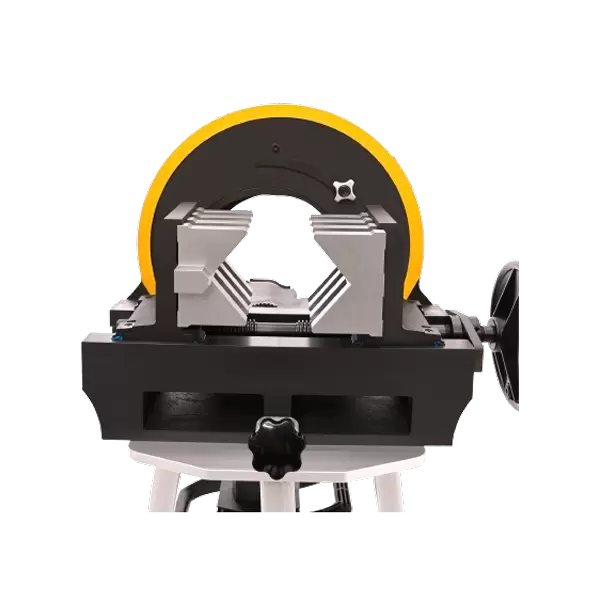
 Prev
Prev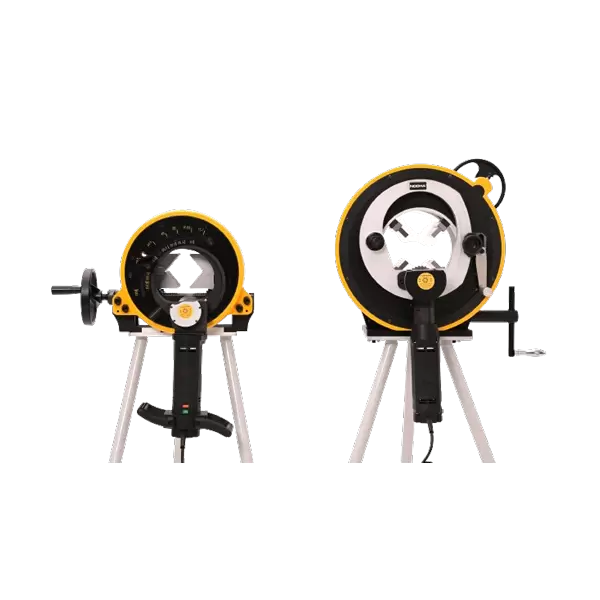
 Next
Next
 Apr 23,2025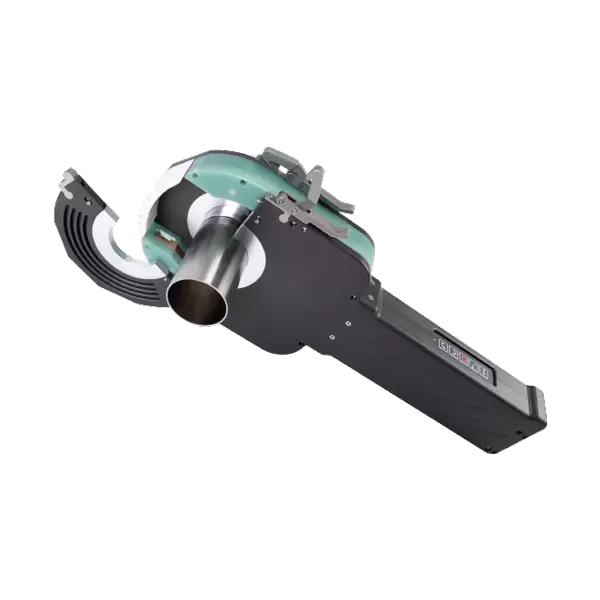
 Leave a Message