


When processing stainless steel tubes, cutting the tube to the required length is often only part of the job. Depending on the welding method and joint design, the tube end may also need to be beveled before welding. This naturally raises a practical question: Can one orbital cutting machine handle both tube cutting and beveling?
In many applications, the answer is yes. Some orbital cutting machines are designed not only for precise tube cutting but also for tube-end beveling. By using the appropriate saw blade and adjusting the cutting setup, the same machine can produce either a straight cut or a beveled tube end.
This capability is particularly useful when working with thin-walled stainless steel tubes for industries such as food processing, pharmaceutical production, semiconductor manufacturing, and daily chemical production. Instead of moving the tube between separate cutting and beveling machines, manufacturers can use one processing system for different tube-end requirements.
However, cutting and beveling are not exactly the same operation. Understanding how they differ, when beveling is necessary, and how an orbital cutting machine handles both processes can help you determine whether this type of equipment is suitable for your application.
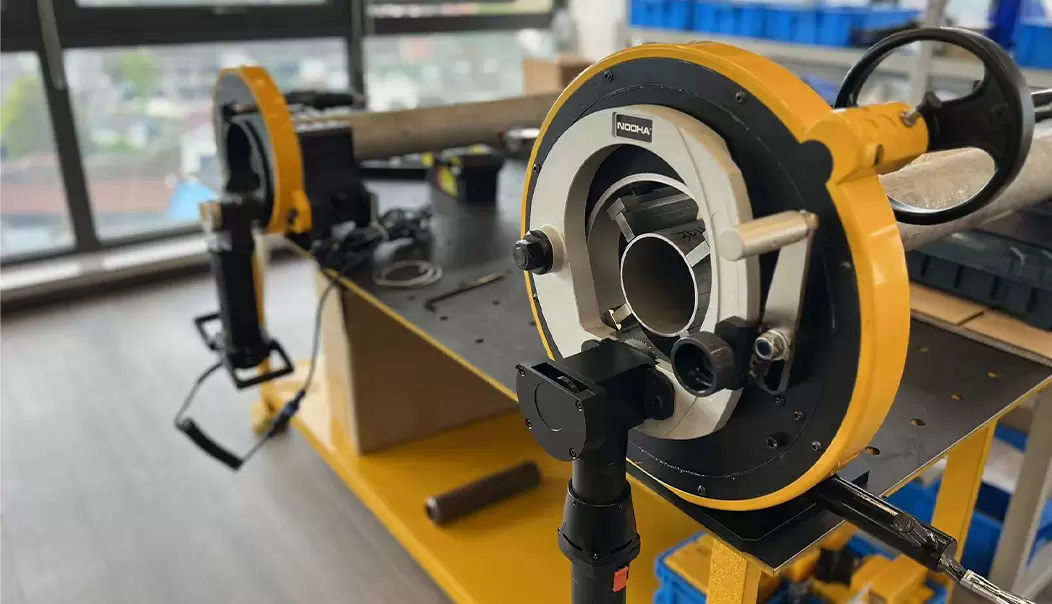
Tube cutting and tube beveling are closely related, but they have different purposes.
Tube cutting is mainly used to divide a long tube into sections of the required length. For precision stainless steel tube fabrication, the ideal cut should be square, clean, and consistent. A good cut should also minimize burrs and avoid unnecessary deformation of the tube wall.
Beveling takes the process one step further. Instead of leaving the tube end completely flat, material is removed from the edge at an angle. This creates a beveled surface around the tube end.
The difference becomes especially important when the tube will be welded.
A square cut may be sufficient for certain thin-wall tube applications where the tube ends can be joined directly. In other applications, a beveled edge may provide the joint geometry required by the welding procedure.
Therefore, the choice between straight cutting and beveling is usually determined by the requirements of the next process rather than by the cutting operation itself.
Yes, an orbital cutting machine can be designed to perform both operations.
The important factor is whether the machine supports the appropriate beveling setup. A standard cutting blade can be used to produce a straight tube end, while a suitable bevel saw blade can be used when an angled edge is required.
The basic orbital cutting process remains similar. The cutting tool travels around the circumference of the tube in a controlled motion. What changes is the cutting geometry and tooling used for the specific operation.
With the right configuration, one machine can therefore be used for:
Cutting tubes to a specified length
Producing a square tube end
Creating a beveled tube end
Preparing tube ends for different welding requirements
This does not mean that every orbital tube cutting machine automatically includes beveling. When selecting equipment, it is necessary to check the machine's actual cutting and beveling capabilities, compatible tube sizes, blade options, and supported bevel specifications.
The beveling process involves removing material from the tube end at a controlled angle.
For a normal straight cut, the blade follows a cutting path that produces an end face perpendicular to the tube axis. The objective is to separate the tube while maintaining a clean and accurate end.
For beveling, a bevel saw blade is used to create an angled edge. As the blade moves around the tube, it removes material from the end and forms the required bevel.
The quality of the finished bevel depends on several factors, including:
Tube wall thickness
Stainless steel grade
Tube diameter
Blade design
Blade condition
Cutting speed
Machine stability
Tube clamping
Required bevel angle
This is particularly important for thin-walled stainless steel tubes. Because the wall is relatively thin, excessive cutting force or an unsuitable blade can affect the tube geometry.
A good orbital tube cutting process should therefore provide sufficient control to produce the required tube-end shape without unnecessary deformation.
Not every stainless steel tube needs to be beveled.
For some applications, a clean and square tube end is enough. If the welding process is designed for direct joining of thin-walled tubes, additional beveling may not be necessary.
Beveling becomes more relevant when the welding procedure requires a particular joint geometry. The beveled edge can provide additional space around the joint and help create the desired weld profile.
The actual requirement depends on factors such as:
Wall thickness is one of the most important considerations.
Thin-walled tubing may often be joined with relatively simple tube-end preparation, while thicker materials may require more extensive edge preparation depending on the welding procedure.
Different welding processes have different requirements for tube preparation. The required tube-end geometry should therefore be determined according to the welding procedure rather than applying the same bevel to every tube.
The design of the tube joint also influences whether beveling is required. A square butt joint and a joint designed for a beveled edge will have different preparation requirements.
In applications where weld consistency is particularly important, controlling the geometry of the tube ends can help maintain a more repeatable welding process.
This is one reason why orbital cutting machines are often used as part of a larger tube fabrication process rather than simply as equipment for cutting tubes to length.
Using one machine for both operations can simplify tube preparation.
Imagine a production process in which some tubes only need to be cut while others need to be cut and beveled. If separate machines are used, the operator may need to transfer tubes from the cutting station to another beveling station.
That creates additional handling.
A machine that supports both operations can reduce the number of separate processing steps.
The tube can remain positioned in the same processing system while the required cutting operation is completed.
This can be useful when dimensional consistency is important, because unnecessary repositioning can introduce variation.
Manufacturers may process different tube orders with different end requirements.
Some tubes may require a straight cut, while others may need a beveled end before welding. A combined machine can provide greater flexibility without requiring a completely separate cutting and beveling workflow.
For workshops that regularly perform both operations, combining the capabilities into one machine can reduce the need for multiple pieces of equipment.
However, this does not automatically mean that a combined machine is the right choice for every manufacturer. If beveling is rarely required, a simpler cutting-only machine may be sufficient.
The machine should always be selected according to the actual production requirements.
Thin-walled stainless steel tubes require more careful control during cutting and beveling.
Because the tube wall is relatively thin, excessive mechanical force can cause deformation. An unsuitable cutting tool may also create excessive burrs, rough edges, or an inconsistent tube end.
This is where the stability and cutting control of an orbital cutting machine for stainless steel tubes become important.
The machine should hold the tube securely while allowing the cutting tool to move around the tube in a controlled manner. The cutting parameters should also be appropriate for the material and wall thickness.
When beveling thin-walled tubing, the goal is not simply to remove material quickly. The process needs to create the required bevel while maintaining the shape of the tube and the quality of the remaining tube wall.
It can.
The geometry of the tube end directly influences the geometry of the welding joint. If the bevel is inconsistent, the welding conditions may also vary from one tube to another.
An appropriate bevel can help create a more consistent joint configuration when the welding procedure requires one.
However, beveling by itself does not guarantee better welds. Welding quality also depends on tube alignment, cleanliness, material condition, welding parameters, shielding gas, operator or equipment control, and many other factors.
For this reason, the purpose of beveling should be understood as preparing the tube for a specific welding requirement, rather than simply assuming that a beveled tube is always better than a square-cut tube.
The saw blade is particularly important when one machine is expected to perform both cutting and beveling.
A blade suitable for straight cutting may not produce the desired bevel geometry. For beveling, a dedicated bevel saw blade or suitable blade configuration may be required.
Blade selection should take into account:
Stainless steel material
Tube diameter
Wall thickness
Required cutting quality
Required bevel angle
Cutting speed
Expected production volume
Blade condition is also important. A worn blade can increase cutting resistance and affect the quality of the tube end.
For manufacturers using orbital cutting machines for thin-walled stainless steel, matching the blade to the application is particularly important because excessive cutting force can have a greater effect on thin tube walls.
Yes, if the machine is designed for both operations.
This is actually one of the practical benefits of having a combined cutting and beveling system.
For one production order, the operator may only need to cut tubes to length. A standard cutting blade can be used to produce the required straight tube ends.
For another order, the tubes may need to be prepared for welding. In that case, the machine can be configured with a bevel saw blade to produce the required tube-end geometry.
The machine therefore does not have to bevel every tube simply because it has beveling capability.
The required process can be selected according to the application.
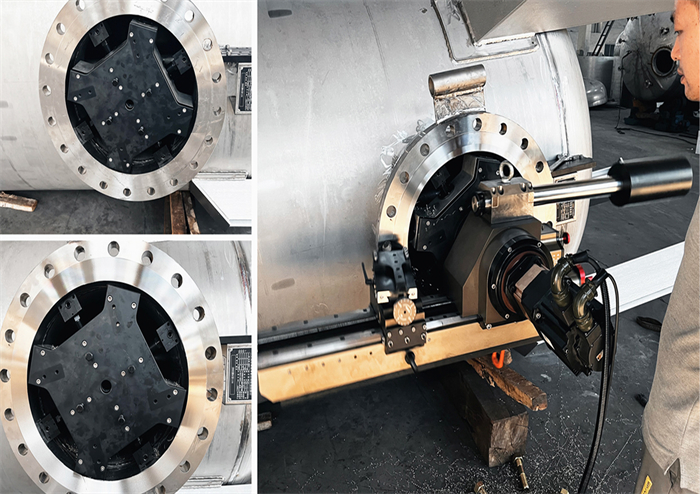
NODHA's orbital pipe cutting machine is designed for cutting and beveling thin-walled stainless steel tubes. It is mainly intended for applications in food processing, pharmaceutical production, semiconductor manufacturing, daily chemical production, and related industries.
For standard cutting, the machine is designed to produce a vertical tube end with low burr formation. When the application allows direct welding after cutting, the tube end can be used without an additional preparation step.
When beveling is required, a bevel saw blade can be used to create the required tube-end preparation. This gives the machine the flexibility to handle both straight cutting and beveling according to the welding requirements.
The purpose is relatively straightforward: use the same basic tube processing system for different tube-end requirements instead of treating cutting and beveling as completely separate processes.
If you are looking for an orbital cutting machine that can also perform beveling, several specifications should be checked before making a decision.
Make sure the machine can accommodate the smallest and largest tube diameters used in your production.
The machine should be suitable for the actual wall thickness of the tubes, especially if you primarily process thin-walled stainless steel.
Confirm whether the machine is specifically designed for beveling and what type of blade or tooling is required.
Different welding applications may require different bevel geometries. Check whether the machine can produce the required angle.
For precision tube fabrication, look at the quality of the cut rather than focusing only on cutting speed. Burr formation, squareness, deformation, and repeatability can all affect downstream processing.
A machine may technically support beveling, but suitable blades and tooling are still necessary for practical production.
Consider the actual industries and products being processed. A tube processing requirement for pharmaceutical piping may be different from one for general industrial fabrication.
For manufacturers that regularly process stainless steel tubes with different end-preparation requirements, a combined machine can be a practical option.
If most tubes only require straight cutting, the beveling function may not be used frequently. In that case, cutting performance should remain the primary consideration.
But when production regularly includes both square-cut and beveled tube ends, having both functions available on one orbital pipe cutting machine can make the workflow more flexible.
The important point is to select the machine based on the actual tube material, dimensions, welding requirements, and production process rather than choosing a machine simply because it offers more functions.
So, can one orbital cutting machine handle both tube cutting and beveling?
Yes, a suitably designed machine can perform both operations. With the appropriate cutting setup, it can produce clean, square tube ends when straight cutting is required and use a bevel saw blade when a beveled edge is needed for welding preparation.
For thin-walled stainless steel tubes, the quality of the cutting process is especially important. Tube deformation, burr formation, blade selection, wall thickness, and cutting parameters all need to be considered when combining cutting and beveling in one workflow.
For applications in food processing, pharmaceuticals, semiconductor manufacturing, daily chemical production, and other stainless steel tube fabrication fields, the ability to switch between straight cutting and beveling can provide useful flexibility.
Ultimately, the right question is not simply whether an orbital cutting machine can bevel. It is whether the machine can produce the tube size, wall thickness, cut quality, and bevel geometry required by your specific welding and fabrication process.

Mr. Jeff Huang
15251441199
Miss Doria Zhu
15102105304
Miss Jina Wang
18261592800








 Language
 Back
Back Prev
Prev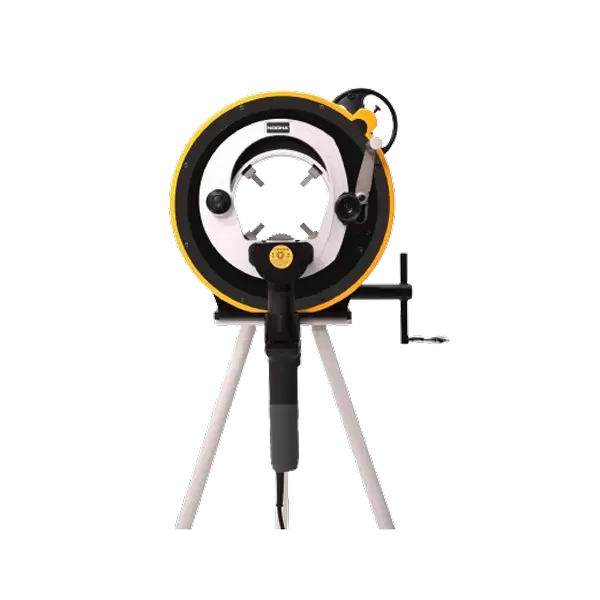
 Next
Next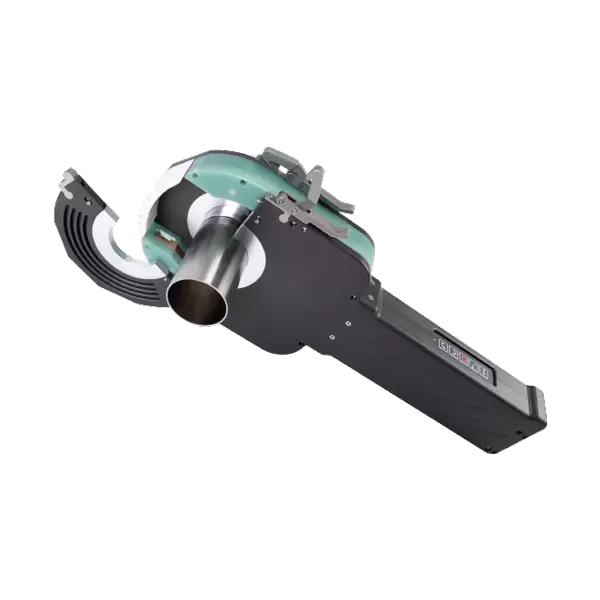
 Sep 05,2025
 Leave a Message