


Stainless steel tube fabrication is a critical process across many high-precision industries, including pharmaceuticals, food processing, semiconductor manufacturing, biotechnology, and chemical engineering. These industries demand extremely clean, accurate, and consistent tubing systems that can maintain structural integrity while preventing contamination and leakage.
One of the most important technologies enabling this level of precision is the orbital cutting machine. Designed specifically for high-quality pipe and tube preparation, orbital cutting machines have become essential tools in stainless steel tube fabrication workflows. They ensure clean, square, and burr-free cuts that are suitable for welding, assembly, and hygienic applications.
This article explores the role of orbital cutting machines for stainless steel tube fabrication, including how they work, their applications, benefits, and why they are widely adopted in modern industrial manufacturing.
Stainless steel tubing is widely used in industries where hygiene, corrosion resistance, and durability are critical. However, the performance of a tubing system depends heavily on the quality of fabrication, especially the cutting process.
Poor tube cutting can result in:
Uneven pipe ends
Burr formation
Contamination risks
Welding misalignment
Reduced system integrity
These issues are unacceptable in industries such as pharmaceuticals or food processing, where even minor defects can lead to serious operational failures.
This is why manufacturers increasingly rely on orbital cutting machines for stainless steel tube fabrication, as they provide unmatched precision and repeatability.
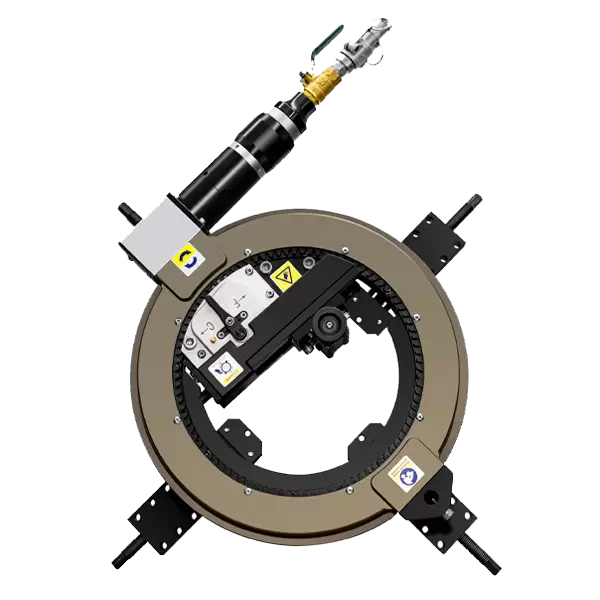
An orbital cutting machine is a precision-engineered device used to cut pipes and tubes by rotating a cutting head around the material’s circumference.
Unlike manual cutting tools or stationary saws, an orbital cutting machine:
Clamps securely around the tube
Rotates 360 degrees around the pipe
Delivers a controlled cutting process
Produces perfectly square and smooth ends
This orbital motion ensures that every cut is uniform, accurate, and free from deformation or contamination.
Because of these advantages, the orbital pipe cutting machine has become a standard tool in stainless steel tube fabrication workshops and cleanroom environments.
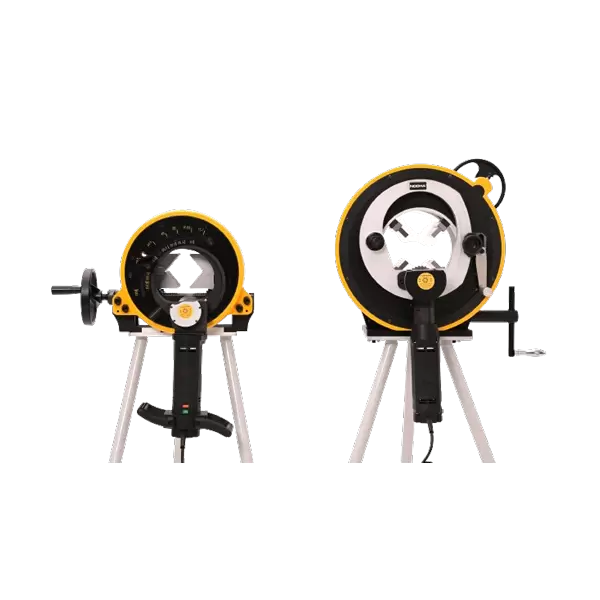
The working principle of an orbital cutting machine is based on controlled rotational cutting.
The machine first clamps tightly around the stainless steel tube. This ensures stability and eliminates vibration during cutting.
The cutting head moves around the tube in a circular motion, maintaining consistent pressure throughout the process.
Depending on the model, the cutting mechanism may include:
High-speed blades
Cold cutting wheels
Precision cutting tools
This ensures minimal heat generation and prevents material distortion.
The final result is:
Smooth pipe ends
No burrs or sharp edges
High dimensional accuracy
Ready-for-welding surface
Orbital cutting machines are used in a wide range of stainless steel fabrication processes.
In pharmaceutical production, stainless steel tubing must meet strict hygienic standards.
An orbital cutting machine for stainless steel tubes ensures:
Clean pipe ends suitable for sterile welding
No particle contamination
Compliance with GMP and FDA standards
These systems are commonly used in:
Bioreactors
CIP/SIP systems
Fluid transfer pipelines
Food-grade stainless steel tubing is widely used in:
Dairy production
Beverage bottling
Brewing systems
Orbital cutting machines ensure that tubes used in these systems are:
Hygienically prepared
Free from contamination
Suitable for sanitary welding
In semiconductor manufacturing, stainless steel tubing is used in ultra-high purity systems.
Orbital cutting machines help ensure:
Particle-free pipe preparation
High-precision alignment
Leak-free connections
Chemical industries require corrosion-resistant piping systems that can withstand aggressive substances.
Orbital cutting machines ensure:
Accurate tube preparation
Strong welded joints
Reduced failure risk
Beyond clean industries, orbital cutting machines are also used in general industrial stainless steel fabrication, including:
Heat exchangers
Pressure vessels
Structural tubing systems
One of the main advantages of an orbital cutting machine is its ability to deliver extremely precise cuts.
This ensures:
Perfect pipe alignment
Reduced installation errors
Improved welding quality
Traditional cutting methods often leave burrs or rough edges.
In contrast, orbital cutting machines produce:
Smooth, clean tube ends
No sharp edges
Minimal post-processing requirements
High-quality tube cutting directly improves welding outcomes.
Benefits include:
Stronger weld joints
Reduced defects
Better sealing performance
Because orbital cutting machines operate in a controlled manner, they significantly reduce:
Metal debris
Dust generation
Surface contamination
This is especially important in hygienic industries.
An orbital pipe cutting machine ensures consistent results across multiple cuts, which is essential for mass production and standardized fabrication.
Compared to manual cutting methods, orbital cutting machines:
Reduce cutting time
Minimize operator effort
Improve production workflow
Traditional stainless steel cutting methods include:
Hand saw cutting
Abrasive wheel cutting
Band saw cutting
These methods often result in:
Inconsistent cut quality
Heat-affected zones
Burr formation
Operator dependency
In comparison, an orbital cutting machine for stainless steel fabrication offers:
Automated precision
Cold cutting process
Consistent results
Clean, weld-ready surfaces
This makes orbital cutting the preferred method in modern fabrication environments.
Orbital cutting machines are primarily used for:
Stainless Steel 304
Stainless Steel 316L
High-grade sanitary tubing
Electropolished tubes
A high-quality orbital cutting machine ensures consistent performance without damaging the material surface.
In stainless steel tube fabrication, cutting is often followed by orbital welding.
The workflow typically includes:
Tube measurement
Orbital cutting
Cleaning and inspection
Orbital welding
Quality testing
By ensuring precise cuts, orbital cutting machines significantly improve welding accuracy and system reliability.
To maintain performance:
Regularly inspect cutting blades
Clean the machine after use
Check alignment calibration
Replace worn components
Follow safety protocols
Proper maintenance ensures long-term stability and precision.
The future of orbital cutting machines for stainless steel tube fabrication includes:
Fully automated CNC systems
Integration with robotic welding lines
Smart sensors for real-time quality control
AI-driven cutting optimization
Portable high-precision cutting systems
These innovations will further improve efficiency, precision, and automation.
The orbital cutting machine has become an essential tool in stainless steel tube fabrication due to its unmatched precision, cleanliness, and efficiency. From pharmaceutical systems to semiconductor manufacturing and food processing, orbital cutting technology ensures that stainless steel tubing meets the highest industrial standards.
By providing burr-free cuts, improving welding quality, and reducing contamination risks, the orbital pipe cutting machine plays a critical role in modern fabrication workflows.
As industries continue to demand higher precision and cleaner production standards, orbital cutting machines will remain a cornerstone technology in stainless steel tube fabrication.

Mr. Jeff Huang
15251441199
Miss Doria Zhu
15102105304
Miss Jina Wang
18261592800








 Language
 Back
Back
 Prev
Prev
 Next
Next
 Mar 11,2025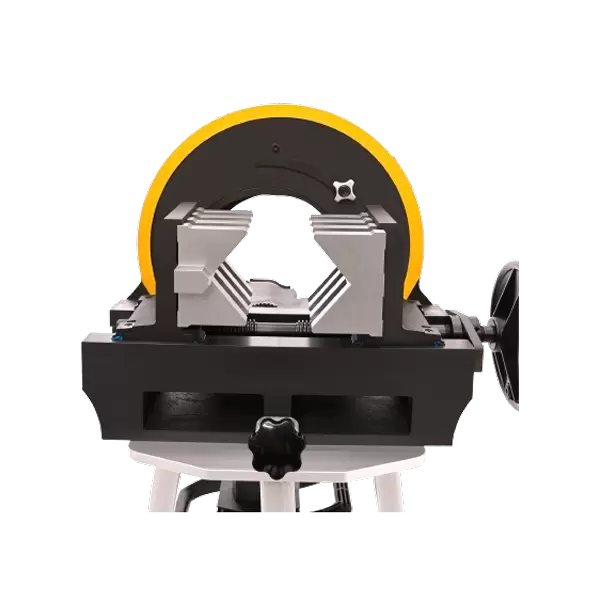
 Leave a Message