

 Language
Application
Our products are used in oil and gas, pressure vessels, shipbuilding nuclear and fossil fuels/electricity, steel structures, etc.
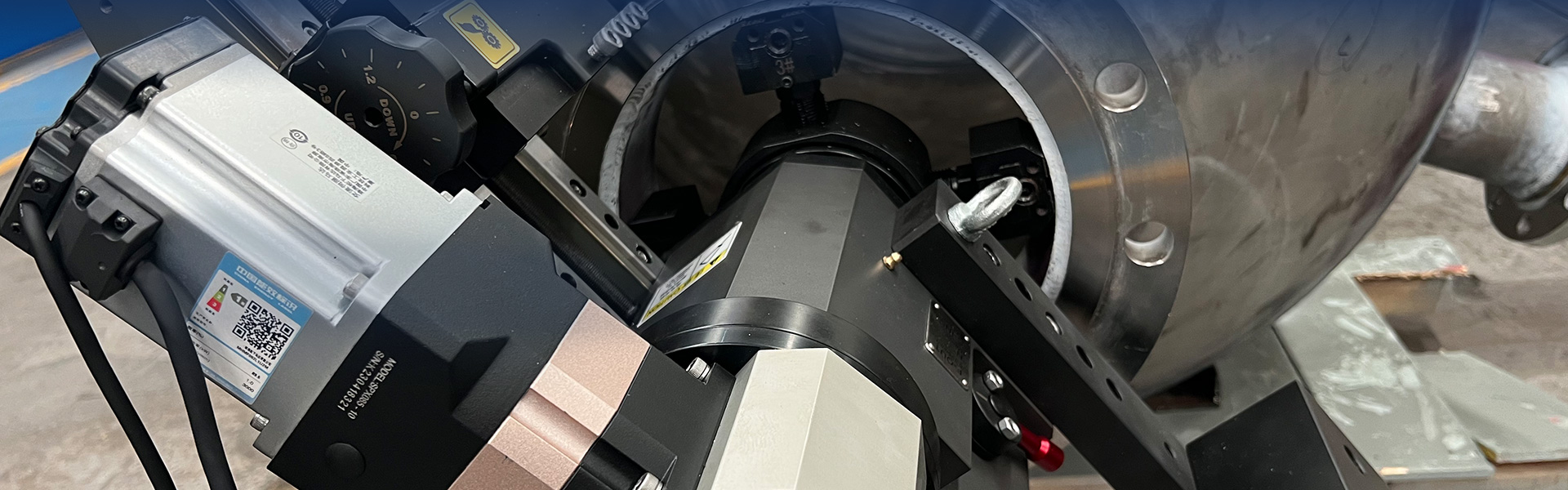
 Home > Application > On Site Machining Equipment > On-site Machining of Large Pressure Vessel Flanges Using a Portable Gantry Milling Machine


I. Project Background and Machining Challenges
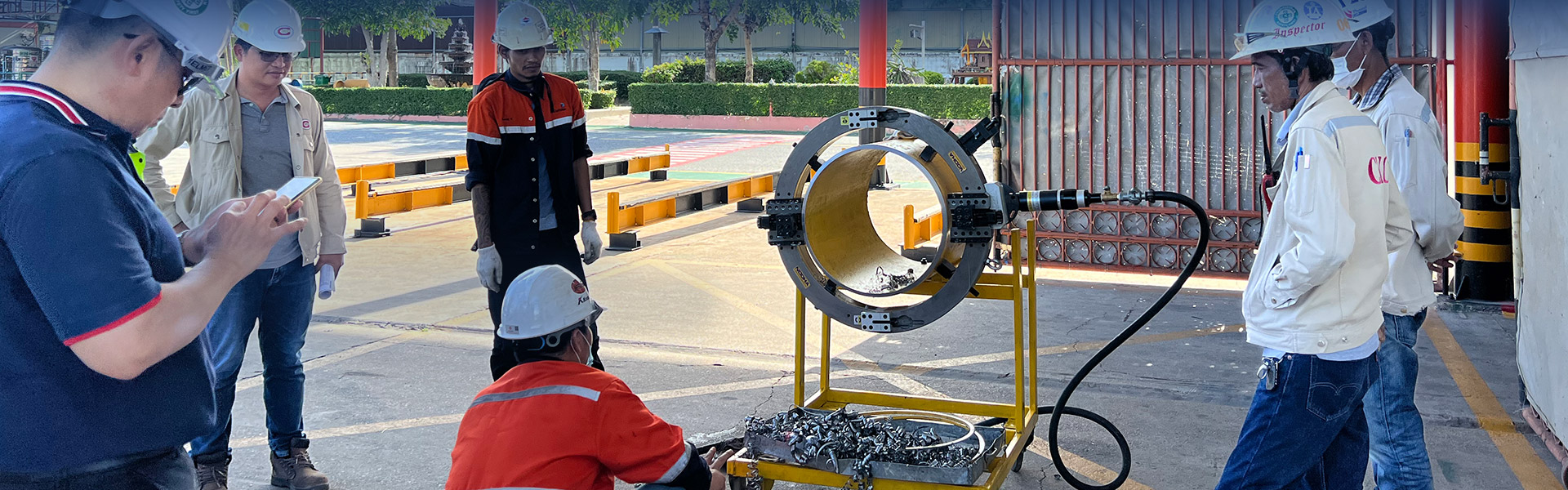
This project involves the repair and precision milling of flange faces on large pressure vessel equipment used in the chemical industry. The workpiece is a large welded flange assembly with a diameter of 2,200 mm, widely utilized in the petrochemical and heavy energy sectors. Due to the workpiece's massive size and weight (exceeding 5 tons), dismantling and transporting it to a stationary CNC machining center would incur exorbitant costs and lengthy timelines; furthermore, transport risks causing secondary deformation or loss of precision. Consequently, traditional stationary machine tools are entirely unsuitable for on-site repair conditions. The workpiece requires the removal of a uniform 4 mm machining allowance, while the flange face exhibits issues such as welding deformation, corrosion, and excessive flatness deviation. Post-machining specifications require a flatness error of ≤0.02 mm and surface roughness that meets standards for subsequent sealing and assembly.
Additionally, the chemical production site presents a high-risk environment involving flammable and explosive hazards, rendering standard electric machining equipment—which poses a risk of electrical sparks—unsuitable for direct operation. The project also demands heavy-duty milling capabilities to handle significant roughing allowances, placing rigorous requirements on machine rigidity, output torque, and operational stability. Conventional portable equipment often lacks the necessary rigidity and precision, making it difficult to balance safety, efficiency, and machining quality.
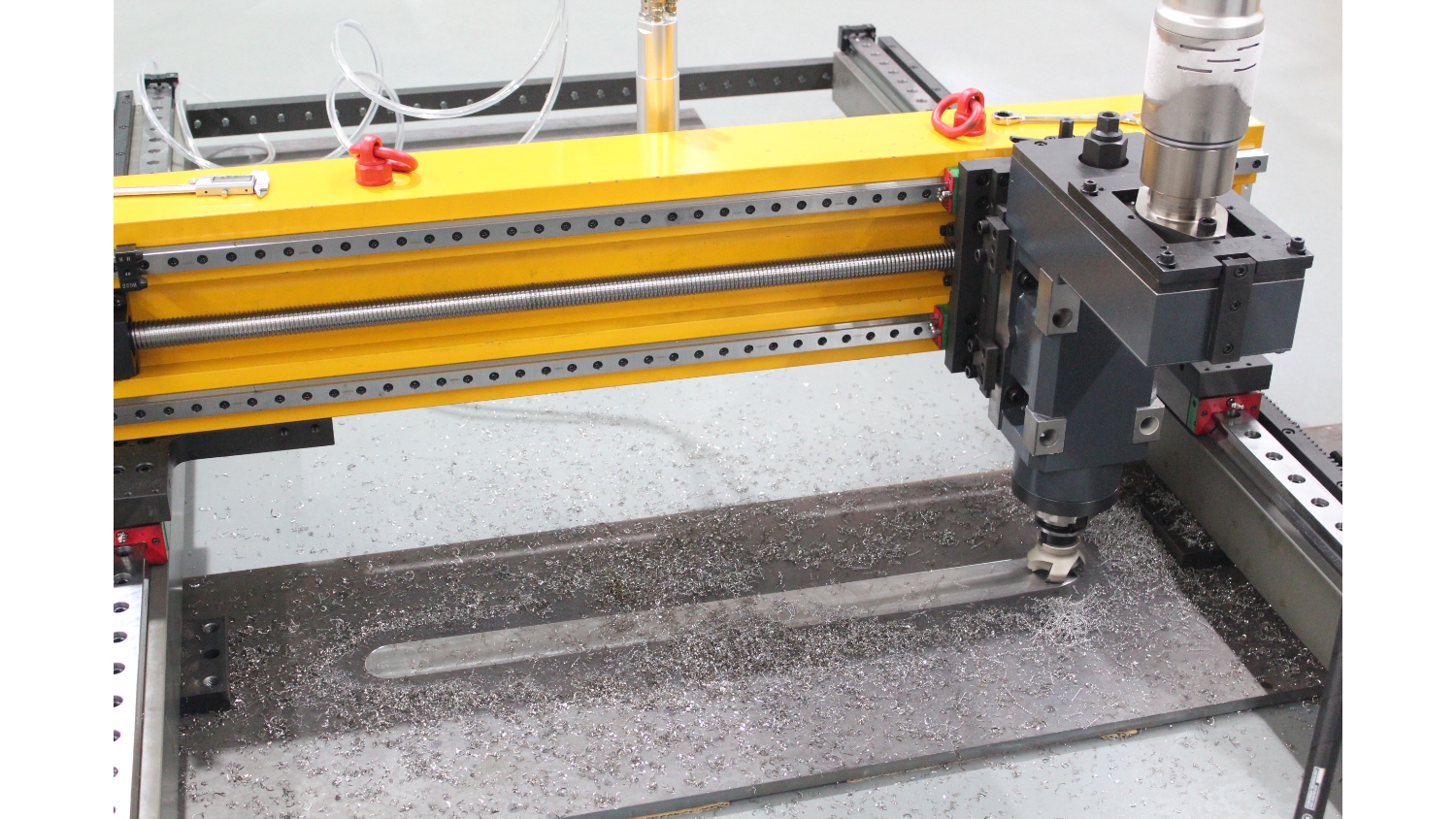
II. Equipment Selection and Key Advantages
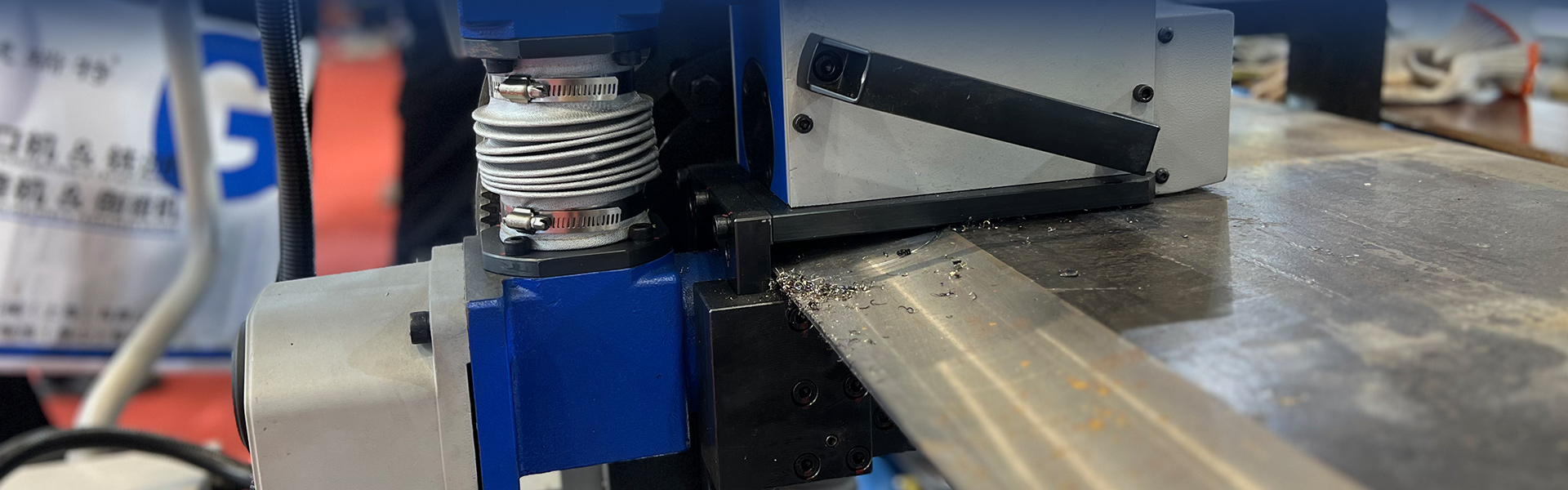
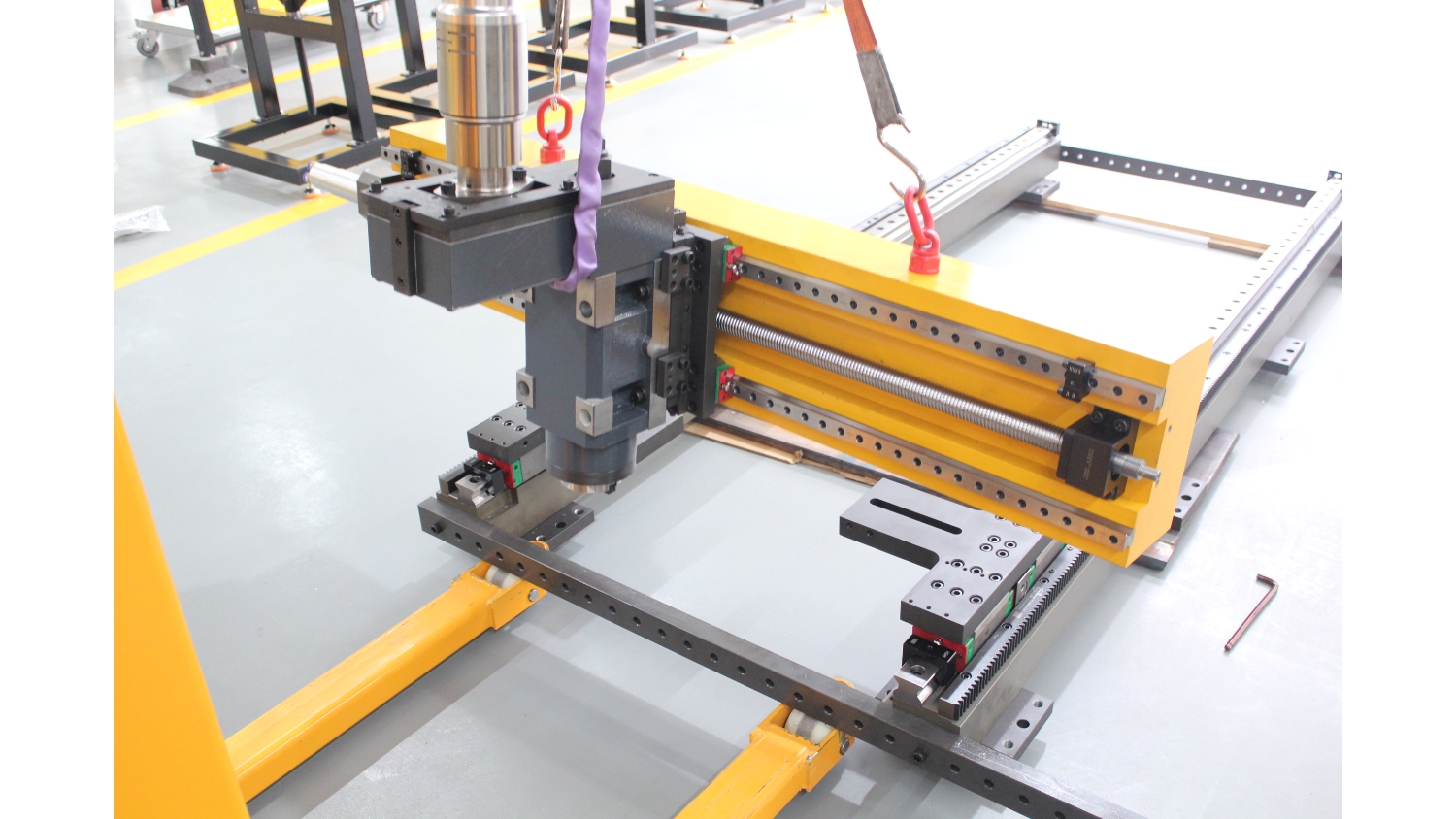
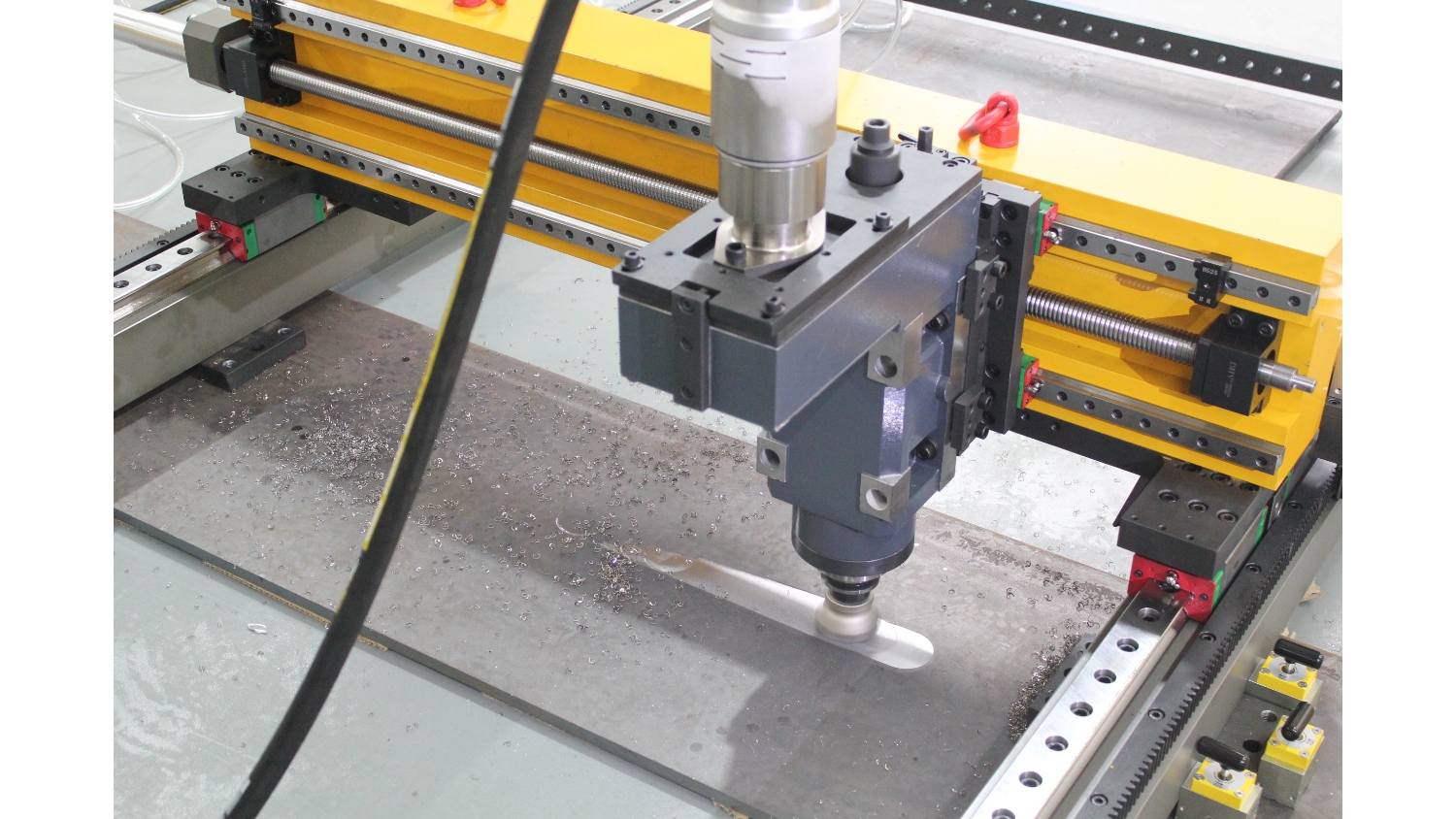
To address the multifaceted requirements of this high-risk environment, heavy-duty milling needs, and on-site machining of large workpieces, the project utilizes a modular, multifunctional portable gantry milling system combining the Pneumatic "P" Series and Hydraulic "H" Series. This solution leverages core advantages—such as dual-mode functionality, compatibility with multiple drive systems, and high-rigidity modularity—to perfectly suit complex on-site machining scenarios. The equipment supports switching between linear and gantry milling modes, while a dual-axis linkage control system enables precise, full-surface machining of large flat workpieces, effectively overcoming the limitations typically associated with machining such large components.
The equipment features a highly rigid, modular bed structure that allows for easy assembly, disassembly, and scalable expansion. It eliminates the need for complex tooling setups, enabling rapid on-site installation and significantly shortening project preparation times. The feed system utilizes X/Y-axis motors paired with planetary gear reducers for automatic feed, alongside a manual feed mode for the Z-axis. With infinitely variable travel speeds, machining parameters can be flexibly adjusted to suit specific roughing or finishing conditions, balancing machining efficiency with dimensional accuracy. Additionally, the equipment is compatible with standard BT40/BT50 power heads; its multifunctional spindle enables a "one-stop" workflow—including face milling, flange face finishing, and edge trimming—without the need to switch machines, ensuring a high level of process integration.
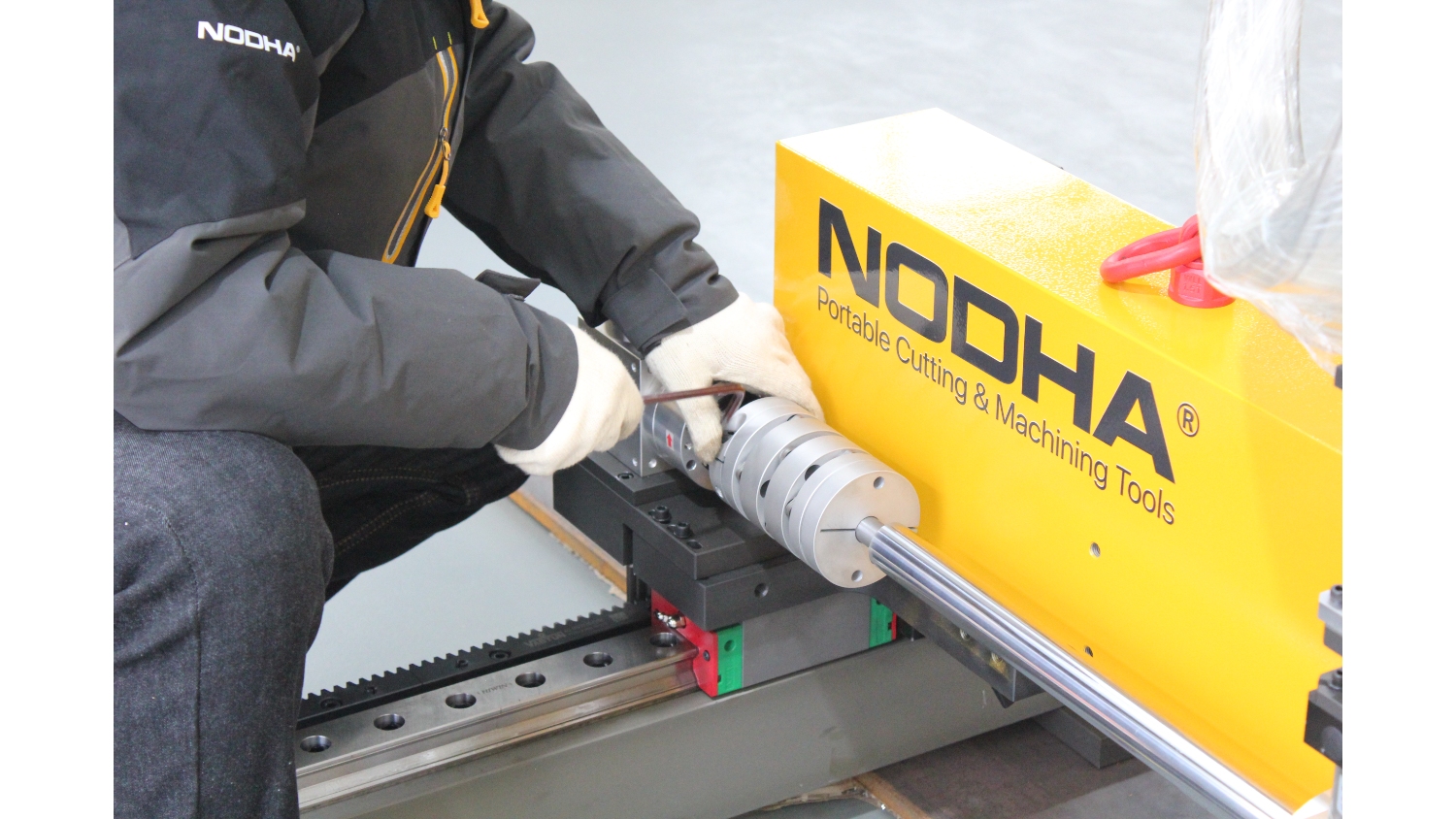
III. Application Across Series Based on Operational Conditions
To address the project's diverse machining requirements, we implemented a phased machining strategy tailored to specific equipment models, maximizing the performance advantages of each series. The first phase involves heavy-duty roughing cuts using the hydraulic H-series. Leveraging its high torque and heavy-load capabilities, this series efficiently removes over 4mm of excess material. It excels in heavy-duty cutting scenarios, maintaining smooth, vibration-free operation even during high-volume material removal. This effectively prevents issues such as tool marks or chatter patterns often encountered when milling large workpieces, thereby establishing a flat, uniform surface for subsequent finishing and making it ideal for heavy-duty milling applications.
The second phase focuses on finishing operations and work in high-risk environments, utilizing the pneumatic P-series. Designed with explosion-proof features that eliminate electrical sparks, this series completely mitigates safety risks associated with hazardous petrochemical and oil & gas environments, making it the specialized choice for flammable or explosive conditions. Featuring a streamlined structure and stable operation, the equipment precisely corrects flange face flatness deviations during the finishing stage, ensuring the sealing surface meets required accuracy standards. Furthermore, it supports switching between manual and automatic travel modes, allowing on-site operators to flexibly adjust operations based on the specific machining area, which significantly enhances the flexibility and efficiency of on-site repair work.
IV. Machining Results and Project Value
The on-site machining process eliminated the need to dismantle or transport the workpiece; following rapid equipment assembly and setup, all rough and finish milling operations were completed in a single pass, reducing the overall project timeline by over 60% compared to traditional methods. Upon completion, the flatness error of the flange face was controlled within 0.018 mm, and the surface finish was uniform—free of chatter marks or tool marks—fully meeting industrial standards for pressure vessel sealing assemblies and long-term stable operation.
Regarding operational costs, the electric (E-series), pneumatic (P-series), and hydraulic (H-series) models all offer the advantages of easy maintenance, simple troubleshooting, and low operating costs, making them suitable for the vast majority of industrial site conditions. A modular, scalable design allows the equipment to handle large workpieces of various specifications; the ability to switch freely between linear and gantry modes enables multi-purpose use, significantly lowering equipment procurement costs for enterprises. Furthermore, the in-situ machining approach completely eliminates losses associated with workpiece transport and the costs of secondary machining, providing a highly efficient, safe, and economical solution for on-site repair and custom milling of large components in the heavy industry, petrochemical, and energy sectors.
V. Case Summary
This case study effectively demonstrates the four core strengths of this portable gantry milling machine series: modular versatility, adaptability to diverse working conditions, machining stability, and on-site efficiency. A high-rigidity bed ensures precision during heavy-duty machining; the multi-drive series covers all scenarios ranging from standard to heavy-duty and high-risk operations; dual-axis linkage and a multifunctional spindle accommodate complex milling processes on large workpieces; and dual manual/automatic feed modes meet varied on-site operational requirements. Compared to traditional stationary machine tools, this equipment overcomes limitations regarding site location, workpiece size, and working conditions while balancing safety, efficiency, and precision, making it a premier choice for the on-site machining, maintenance, and repair of large heavy-industrial components.

Mr. Jeff Huang
15251441199
Miss Doria Zhu
15102105304
Miss Jina Wang
18261592800






 Back
Back Prev
Prev
 Next
Next

 Jan 08,2025


 Leave a Message